
Hussein Al Attar is not a household name, at least not unless your household happens to be full of car designers. Nevertheless, he is one of the designers who has had the most influence on BMW over the last decade.
Al Attar penned the fan-favourite BMW M2, the first one, unveiled in 2016. Known as the F87 M2 to gearheads the world over, it was an instant cult-classic and a surefire collectible. But he also designed a car everyone loved to hate back in 2017, when it launched: the oddball 6 Series Gran Turismo. In addition, Al Attar also designed the hugely successful 2019 BMW X6 (G06) fastback SUV. And, at the more adventurous end of his portfolio, there is the M4 GT3 racecar, the M Hybrid V8 endurance prototype, as well as the delightfully deranged BMW Dune Taxi off-road EV concept.
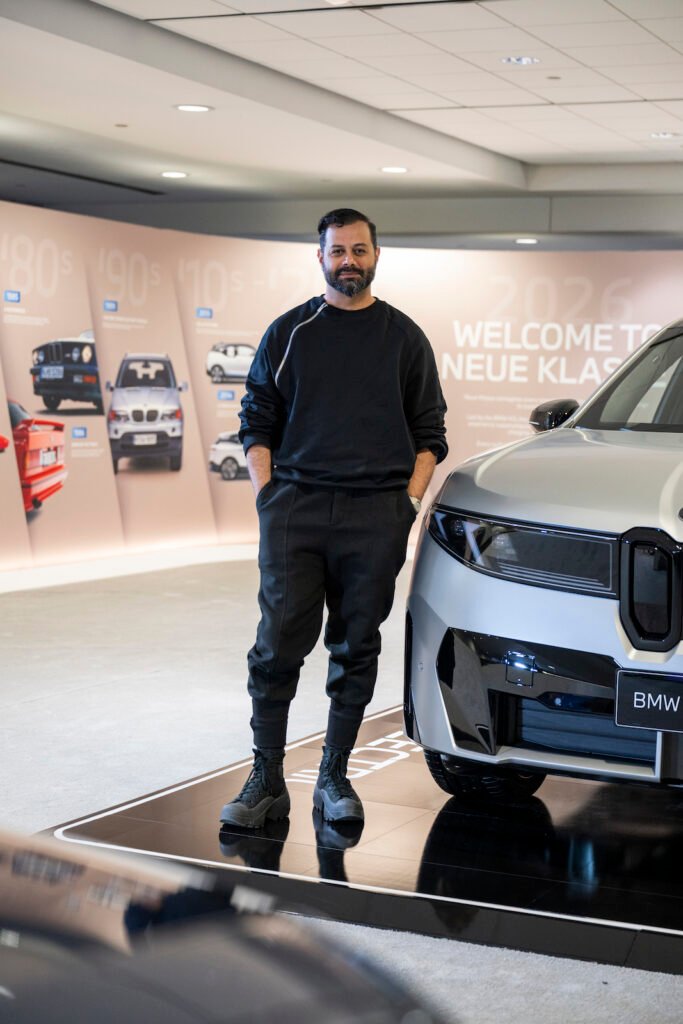






“I’m one of those people who, honestly, I’m basically doing my dream job that I wanted to do as a kid,” said Al Attar, during our conversation, taking place inside BMW’s all-new iX3.
Some car designers are like actors who can only ever play the same role; they can only do one type of car. But Al Attar can seemingly do anything, and do it well. If you imagine his car designs on a spider chart showing the many facets of BMW — M cars, family cars, SUVs, racecars, concepts — his work touches every corner of it.
That’s why I’m sad to report that a couple of months after I sat down to speak to Al Attar, his prolific 14-year run at BMW suddenly came to an end. He took a prestigious top-level design job with another automaker. So, all the more reason to look back on his influential work at BMW.
A Life Uprooted
His path into car design is an unusual one.
“I was born in Iraq, in Basra, but I was two years old when we moved to Baghdad,” he explains. Then the family had to move to Libya and — just before Al Attar’s 16th birthday — they moved to Germany. “Everywhere we moved it was as refugees, for political reasons,” he explained.
“When we moved to Germany, it was very difficult to learn a new language at 16. Being a whole family thrown into this completely different environment, different culture, different society, you had to find your way through it. It wasn’t easy, but I think we did pretty well,” he said.
Cars were a throughline for Al Attar, a constant through all the upheaval.
“I started when I was a kid, drawing everything, and then somehow cars stuck. Maybe it comes from my dad, who was also very enthusiastic about cars,” he muses. It began when he was just five or six years old. “I didn’t even know it was called design. To me, it was like, ‘Oh, I’m drawing a car that doesn’t exist out there.’ I didn’t even know that was a job.”
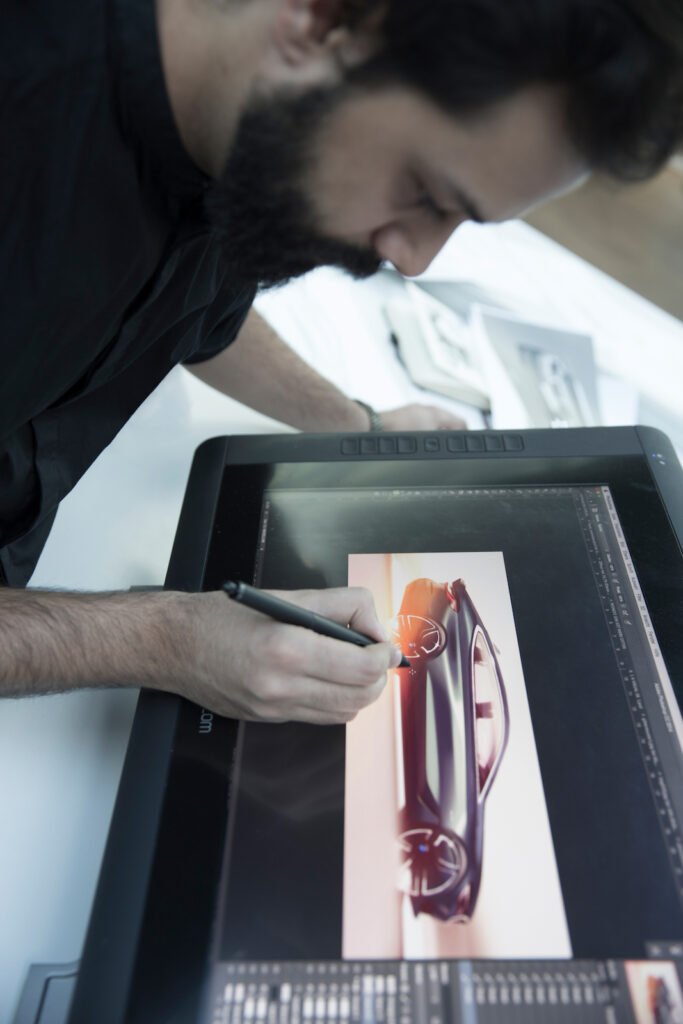
“There’s no car industry in Iraq or Libya,” he adds. “I was already thinking about an alternative: maybe architecture, maybe art.” Becoming a car designer was, “just such an impossible dream,” he remembered.
When the family moved to Germany that all changed. Germany is one of only a handful of countries in the world where there are hundreds, thousands of car design jobs.
“All of a sudden that dream became something tangible. There was a really good university in Germany called Pforzheim, which is the one I ended up going to. I graduated and then my first job was basically at BMW.”
It’s tempting to ascribe his chameleon-like talent for designing all types of vehicles to a wide-ranging childhood that saw him constantly uprooted and adapting to new places. But, that explanation is lazy — even if there may be a kernel of truth in it — because it ignores all the hard work, talent, experience, imagination, skill, and salesmanship that makes a successful car designer.
Munich
“I started as an exterior designer in Munich, at BMW headquarters, and worked there for seven years,” he said.
Does he have a favourite car from that time? I expect him to say the M2, but instead he smiles and laughs.
“I’m laughing because there’s a perception, I think, from the outside, that the coolest car must be the one that is your favourite. And, obviously, I love the M2. I’m looking to buy one actually, the first generation, the F87 that I worked on. That obviously was a lot of fun to work on, but the project where I actually had the most fun — because I felt like I had a little bit more freedom — was the 6 Series GT. It’s maybe a controversial choice, for some people, but I really believe in that car.”
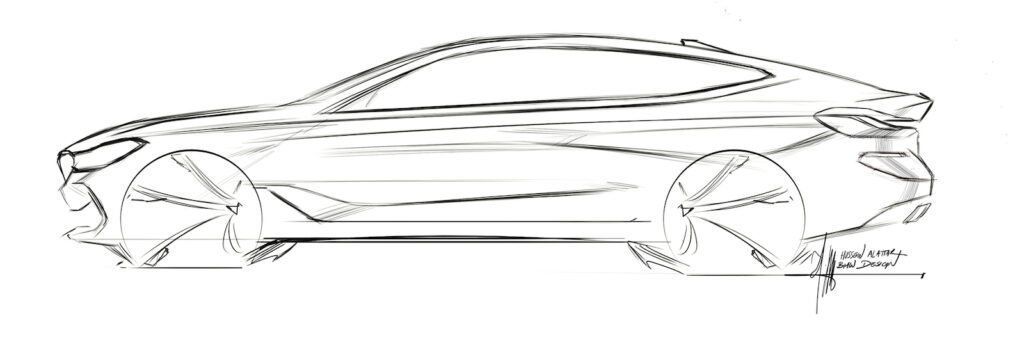
The 6 Series Gran Turismo was a sleeker version of the 5 Series GT, a tall-roof hatchback sedan with a funky split tailgate.

Based on the look of shock on my face, he felt the need to explain himself. “When you drive it, you understand why it exists. It’s a GT, as in Gran Turismo. It’s literally, like this kind of grand tourer. If you’re driving long distances, it’s amazing. It still has a little bit of the BMW driving dynamics, but it’s super comfortable. It’s very luxurious. On the exterior, there was a lot of criticism of the previous generation [5 Series GT] so there were a lot of things that we fixed with the new generation. It was rewarding.”
Los Angeles
But the 6 GT was a victim of BMW’s portfolio downsizing; the model got axed a few years ago. Al Attar’s other fastback design, however, the current-generation X6, remains a strong seller.
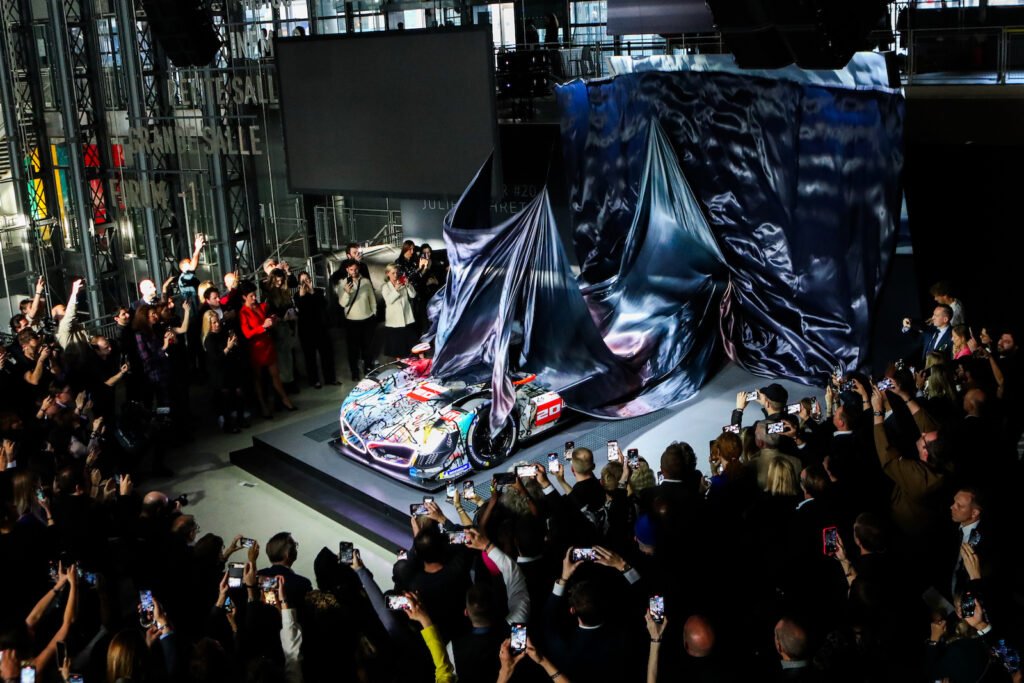
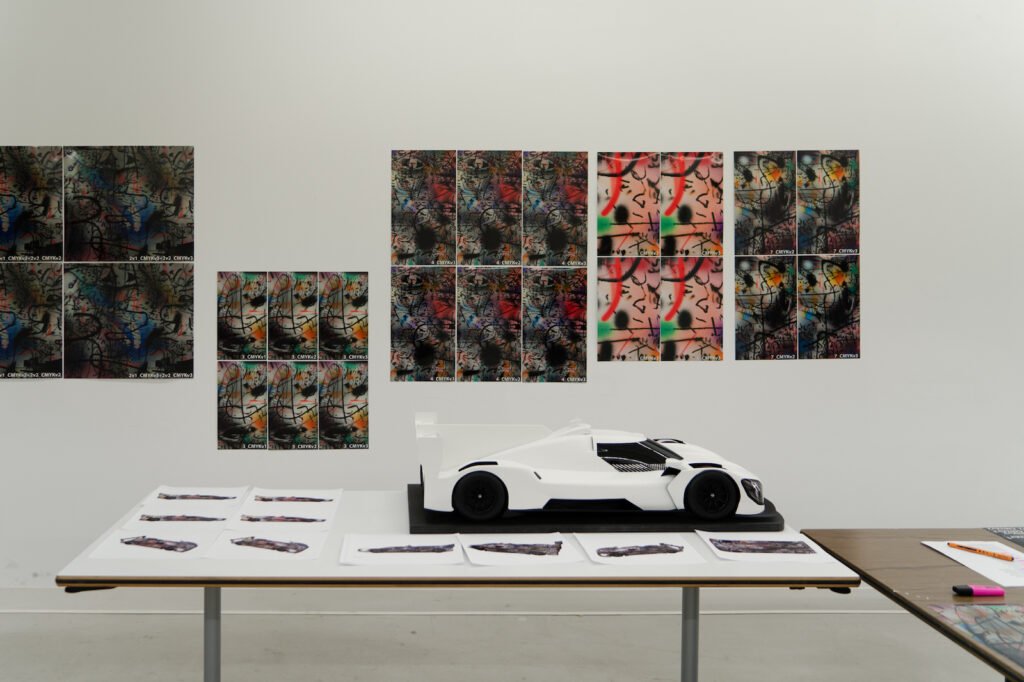
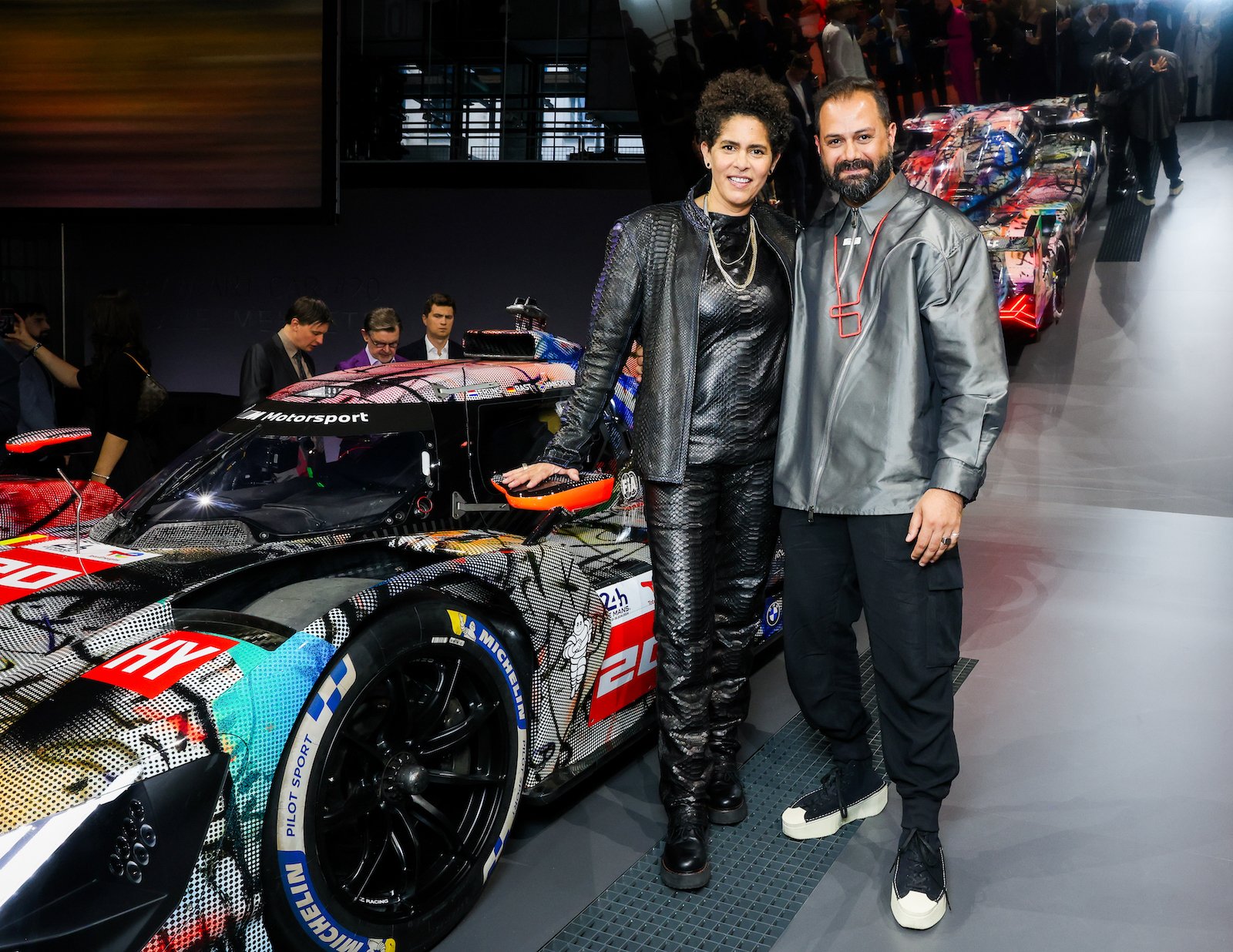
In 2019, Al Attar moved to yet another new city, Los Angeles, where he joined BMW’s Designworks studio. There, he did the menacing M4 GT3 racecar, and the M Hybrid V8 prototype endurance racer. (The latter, you may remember, was given the BMW Art Car treatment by artist Julie Mehretu.)
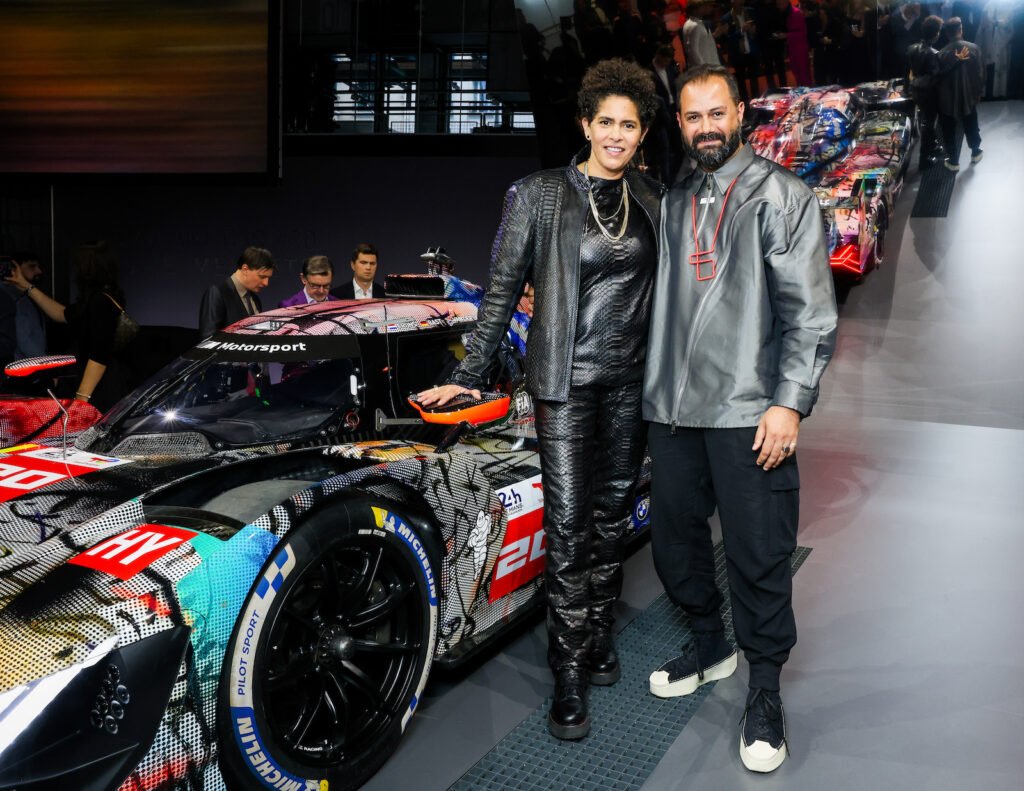
“The governing body for that racing series actually wanted the cars to look like the brands they are representing,” Al Attar explained. “That was a great opportunity to design, on one hand, an amazing car with the proportions of a spaceship, and on the other hand, to really reinterpret the BMW design language in a way that we haven’t done before. How do you distill the essence of BMW and translate it into this beast that has to race for 24 hours?”
The Future of Creative Work
Such a wide-ranging body of work in the field of car design is rare, and even rarer to do it all in the span of just 10 years or so. Perhaps unsurprisingly, Al Attar finds inspiration far beyond the hyper-specialized automotive realm.
“I don’t think the future of a creative is to be an expert or a specialist; I think it’s to be a generalist,” he said. “My goal is not really to be an expert in everything. […] I always try to find connections and nodes between different creative disciplines.”
“I happen to be a car designer by training, but I would love also to learn a little bit more about filmmaking, music, architecture, fashion design. At the end of the day, what you’re doing is you’re conveying an idea, you’re translating a principle into this tangible thing.”
Many car designers look to architects, furniture designers, or visual artists for inspiration, which is why I was surprised when Al Attar brought up multi-disciplinary artist Donald Glover as a key inspiration. He’s critically acclaimed as an actor, musician, comedian, writer, filmmaker and probably more things that I’m forgetting.
“Whatever [Glover] touches, it feels like he’s been doing it for a while. It’s always surprising. All of a sudden he leaves [the sitcom] Community and he’s working on an album as Childish Gambino. You listen to the album and you’re like, ‘shit, it’s amazing.’ Then he has this show Atlanta, and you’re like, ‘how is this so good?’”














“That kind of talent, that kind of expression is something that is really fascinating to me, and I’m trying to find that,” Al Attar said.
Perhaps such wide-ranging creative inspiration is why he’s always struggled a bit with the “car guy” label. “Yes, I like cars, but almost as sculptures,” he explained. “I look at them as movable art, mobile architecture. That’s so much more interesting to me. And as a designer, it allows me to be a little bit outside of that typical realm of car‑guy‑ness, and able to draw inspiration from other fields.”
Right now, for Al Attar, that means film, and a new wave of architects from the Middle East, as well as fashion. “I love Issey Miyake, the pleats. And there’s this brand House of Errors, from the U.K.; they do some very, very interesting things with knit and soft denim materials. It’s streetwear, but very artistic, almost creating scenes on their garments.”
His watch on the day we met was a D1 Milano. “It’s not even that fancy or expensive or anything. I like the monochromatic look. Maybe it’s because I’m getting old, but I really like these desaturated earth tones right now.” Before the earth tones, Al Attar was in a “green phase,” he added.
Anything with a strong visual identity piques his interest. “Anything that’s a personal expression, where you can see someone’s personality, and I can understand how that person thinks and how they are as a person. That, to me, is very fascinating.”
Taken together, his cars for BMW do, I think, give some insight into who Hussein Al Attar is. They’re a cross-section of the car industry: a purist’s sports car, an avant-garde SUV, a hyper-functional luxury sedan, and blood-thirsty racecars. With each one, you’re like, ‘how did the same designer nail all these different genres?’ He’s a polymath of car design. It’s very Donald Glover of him. And, who knows, maybe Al Attar is on his way to becoming a household name after all.