
Some tools hold weight beyond their function, shaping not just the materials they meet but also the lives of those who wield them. In the right hands, they can help form a bridge between raw potential inside a craftsman’s mind and a finished masterpiece. For Drew Hafner, a Snap-On body hammer he bought at 17 is one of those tools.
“A body guy I worked with said, ‘You’re not a real body guy until you own a Snap-On body hammer,’” Hafner recalls. It was the first tool he purchased for himself, and it’s been at his side ever since. Over the years, it’s shaped countless pieces of metal, including every inch of his personal project, a 1968 Porsche 912.
The hammer itself is a simple tool that will appear familiar to most. With a smooth hickory wood handle, it feels solid and balanced in the hand. The head is forged steel, with a flat, rounded surface on one side and a pick on the other, designed for precision shaping of metal. “I literally used it today,” Hafner says. “I use it every day.” Despite its unassuming appearance, the hammer has become a symbol of Hafner’s dedication to his craft and his journey from apprentice to master.
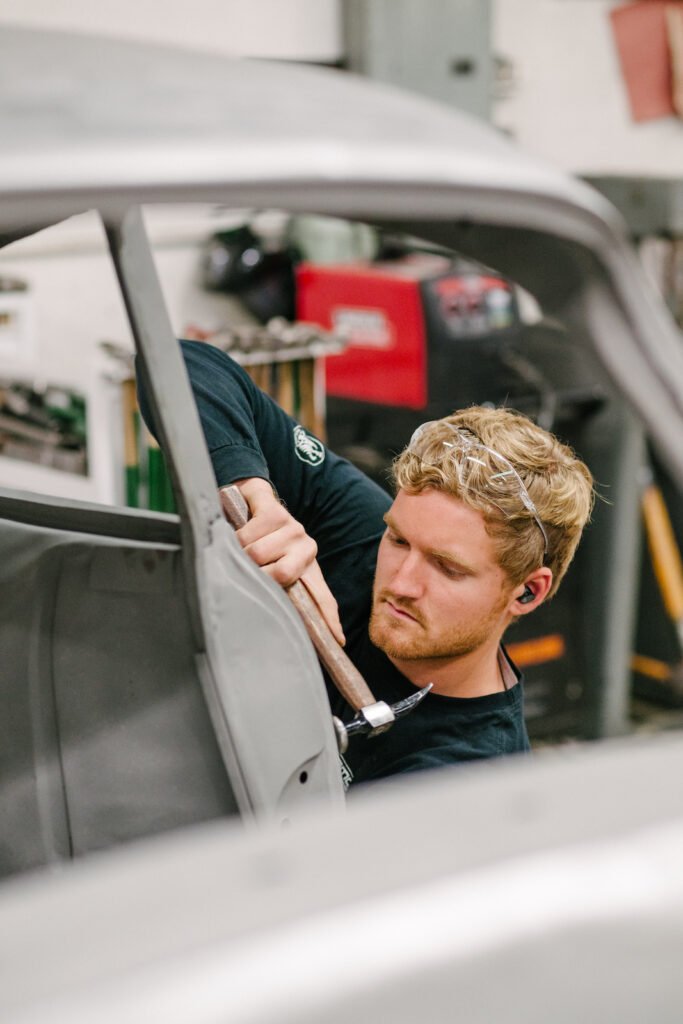

Hafner’s foray into the automotive world began in Columbus, Ohio, where he grew up watching his father work in the collision repair industry. By the time he was 11, he was helping out in the garage, painting, welding and sanding body filler. In high school, he joined a vocational program in automotive collision technology, which gave him the chance to refine his skills and get a head start on his chosen career.
“They taught about the in depth mechanics of cars, how to weld, paint and fix damaged cars,” he recalls. “It was hands-on every day, and it really set me up for where I am now.”
After high school, Hafner went straight to work at a body shop. “I was an 18-year-old kid with barely any money, borrowing tools from the older guys,” he recalls. “Eventually, they got tired of me asking, so I started building my own collection. The hammer was one of the first things I bought.”
In 2018, Hafner reached out to Rod Emory of Emory Motorsports on Instagram. He was 20 years old, ready for the next chapter, and looking to be part of something bigger. Emory saw potential and offered him a gig. Two weeks later, Hafner packed his belongings, including the hammer, and drove from Ohio to California. “I didn’t know anyone out there,” he says. “It was just me, my Volkswagen Jetta, and my toolbox.”
Emory Motorsports is renowned among Porsche enthusiasts as a leader in vintage Porsche 356 builds. Known for their craftsmanship and true-to-the-brand customizations, the shop has cultivated a loyal following around the globe. For Hafner, it was a dream come true to work at a place so deeply revered in the Porsche community.
He quickly found his place in the team, working alongside some of the most skilled automotive craftsmen in the world. Over time, his relationship with Emory Motorsports deepened in a way he hadn’t anticipated. After several years of working together, Hafner began dating Rod Emory’s daughter, Jayde. They married in 2022, making Hafner not just part of the team but part of the family. “It’s a family business in every sense now,” Hafner says. “I work with my wife, my brother-in-law, and my father-in-law and mother-in-law every day. It’s pretty special.”
At Emory Motorsports, Hafner spends his days tapping on vintage Porsche 356s. Each car is stripped down to bare metal and rebuilt with subtle customizations. It’s slow, methodical work, but Hafner thrives in the process. “We’re not about over-the-top modifications,” he explains. “It’s about enhancing what’s already there in a way that feels natural. The goal is to subtly enhance and improve upon these cars as if Porsche was still building 356’s to this day.”
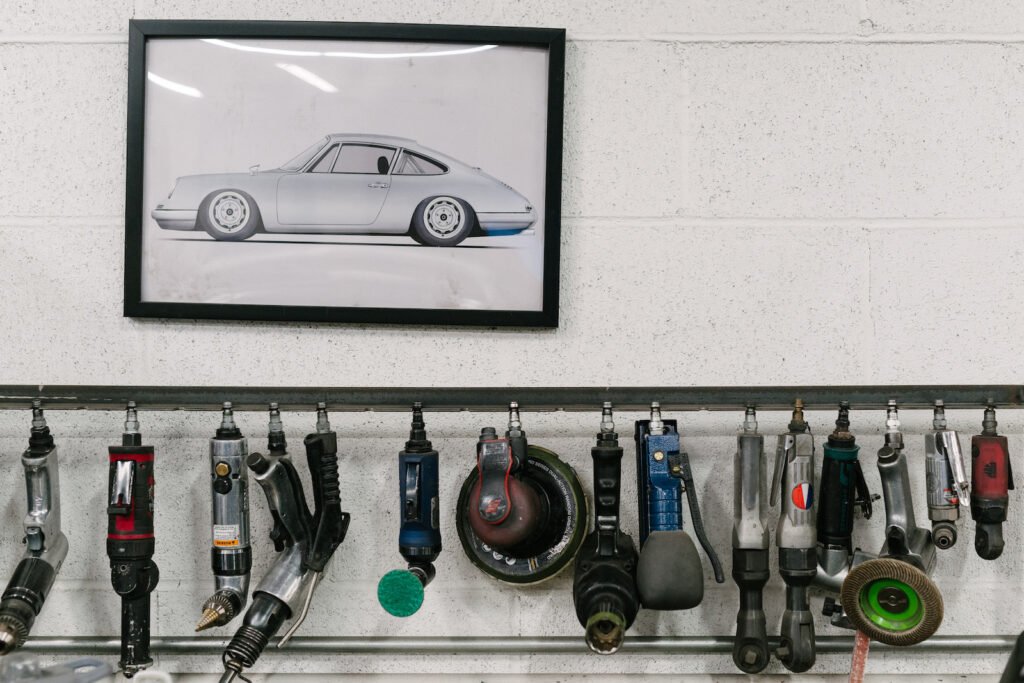
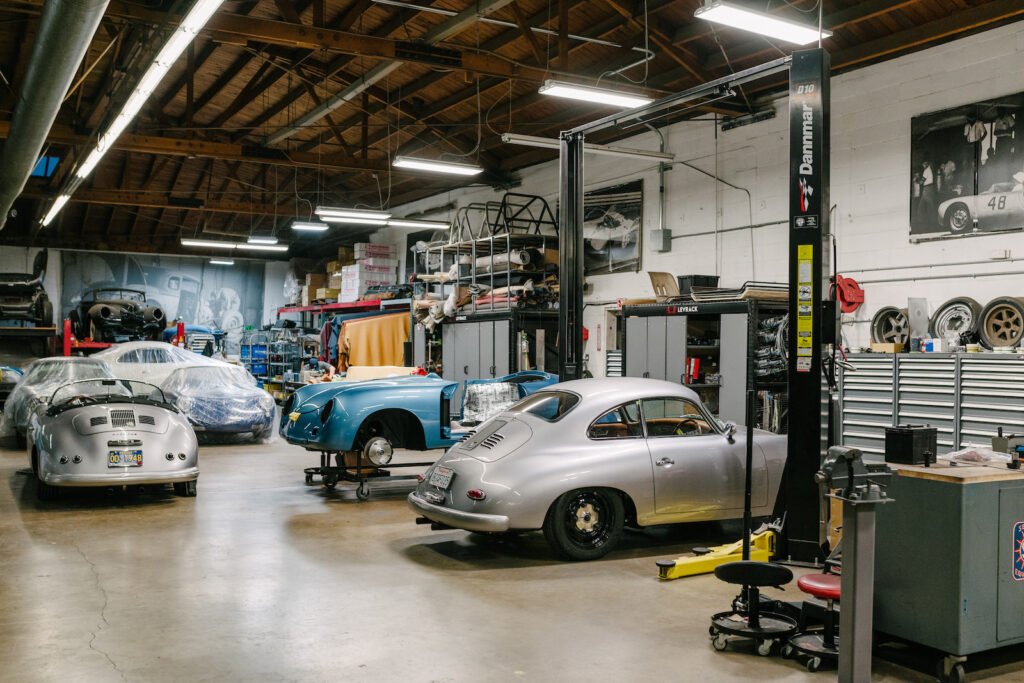
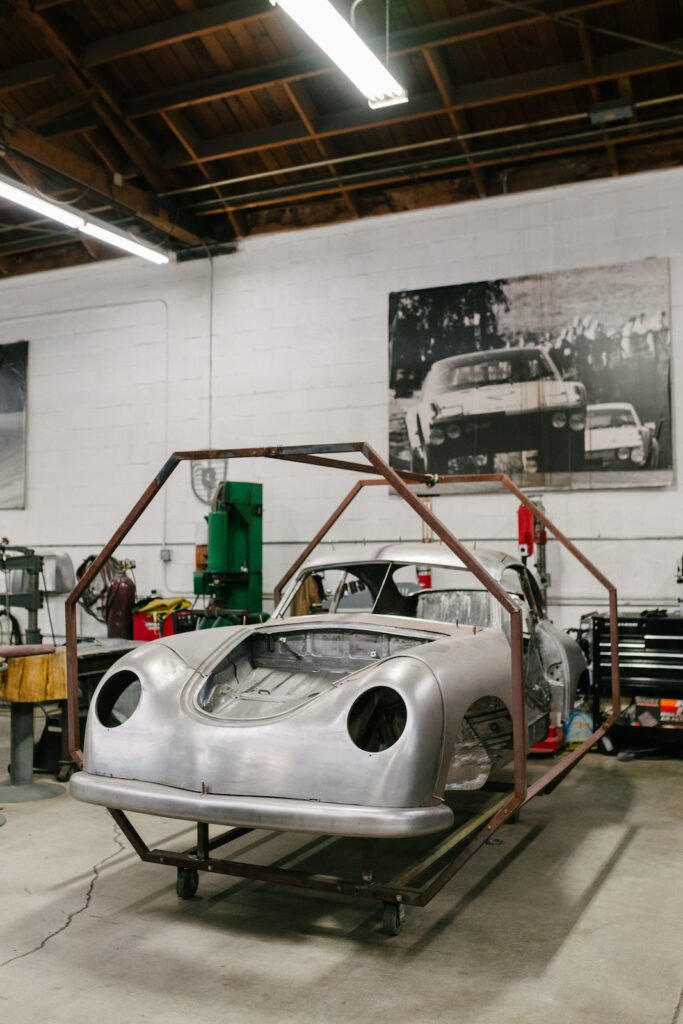
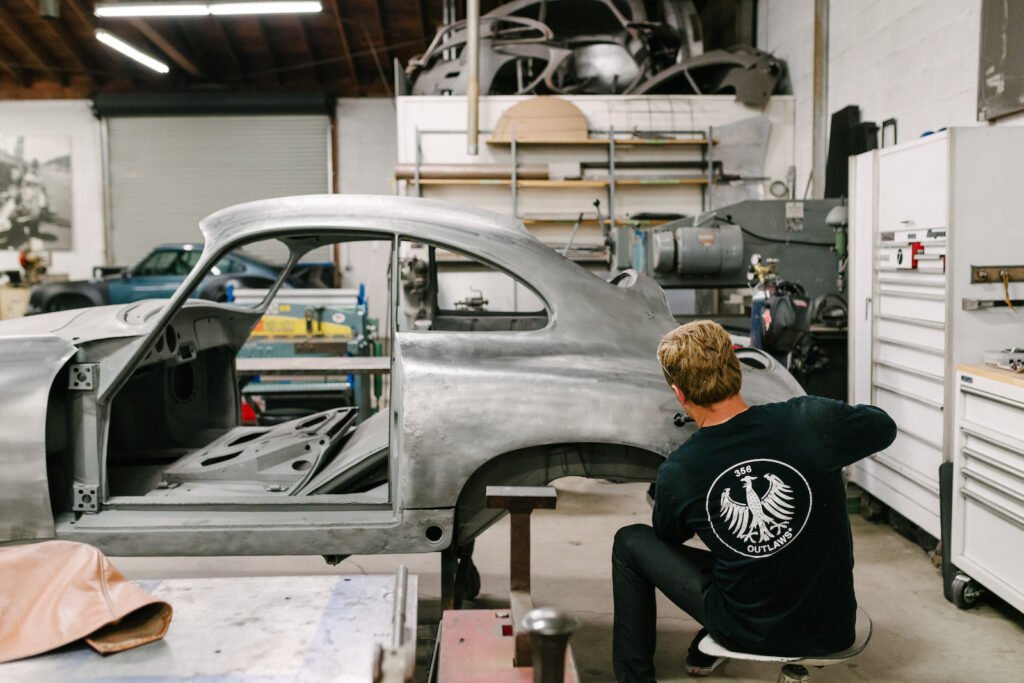
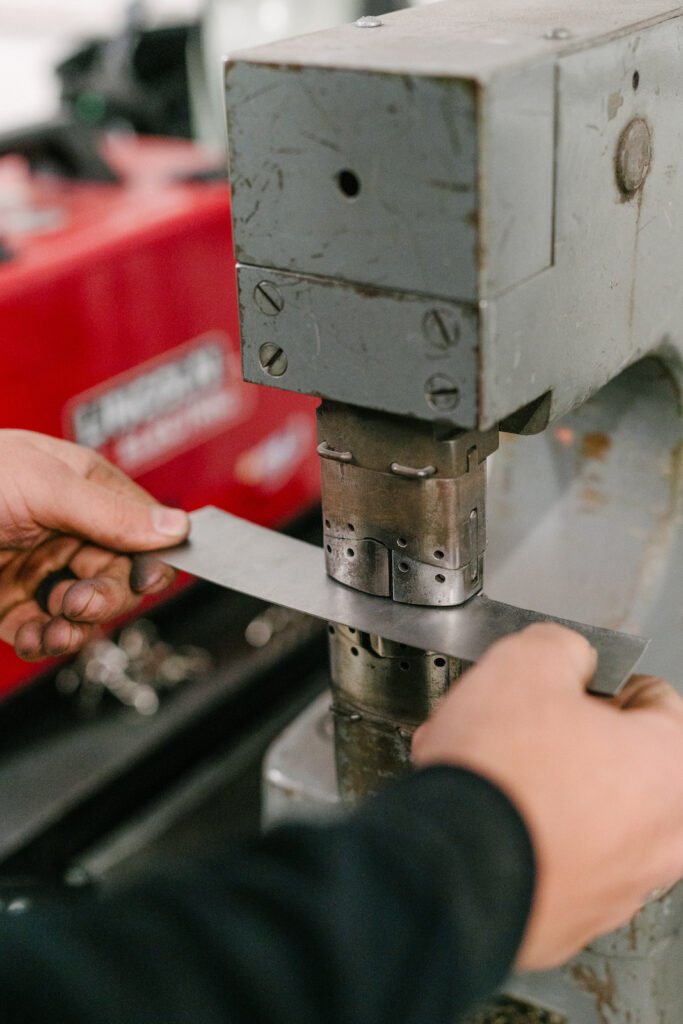
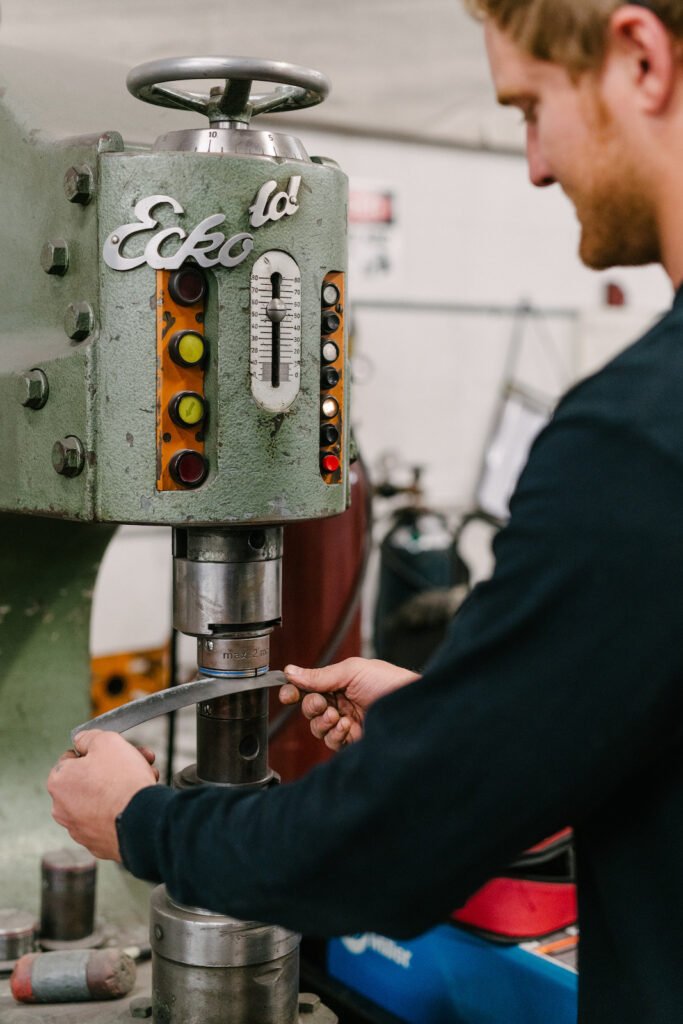
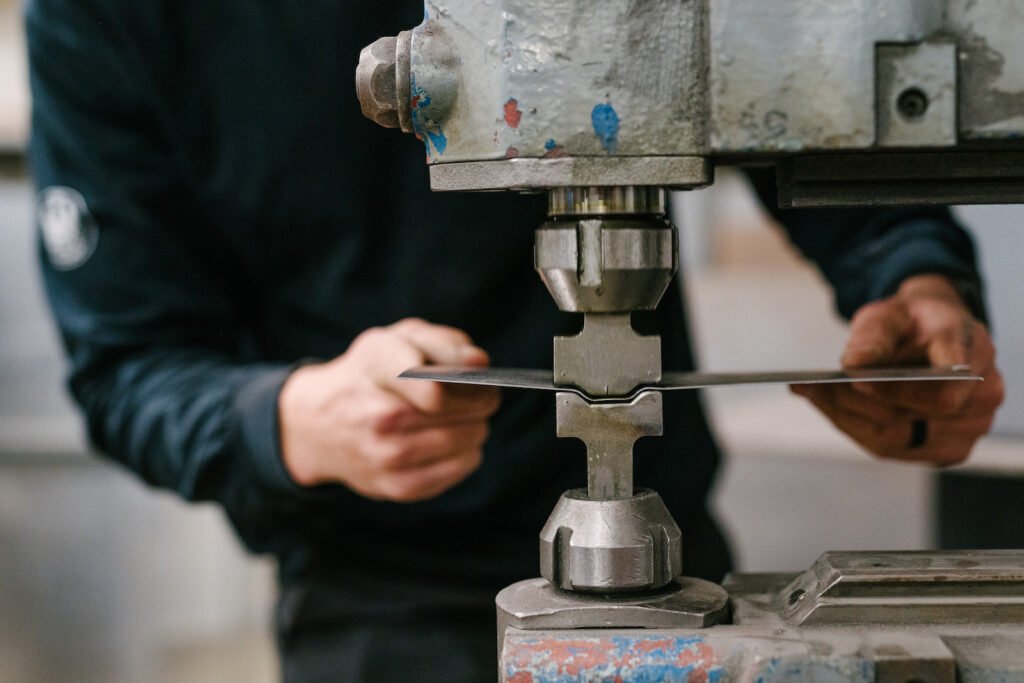
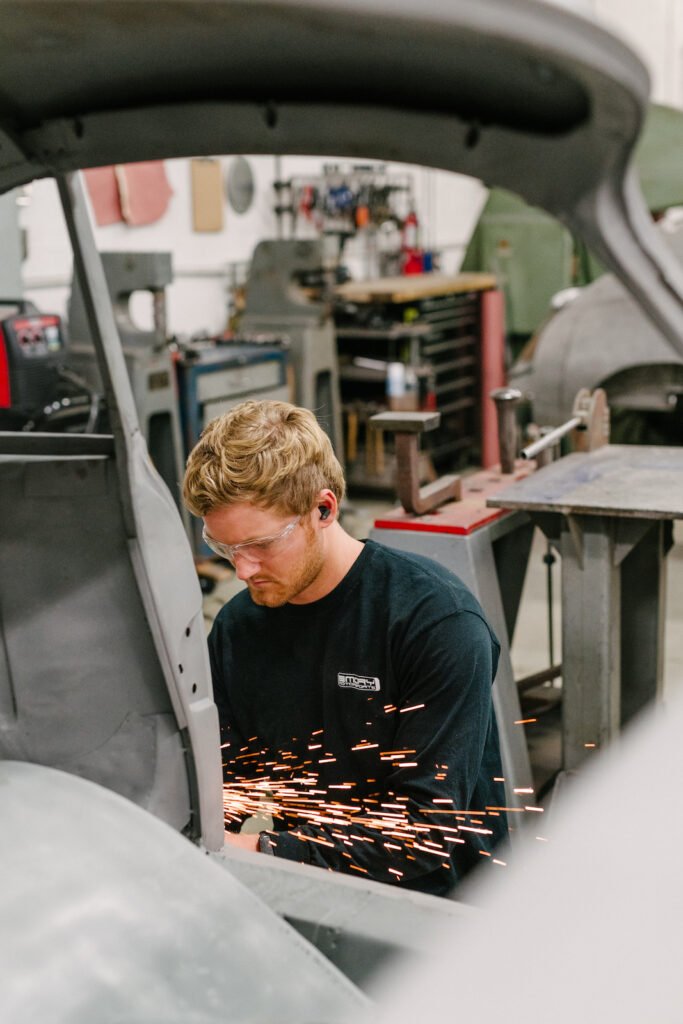
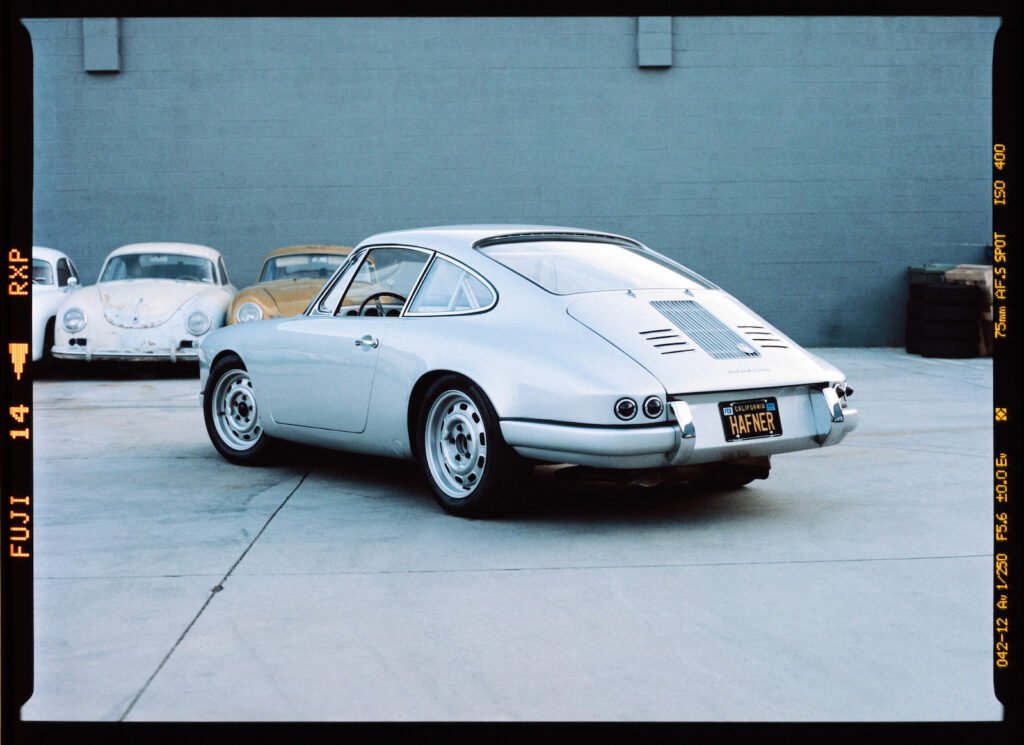
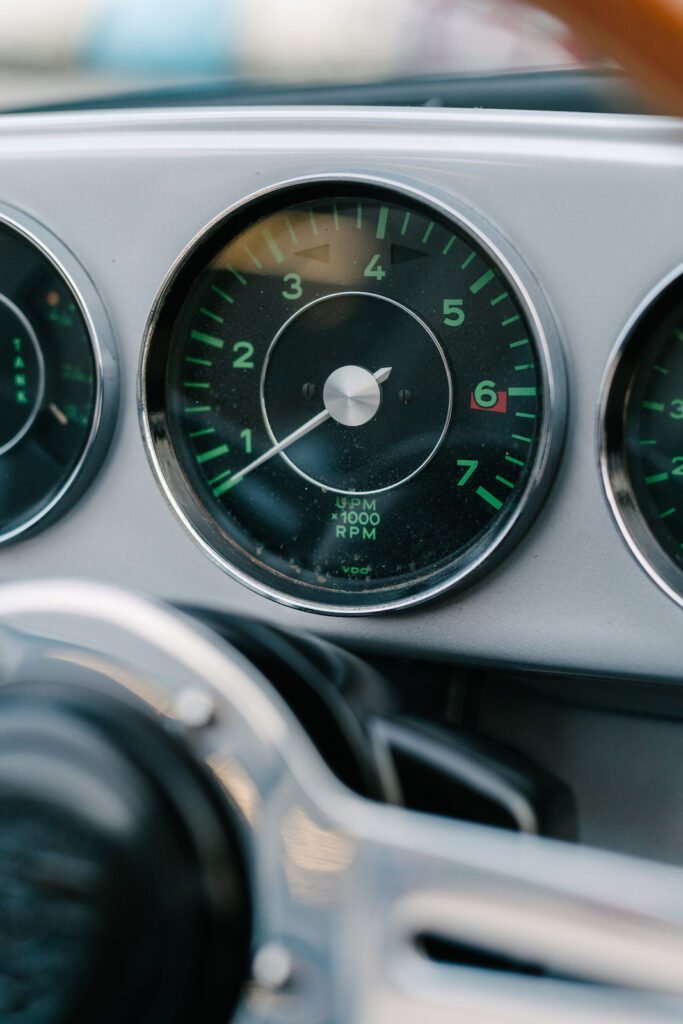
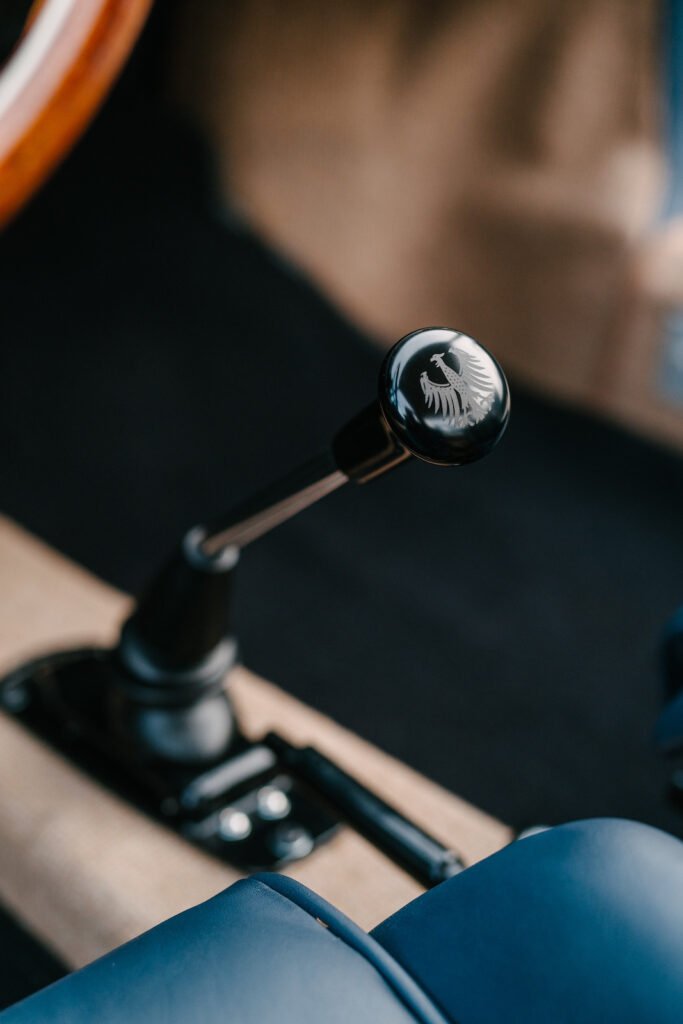
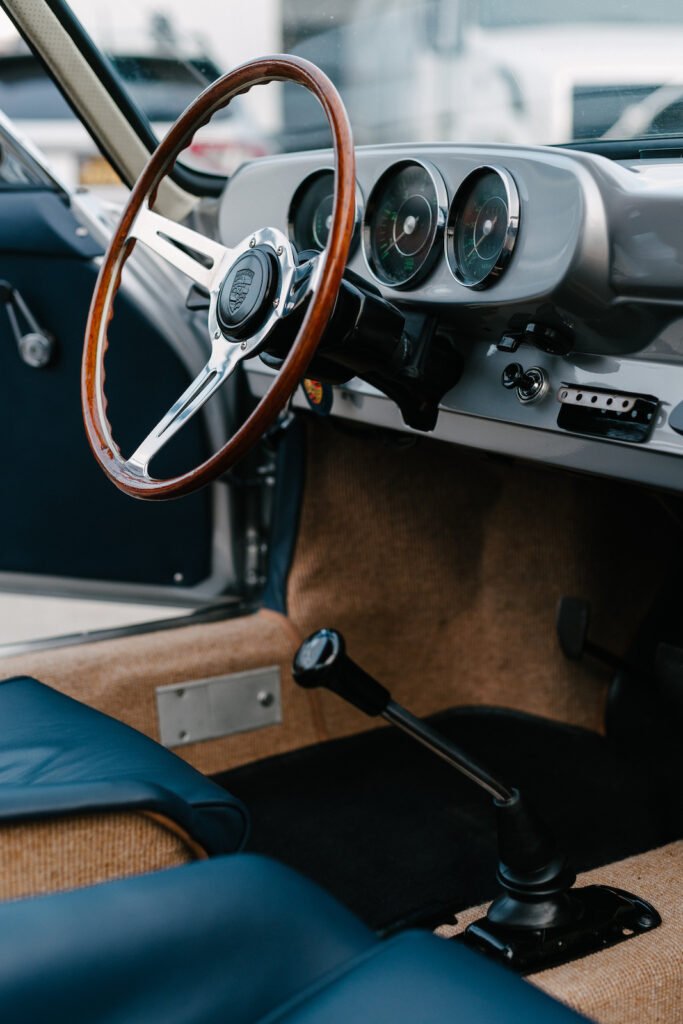
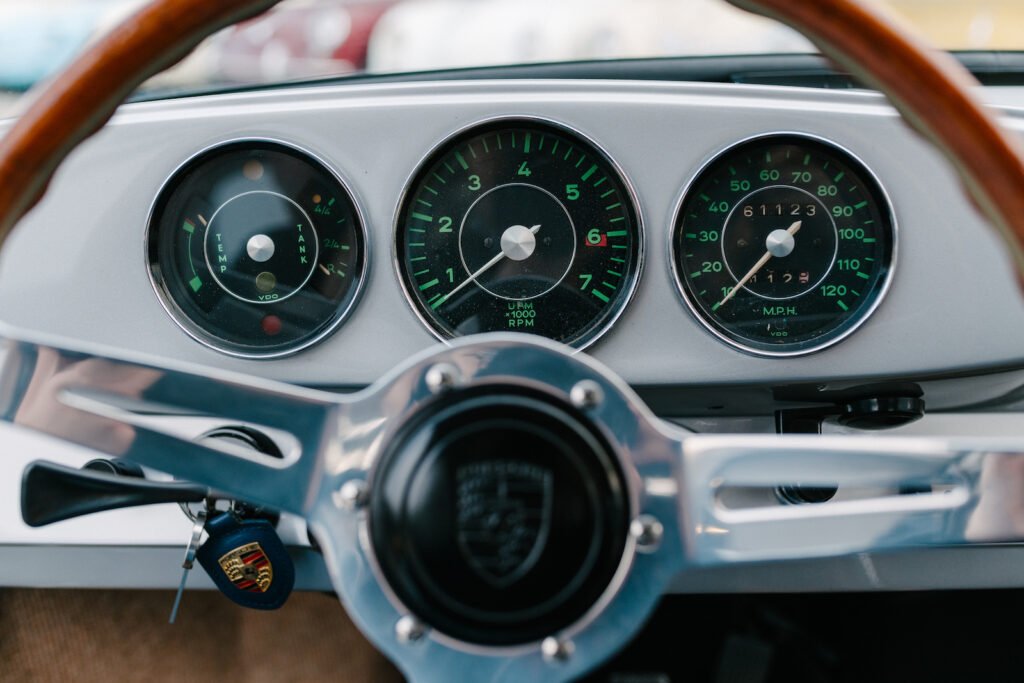
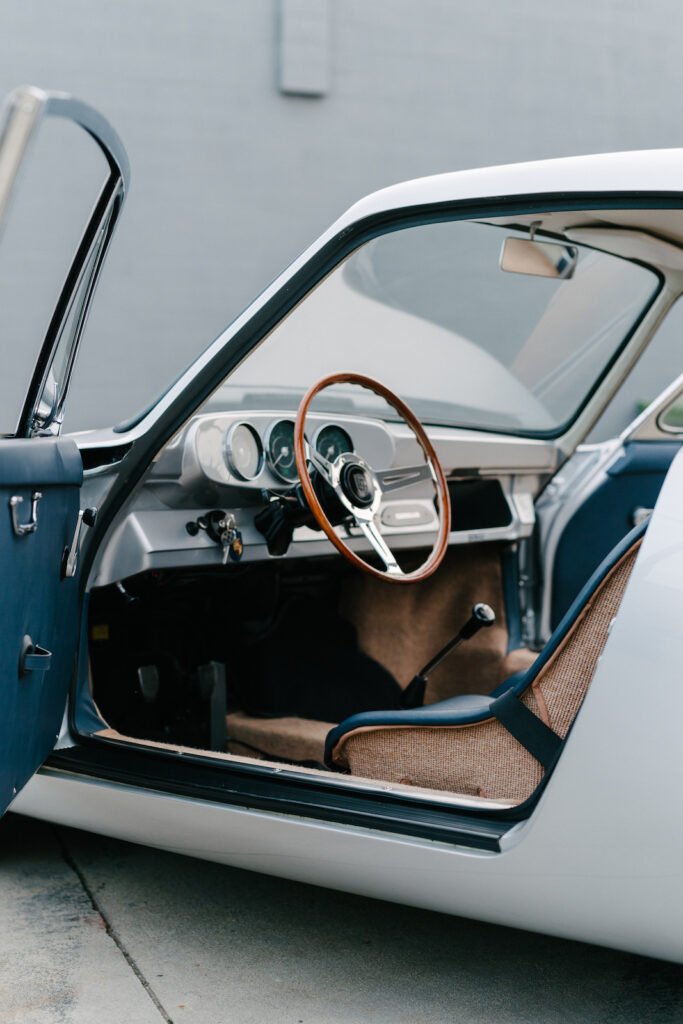
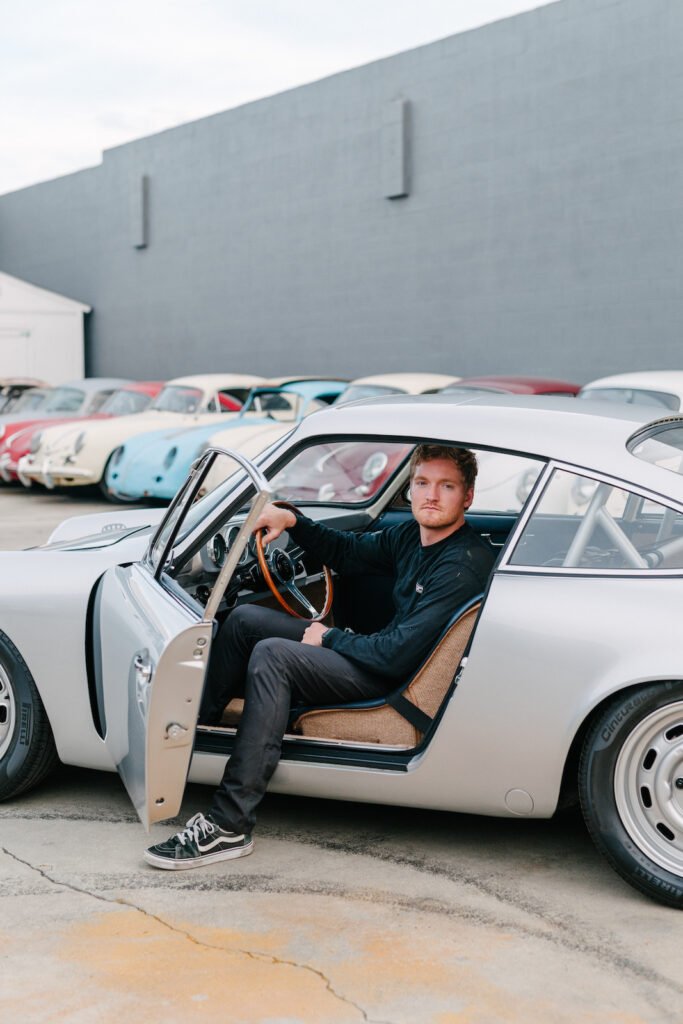
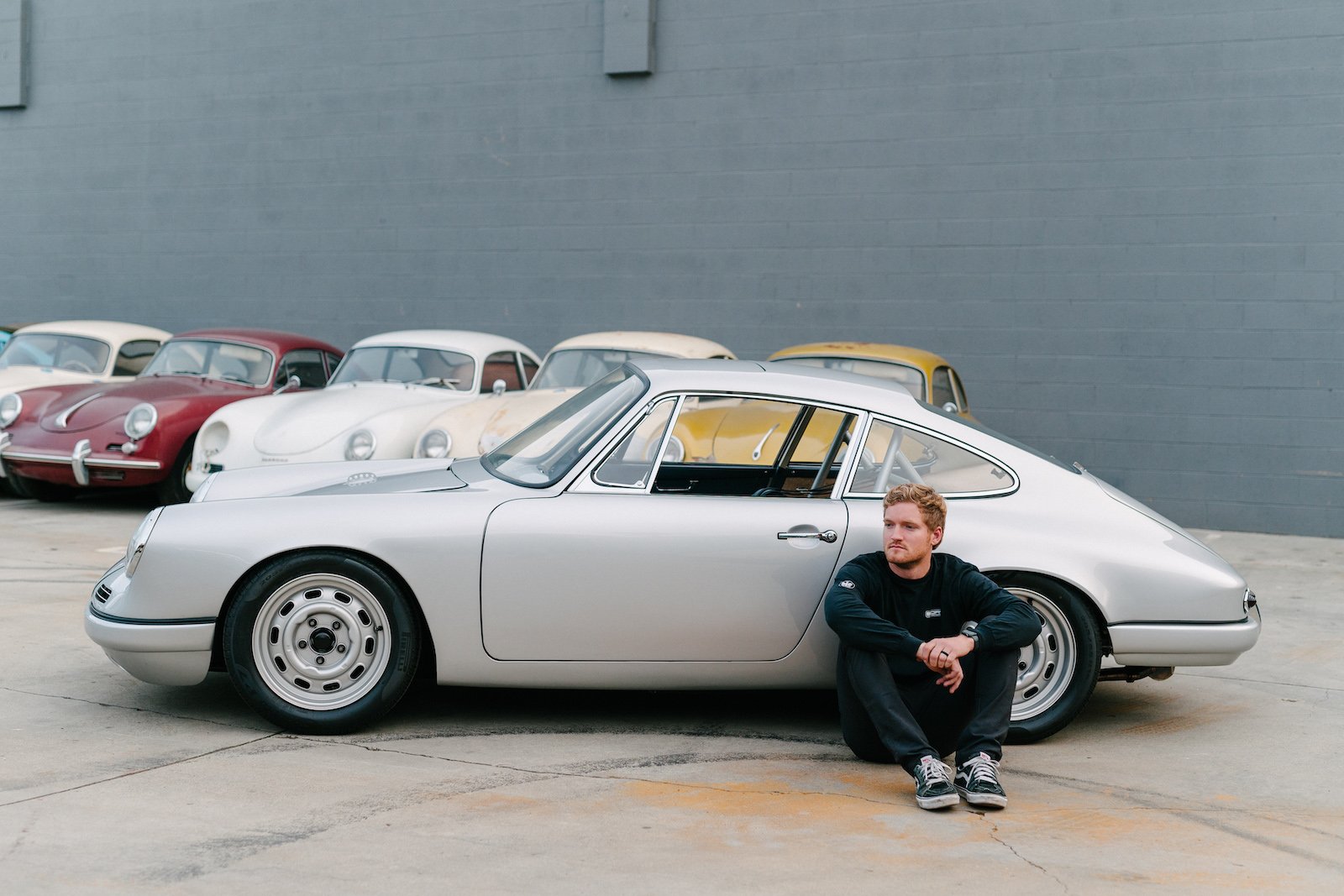
That philosophy guided Hafner when he began working on his own car, a 1968 Porsche 912 that was an absolute mess when he found it. It had rusted-out floors, no engine, missing doors, and fiberglass body panels from a previous attempt to modernize it in the 1980s. For most people, it would’ve been a hard pass. For Hafner, it was perfect. “It was the ideal candidate for what I wanted to do,” he says. “The fact that it was so far gone actually made it easier to make it my own.”
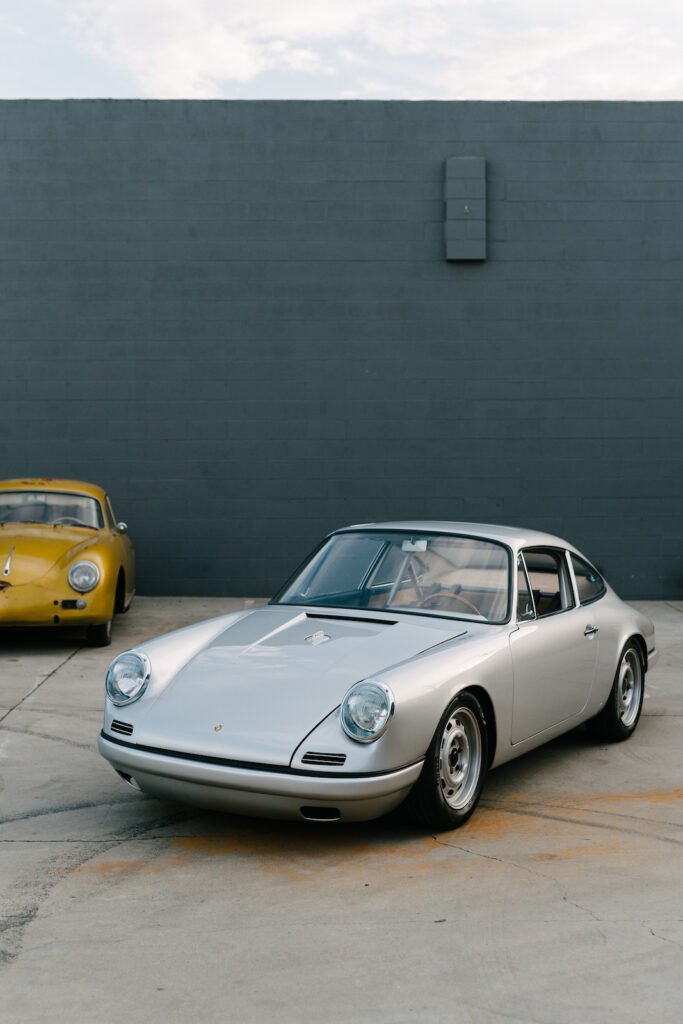
The vision was clear from the start. He wanted to create a vehicle that bridged the gap between Porsche’s 356 and 911 generations, and that felt like something Porsche might have built in the late 1960s had they experimented with combining the two. “I wanted it to look like a prototype,” he says. “Something that might have existed in an alternate timeline.”
The build took 18 months of near-full-on work. Every day after his regular 10-hour shifts at Emory, Hafner would pull the 912 into the shop and get to work. “I’d spend four or five hours every evening and then all weekend on it,” he says. “It was a grind, but I didn’t want it to become one of those projects that drags on for years.”
He started by stripping the car down to a bare shell, cutting away the fiberglass panels and rusted floor pans. From there, he used his hammer to shape new custom panels, smoothing out sharp angles and adding subtle curves inspired by the 356. “A lot of the details are things most people wouldn’t notice,” he says. “But the enthusiasts see them. That’s what makes it worth it.”
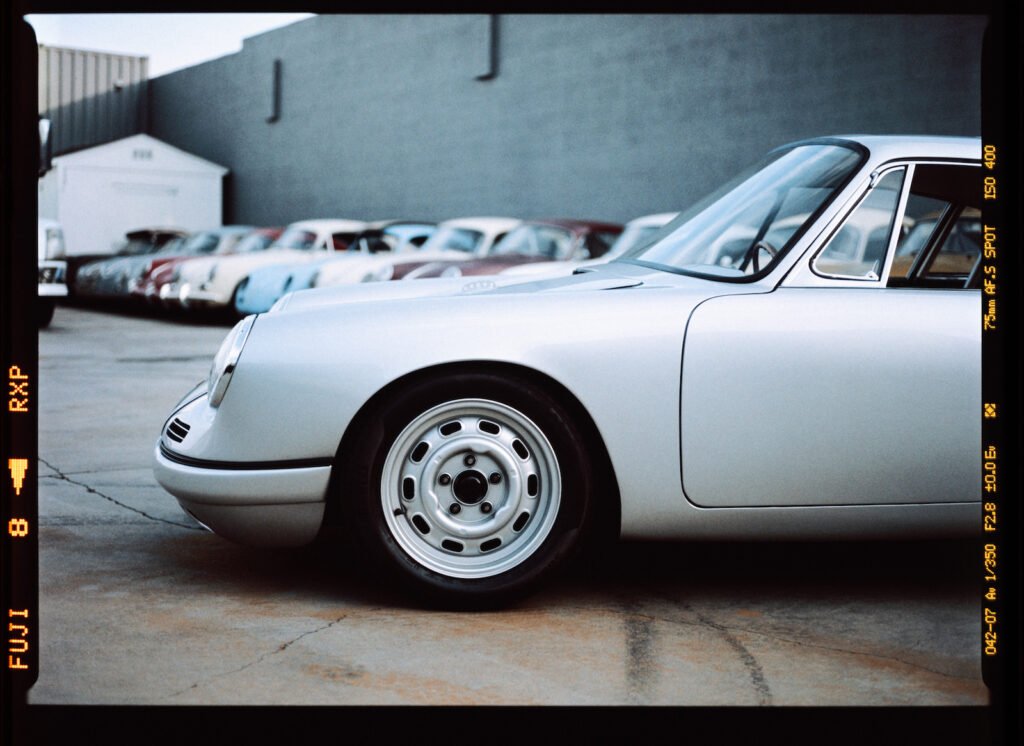
One of the most challenging aspects of the project was making the modifications look invisible. Hafner reshaped the car’s rocker panels, creating a seamless transition from the door to the floor pan. He also radiused sharp edges and smoothed out imperfections to give the car a more cohesive look. “It’s all about flow,” he explains. “The car has to look right from every angle.”
To keep the build true to its era, Hafner avoided modern materials like carbon fiber. Even the paint is a period-correct Porsche color. “I wanted everything to feel authentic,” he says. “It had to look like it belonged.”
Throughout the project, he relied heavily on his trusty hammer. “That hammer touched every piece of metal on this car,” he says. “It’s funny to think about, but it’s true. Every single panel has felt that hammer.”
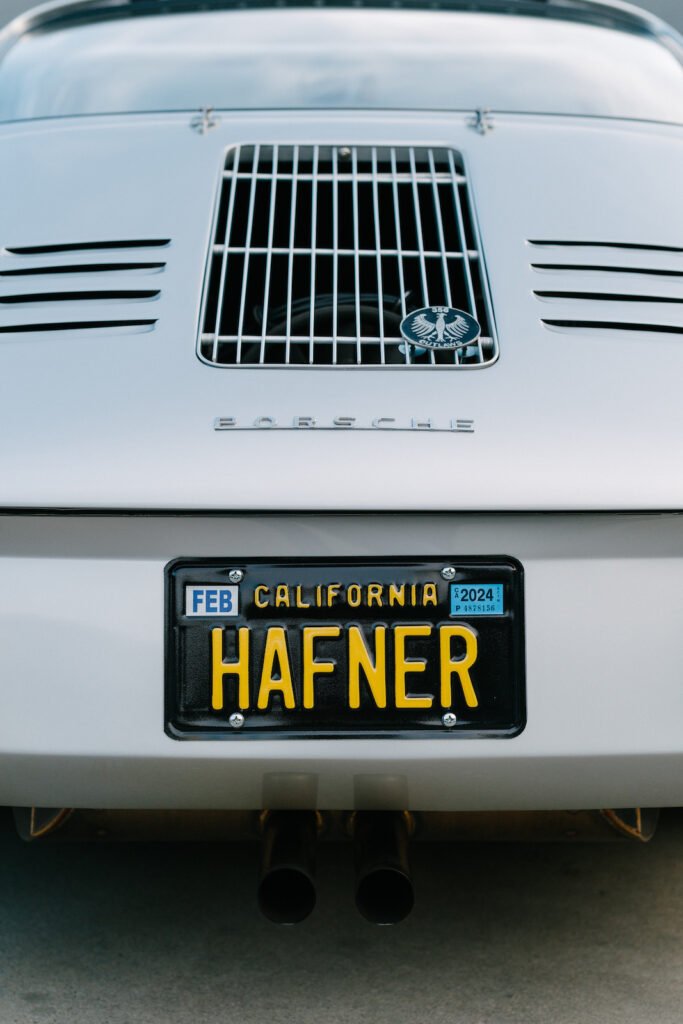
The result is a car that feels like it’s always existed. At first glance, it looks like a clean, original Porsche. But closer inspection reveals the countless hours of craftsmanship that went into it. “If you don’t know what you’re looking at, you might think it’s just a clean old Porsche,” Hafner says. “But for someone who knows these cars, it’s all there.”
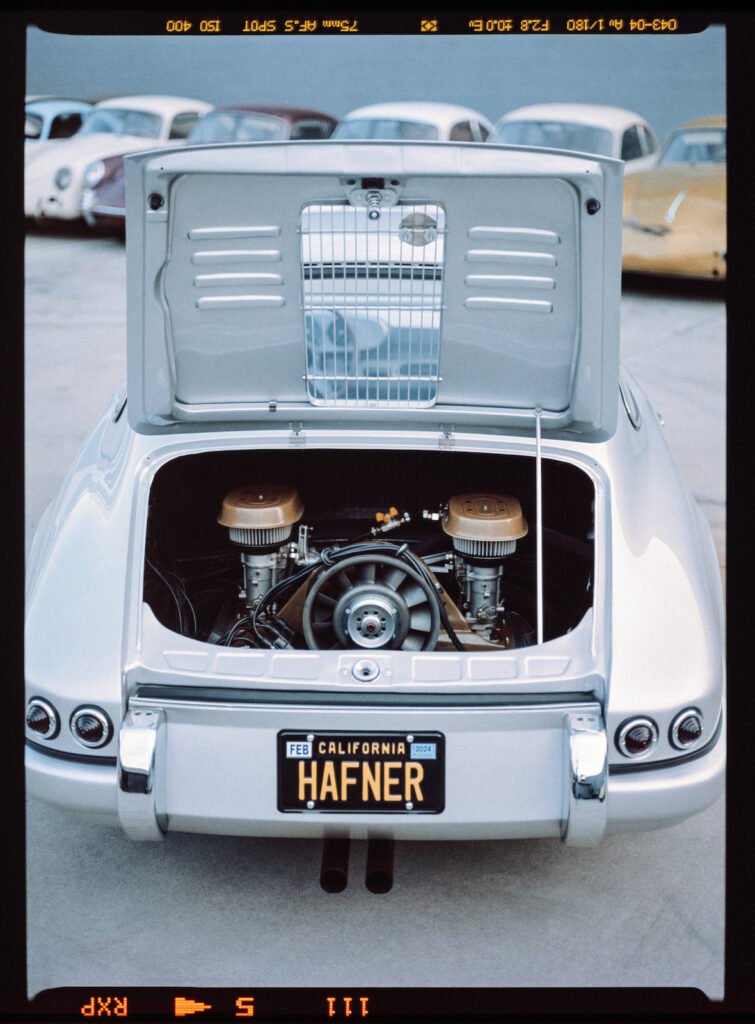
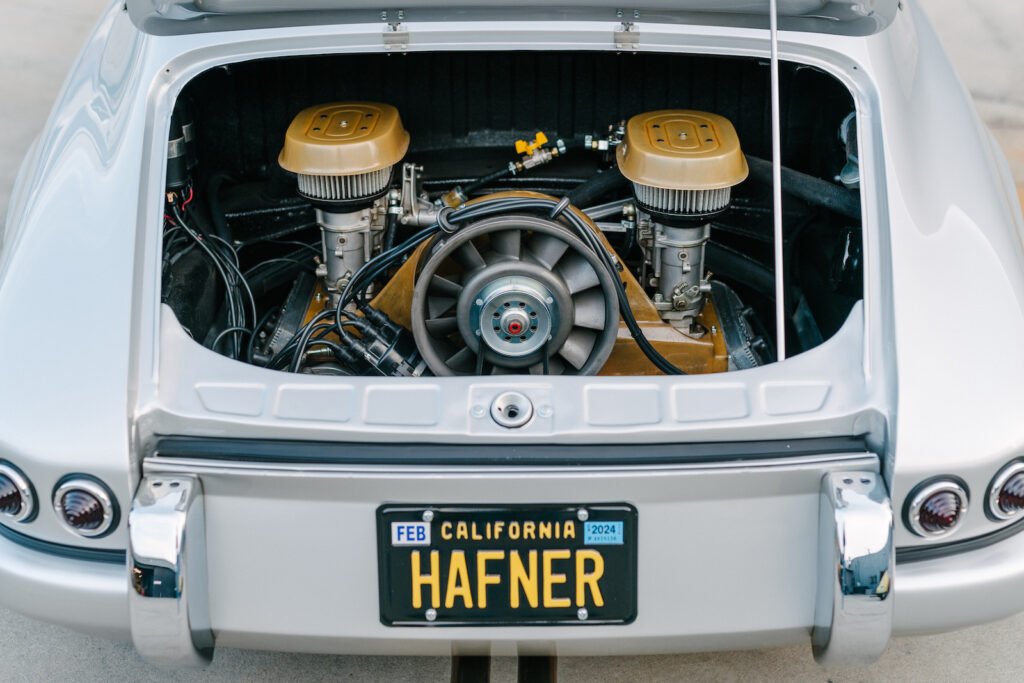
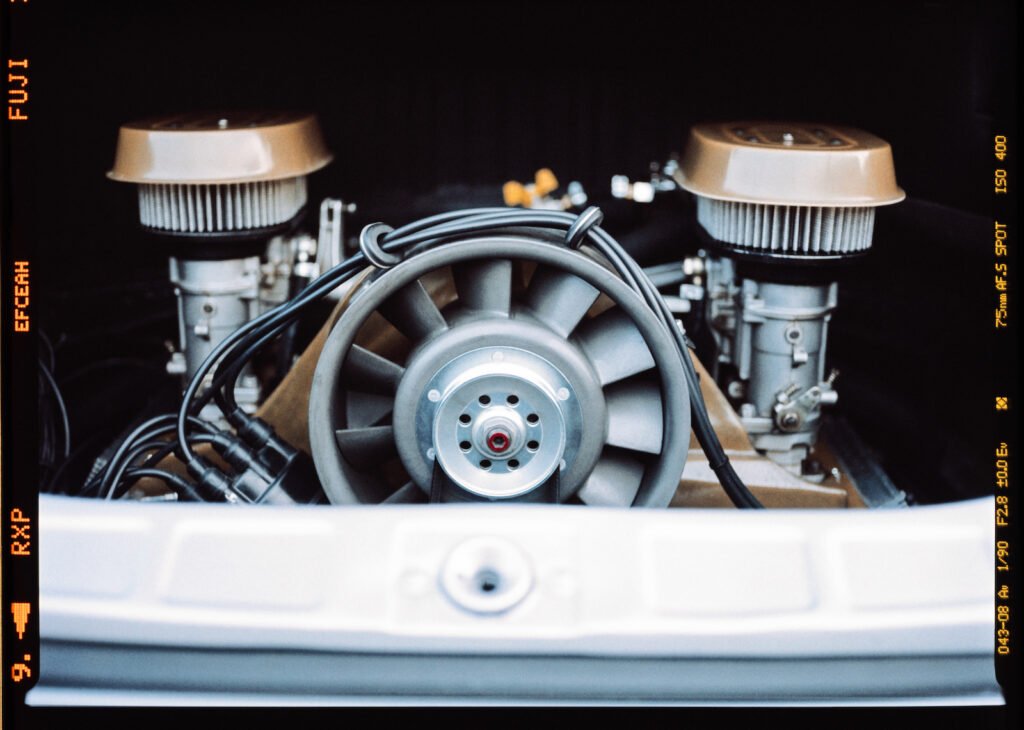

Hafner credits much of the success of the project to the support of his family and coworkers. “Rod was in full support of the build from day one,” he says. “He let me work on it in the shop and gave me the space and time to do what I needed. I couldn’t have done it without him and the rest of the team.”
From its rusted beginnings to its finished form, the car reflects Hafner’s own evolution—from borrowing tools in his teens to becoming a part of the Emory family and a master of his craft. Now completed, the 912 stands as “everything [he] wanted it to be.”
And at the heart of it all is a single, unassuming hammer. “That hammer touched every piece of metal on this car,” Hafner says. “I’ll use it until the day I die, and then, hopefully, my kids will use it. It’s part of the story now.”