
Wayne Ready is used to experiencing the world overturned; it has defined him, inspired him, tested him, rewarded him and most importantly, humbled him. Right from his earliest years, Wayne has needed to face, absorb and transform upending forces, and in many cases brazenly challenge those powerful energies head-on.
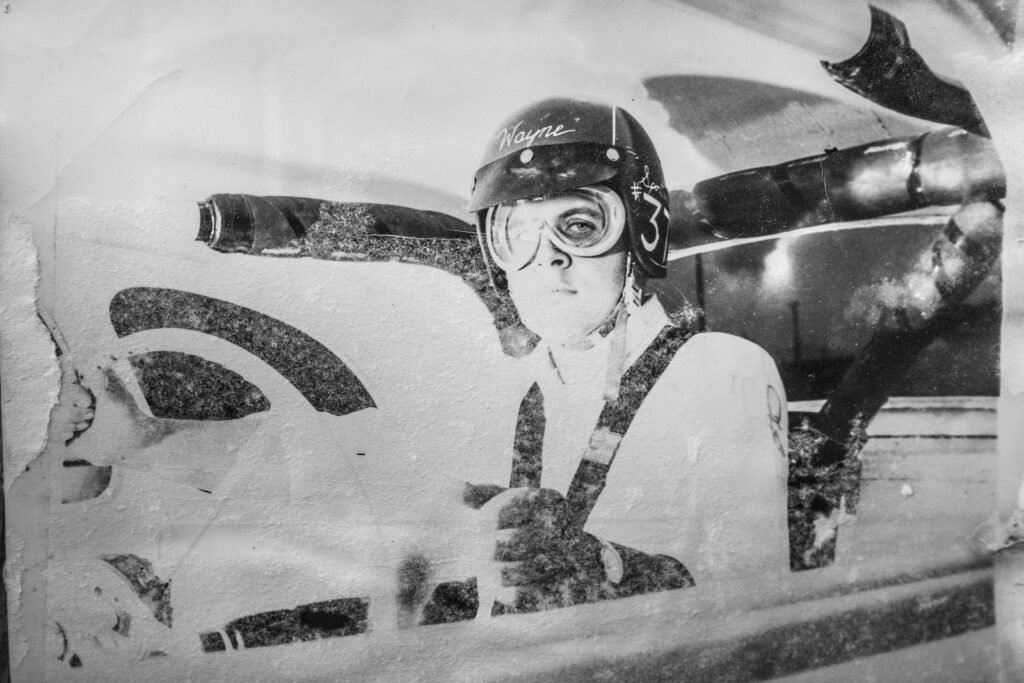
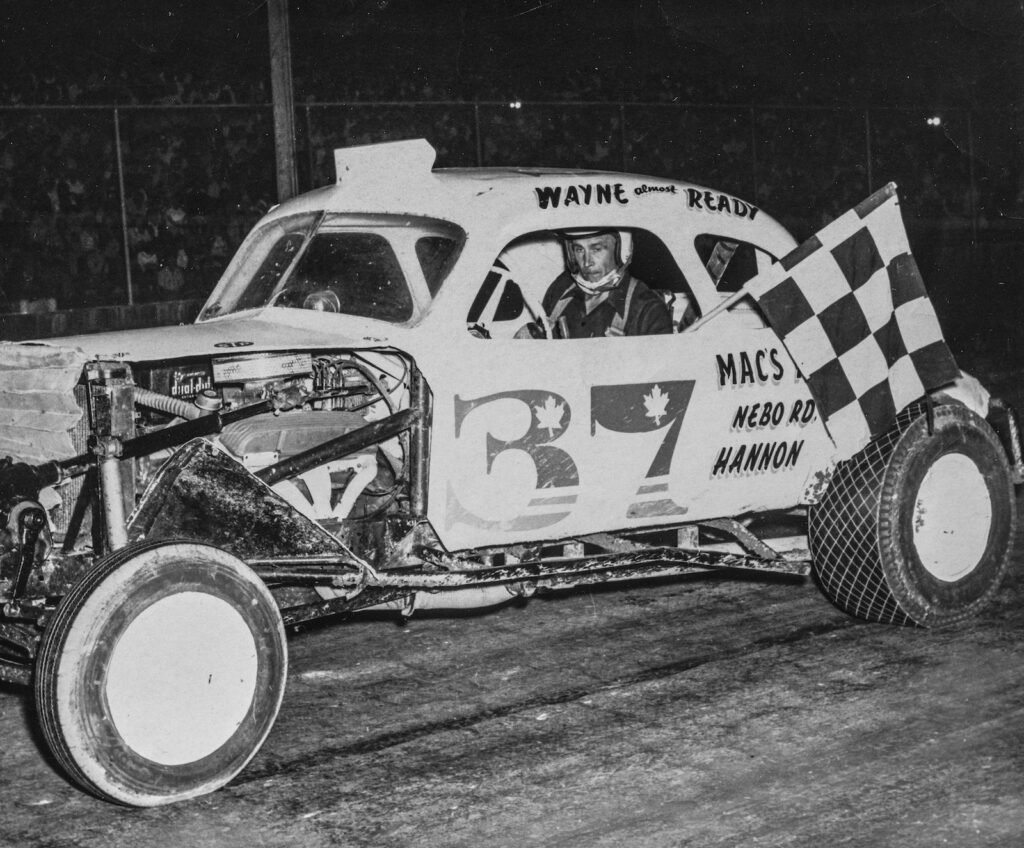
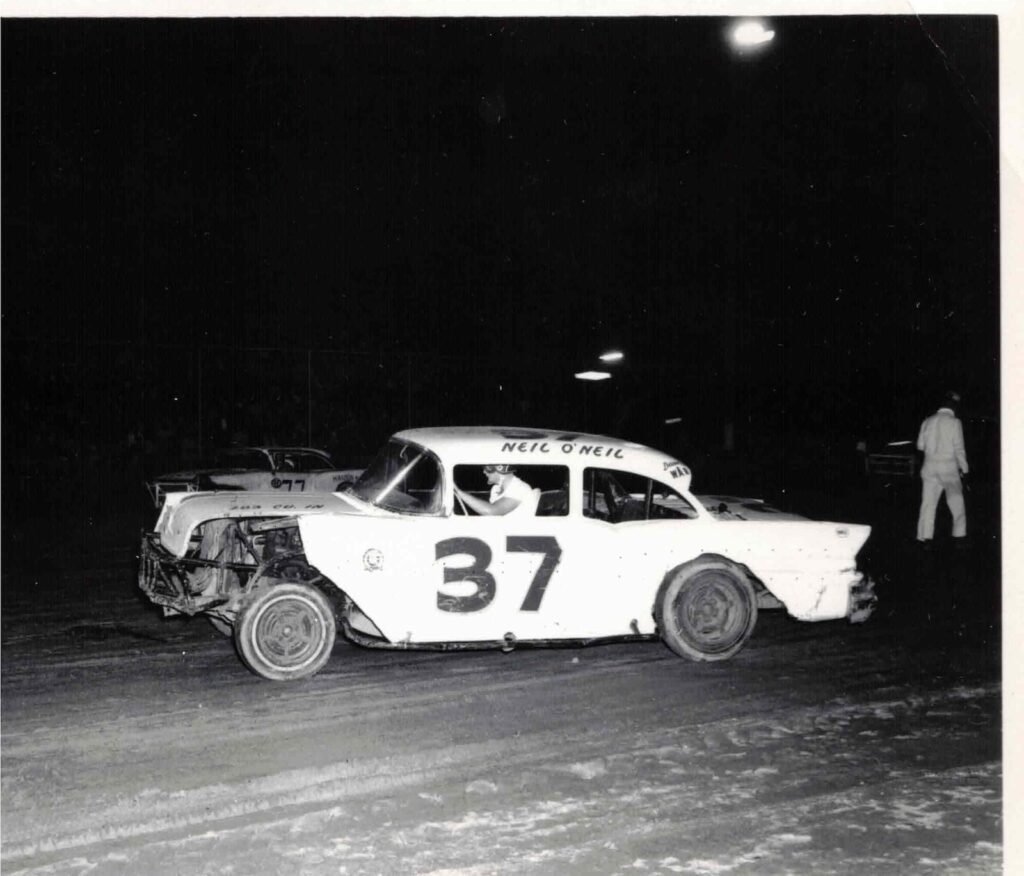
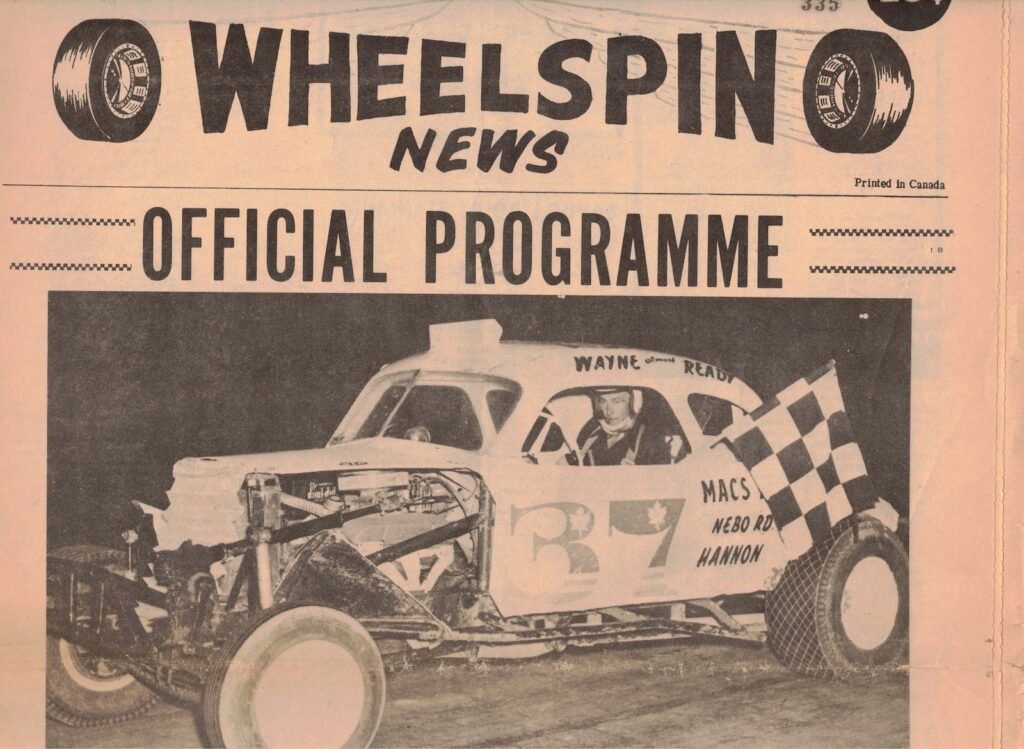
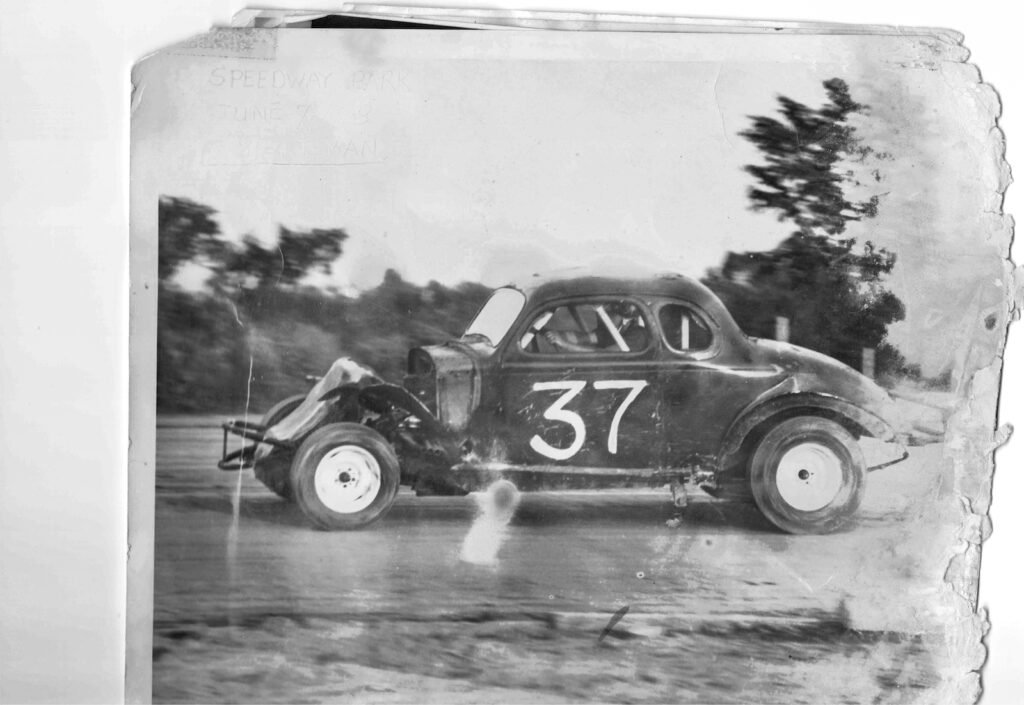
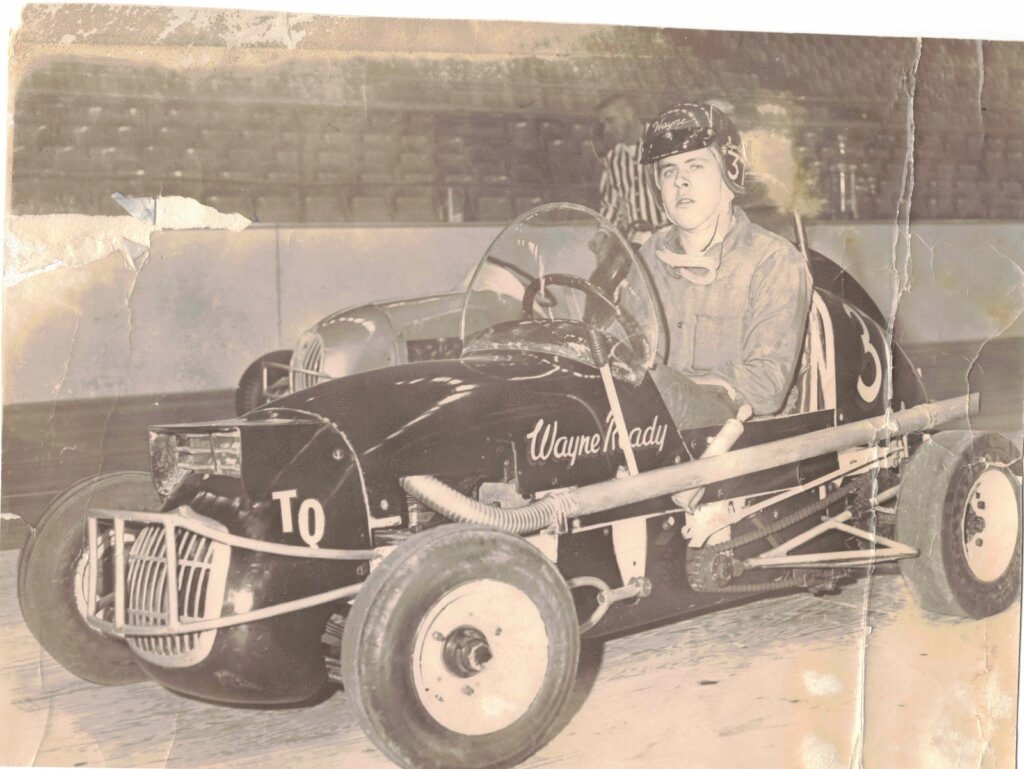
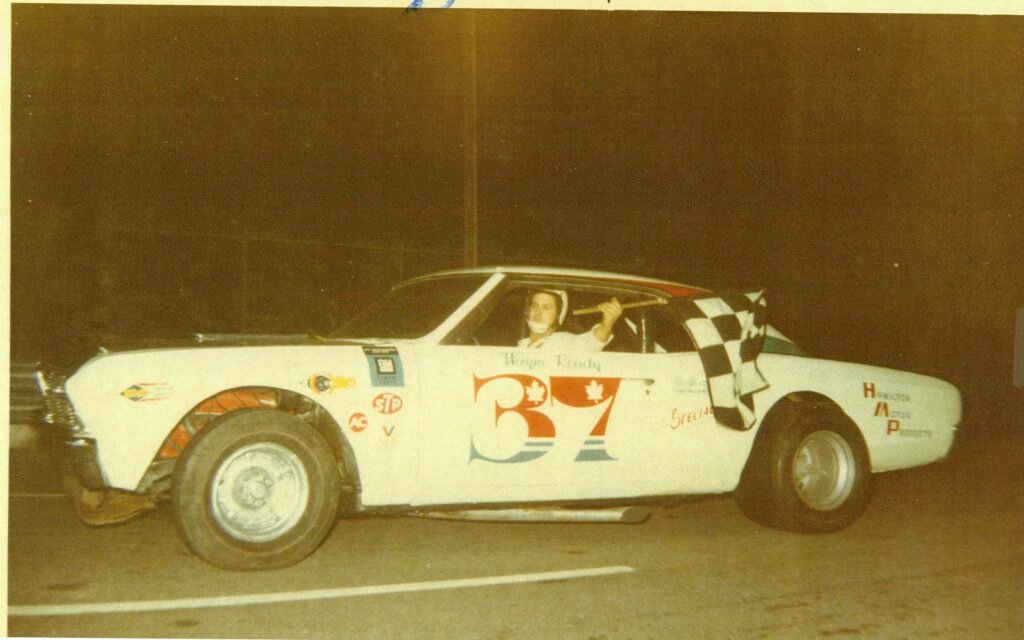
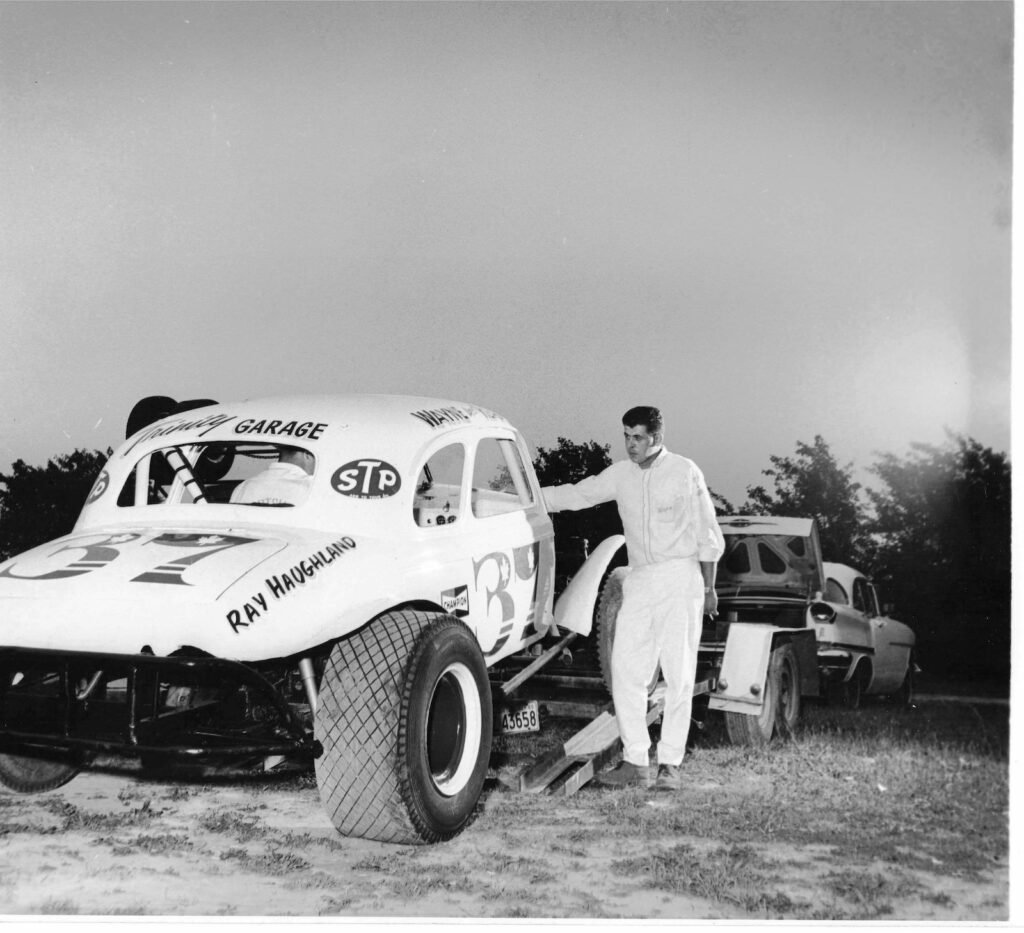
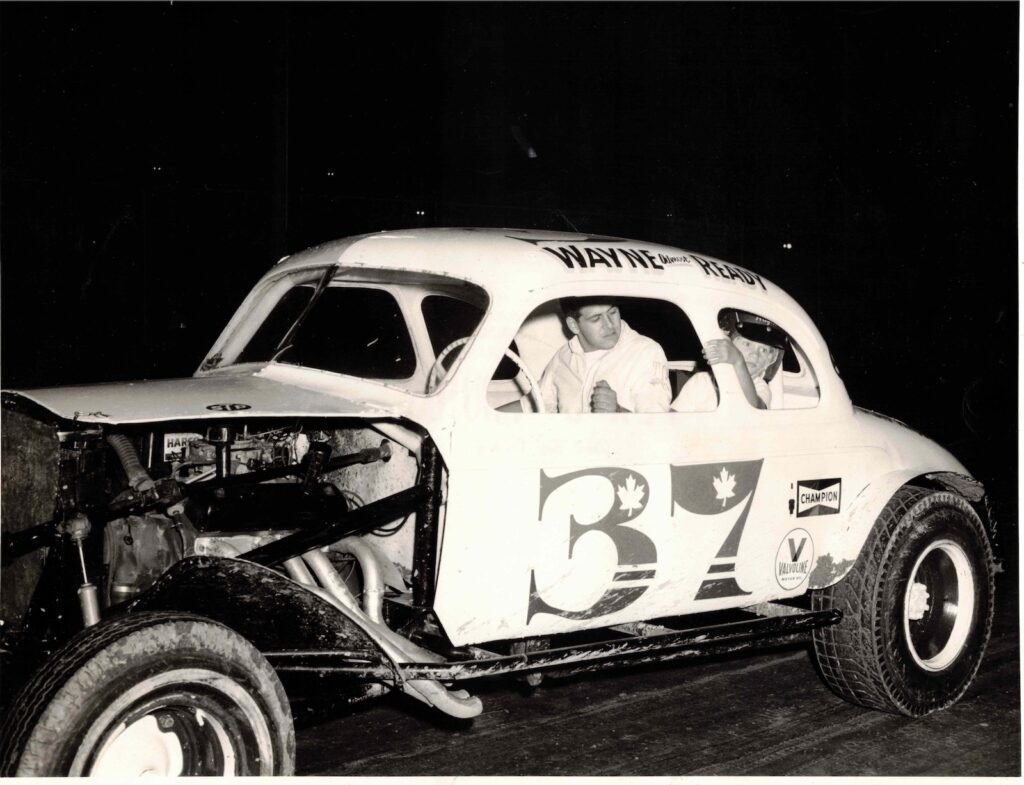
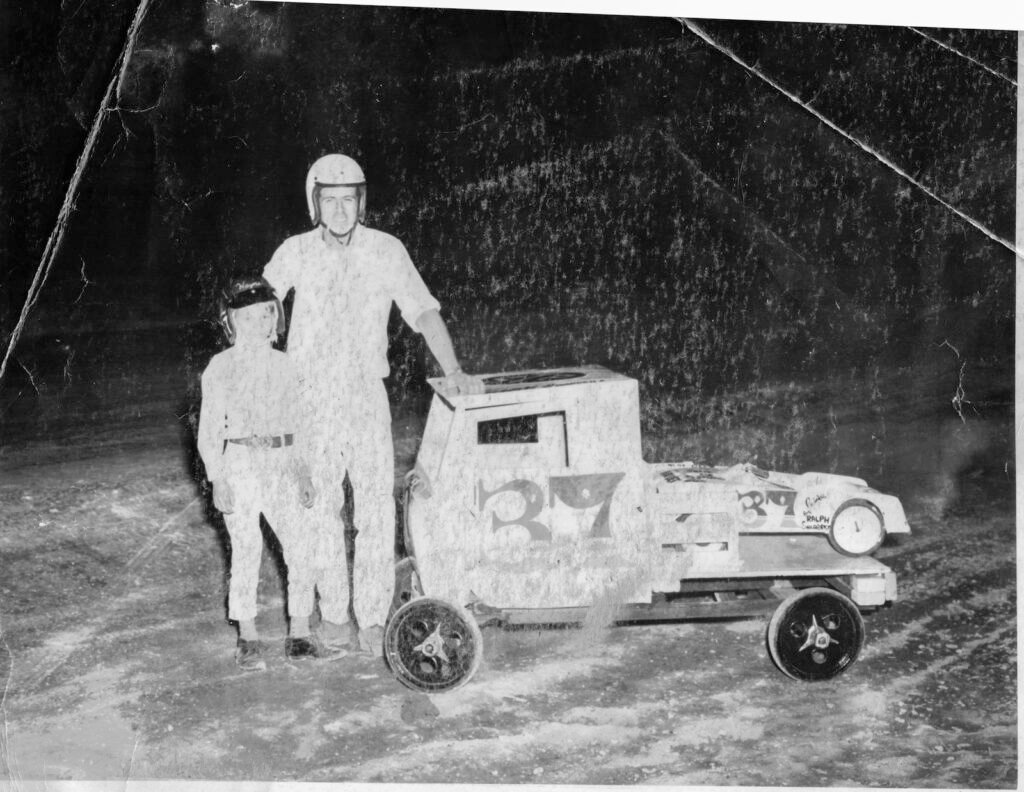
Even his emblematic racing number “37” is a result of turning his favourite racing number “73” on its head. The driver already using number 73 was still a year from retirement when Wayne started his racing career in 1958. Wayne simply mirrored his luck using his lucky number and flipped the figure to 37. It was a small bump.
Remarkably, the wheels of fate were irrevocably set in motion by the time Wayne was two and a half. Like many children of that time, Wayne lost his father, Gordon Ready, during WWII. Serving as an ace turret gunner, Gordon was downed in 1943 in a Martin Marauder twin engine bomber over the Mediterranean Sea as it flew from Tunis to Italy. Even though Wayne was far too young to fully comprehend, his life and future resolve were crystalized in that moment of tragedy and familial upheaval.
Kids can often be cruel. As Wayne moved along in the public school system, he found many kindred spirits who had lost their fathers in the war as well. They banded together for strength as they had to suffer the hurtful “momma’s boy” slurs from the other children. They taunted the fatherless boys excluding them from sports and brawling with them. A sarcastic, “what can a momma’s boy do?” was the common ridicule.
In that crucible of time, Wayne built up his courage and vowed to himself that he would show them exactly what a momma’s boy could do. He fixed that having his life overturned by his dad’s untimely death would be the fuel for his lifelong resilience.
Wayne was always mechanically inclined, and he was naturally drawn to racing cars as they were the physical expression of the most advanced, precision technology of the time. He loved to build, experiment, learn and improve. He soon discovered that the secret to building a better racing car was driving that racer constantly in the heat of competition.
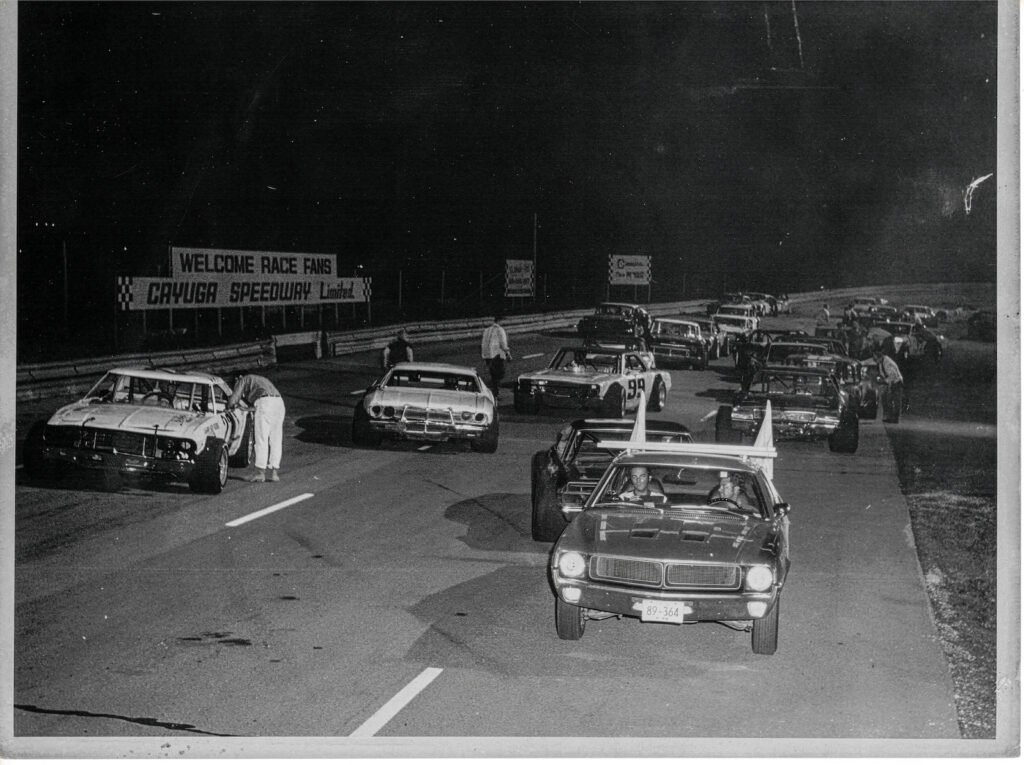
“It’s about the feel of the vehicle in motion and at its limits,” Wayne said with a knowing smile. “You can take a car for as many test laps as you wish, but until you are competing wheel to wheel with the adrenaline flowing, you’ll never really know the true mechanics of the car. Again, it’s all about the feel at the edge of performance. That’s where the answers are.”
Wayne always visited those edgy, “information-rich” and intense spheres while at the wheel and sometimes paid the price for the precious knowledge.
His cutting-edge and dangerous racing lifestyle garnered him quite a bit of attention and notoriety. Not surprisingly Wayne’s racing success created adoring female fans and that took him to the point where he was walking towards the altar. One night while routinely calling his fiancé, he made a mistake with the last number dialed on his rotary phone. A beautiful voice greeted him, but in short order he and the woman on the other end realized that an error had been made. They were strangers. Still, with that brief and unexpected interaction, something had been upended. After a hard look inside for the truth, Wayne found himself making the identical “mistake” with the rotary dial once more. I asked if he had remembered the mistaken number he had once dialed. He quickly replied, “You bet!”
Wayne and Sharon (the “chance” enchanting voice on the phone) just celebrated their 57th wedding anniversary. Wayne is quick to note that his racing career has always been hard on Sharon. “I am so lucky to have her as my wife. She’s put up with me, loved me and supported me. She is so resilient,” Wayne remarked with an obvious love and ease. He continued, “no matter the physical pain of an injury or the danger, it always seemed as though my family suffered the most. My race car and driving were the centre of my life. It had to be that way for me to be successful and remain alive. Sadly, my blood family always had to wait.”
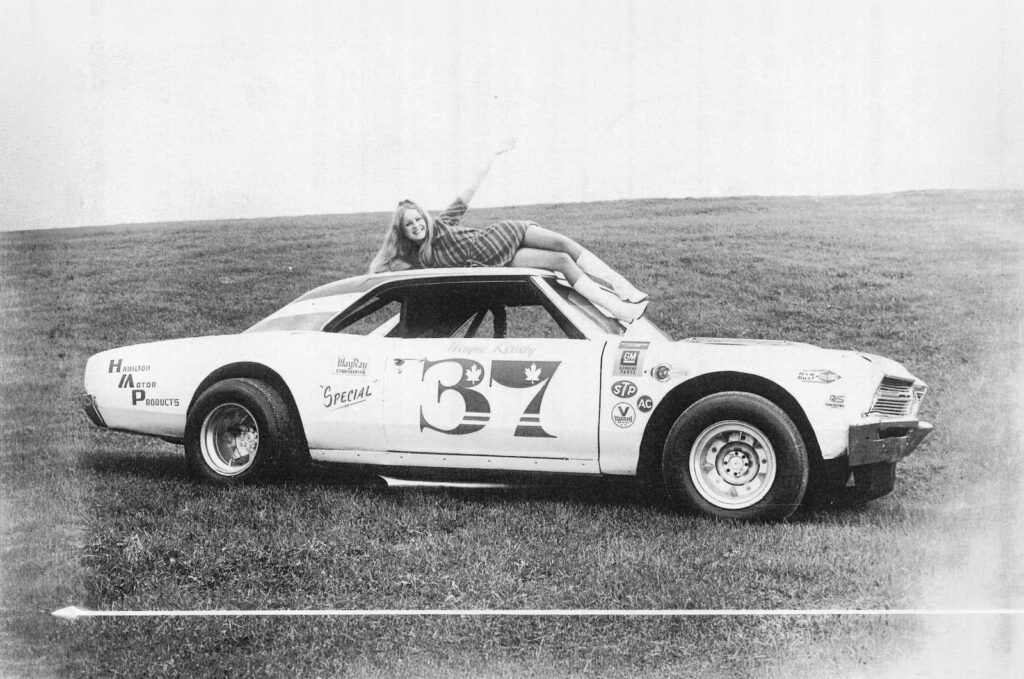
To that point, the added-on, three-day-a-week, six months a year racing schedule, plus the perpetual year-round shop time was hard on the driver and crew and almost unbearable for spouses and family. It certainly seemed as though Wayne’s priorities were on their head, but ironically it was necessary for Wayne to eventually be there, and whole for his family.
Crashes are a known reality for even the most safety conscious race car driver. To push the envelope and seek knowledge at the bleeding edge invites chaos. As Wayne alluded, a split focus with competing priorities is deadly. A full commitment to the moment and the microseconds of racing is mandatory, and one’s family must be barred from thought while racing. Still, the anxious family will always be there as one takes the checker flag or blinks back into consciousness. Stoically, and keeping true, Wayne considers himself very fortunate that his wife was not present the evening when he endured the most serious crash of his career.
Wayne was strapped into his finely tweaked 1939 Chevy Coupe, outside pole position at the paved Cayuga Speedway in1968. His race was the feature of the night. Little did he know that it would be the last time he rolled this beloved coupe up to position. The car barked off the line and took turn one and two with authority and grace. The back straightaway was a virtual flight path for the coupe as it accelerated effortlessly. Approaching the third corner Wayne methodically moved to tap the breaks to get the racer to settle down and put more weight on the front end for high-speed handling. The break pedal went right to the floor. The line had blown. Wayne was hurling into the corner with no means of slowing down. He instinctively pulled the wheel hard to the left trying to save the turn or at least minimize the impact. All he could think at that moment was, “this is going to hurt”.
The coupe scraped violently into the double ARMCO barrier and partially breached the top with the racer half riding the rail. Car parts flew in all directions as the barrier posts viciously beat the coupe and Wayne inside. The brutality was total, and all went dark as an eerie calm settled in.
Wayne opened his eyes slowly and was astonished at the dead calm around him. He climbed out of his carefully engineered cage that had just saved his life and rested up against the ARMCO barrier with the demolished carcass of the coupe beside him. “I could not get over the calm,” he recalls with a wistful stare.
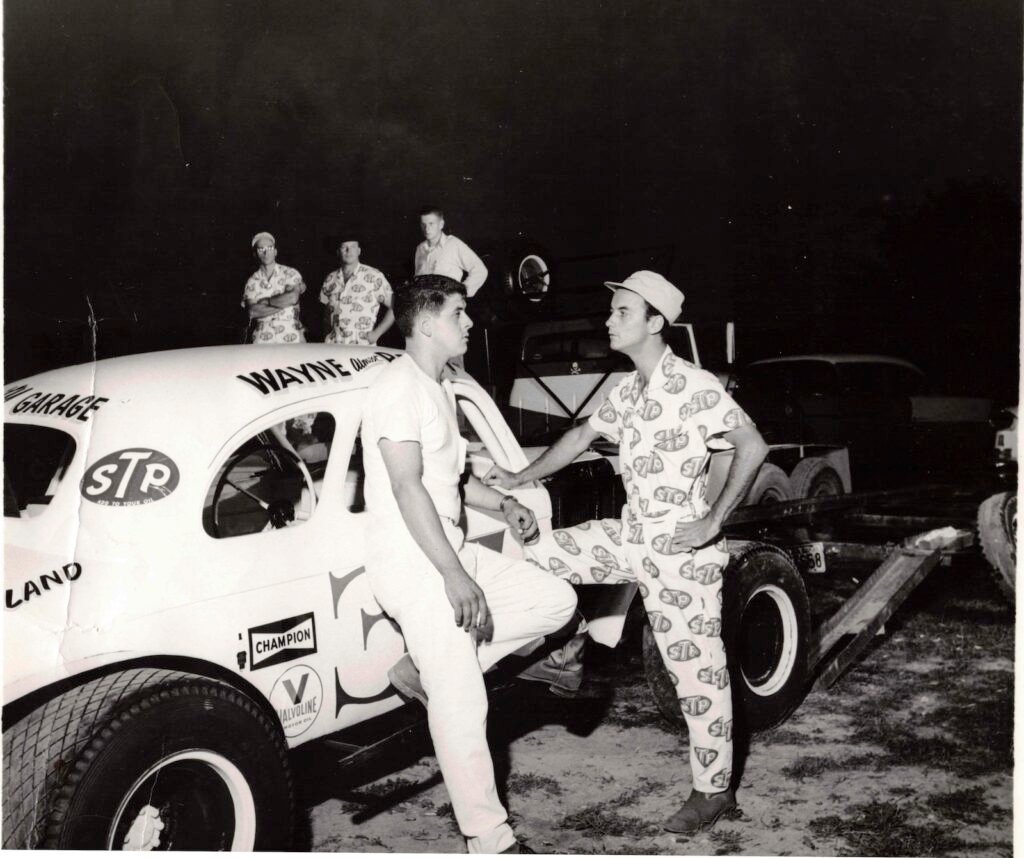
Almost instantly, as Wayne now remembers, his dear friend and lifelong racing partner, Ray Haughland was at his side making sure that he was OK. Sirens could be heard, and people were rapidly approaching but there was still a haunting calm. In the “quiet”, Wayne noticed Ray moving towards a dislodged front wheel assembly twisted in front to the car. Ray proceeded to pick up the substantial piece, and he heaved it through the front windshield of the wrecked racing car.
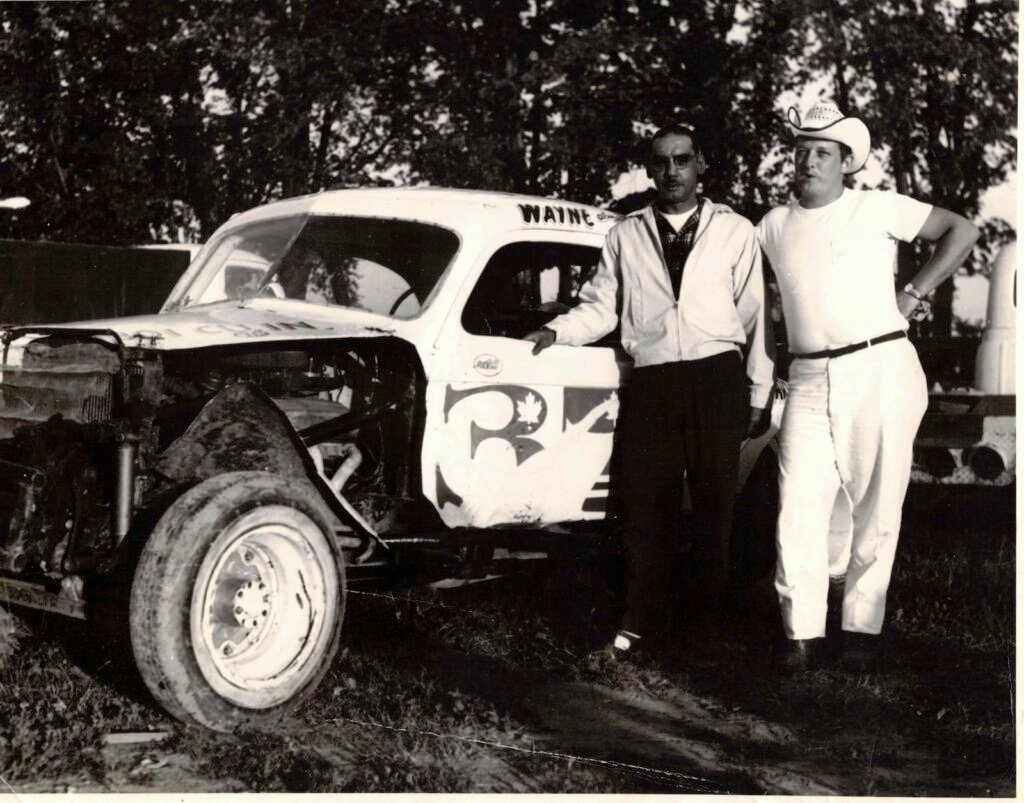
“Why did you do that, Ray?” Wayne asked with an innocent inflection. Ray simply replied, “the windshield was the only thing that didn’t smash, so I thought that I might as well get it done with.” Wayne was fortunate that he walked away with only a messed-up shoulder and more bumps and bruises than he could count. Still, he was alive and would be ready to race again. The coupe conversely, was done.
All the pieces were collected, placed on a converted race car hauler (beefed up truck), and driven to Wayne’s home shop. He did not want his wife Sharon to see the hulking mass knowing that it would scare her, but she did the next morning as the car lay contorted and in pieces on the hauler. With fear, tears and the reflection of the wreck in her eyes she said to Wayne, “you know that you could have been killed, don’t you?” Wayne replied as a race car driver and not necessarily as a husband with, “the structure held and I am here.” Sharon fell silent and her sad eyes became fixed as she glared back. Sitting forward in his chair, Wayne quietly returned to that remembered moment wondering if, at that time, Sharon really absorbed his enthusiastic embrace of the risks of racing or if she just welcomed another hard layer of emotional protection until she could claim Wayne back after his racing retirement.
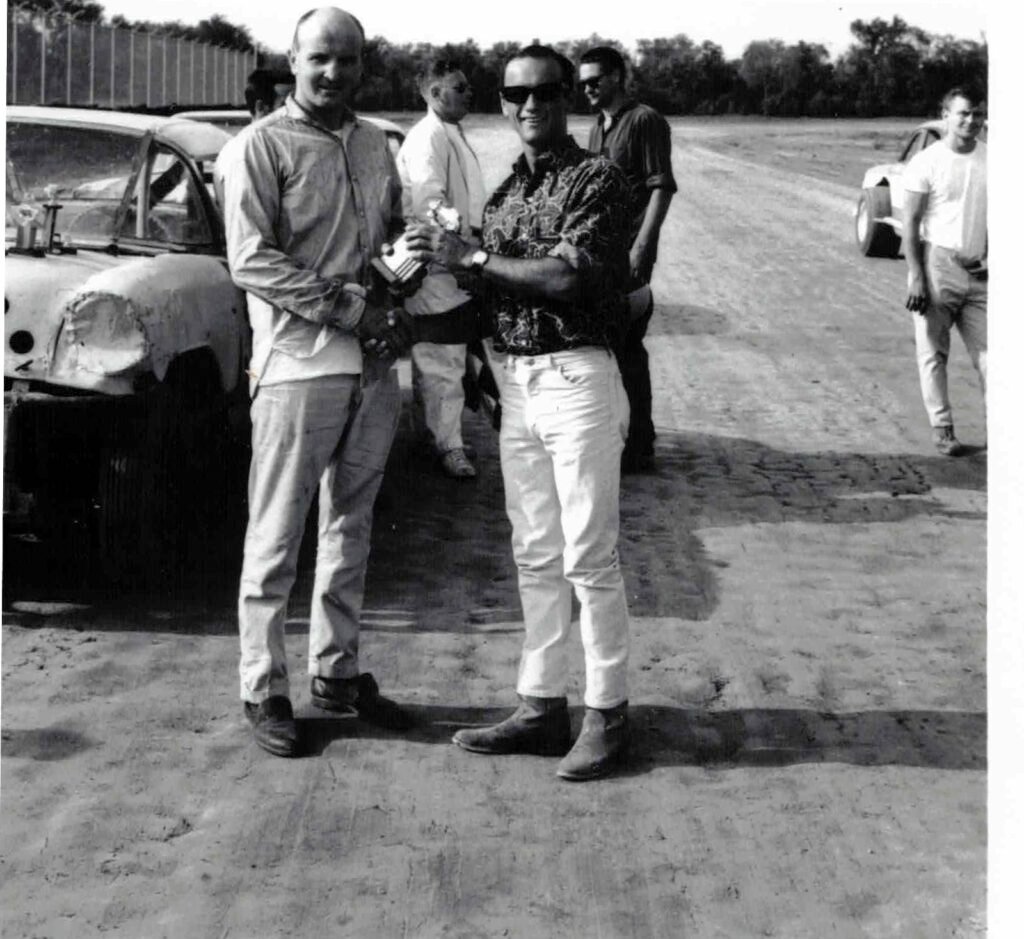
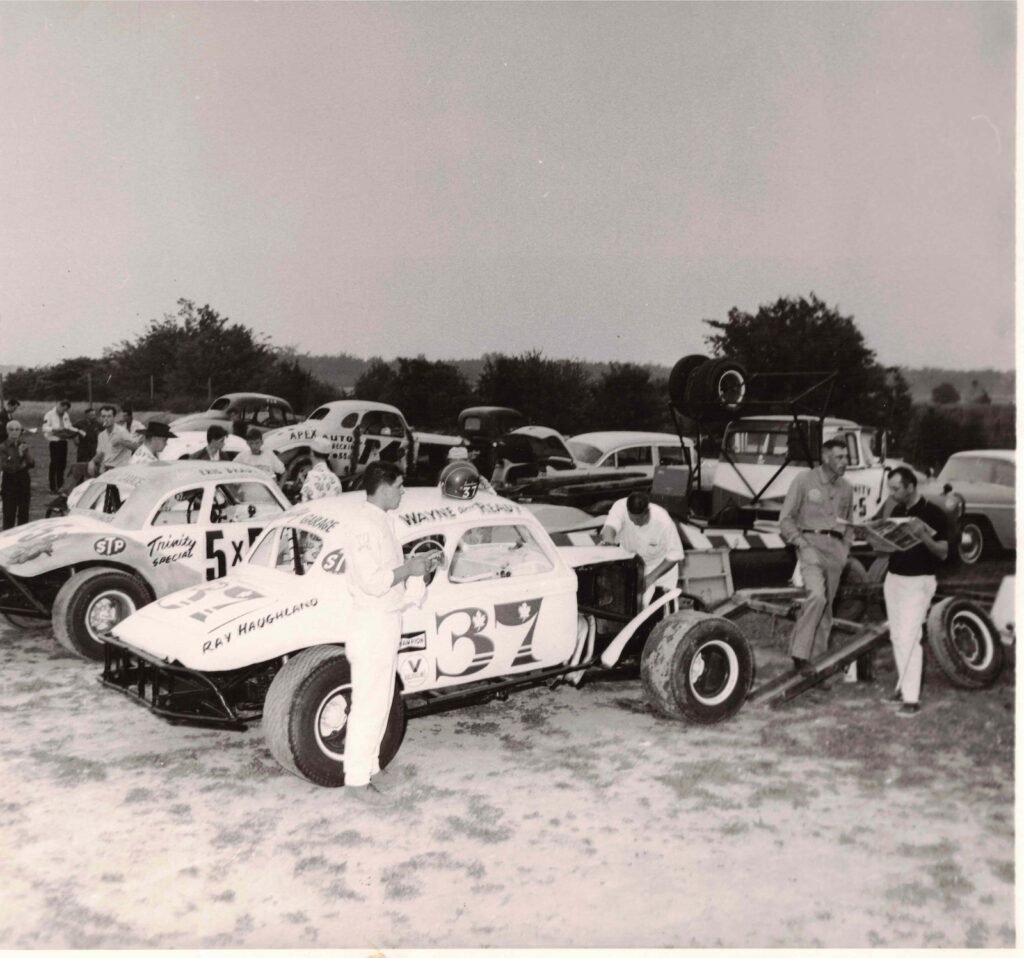
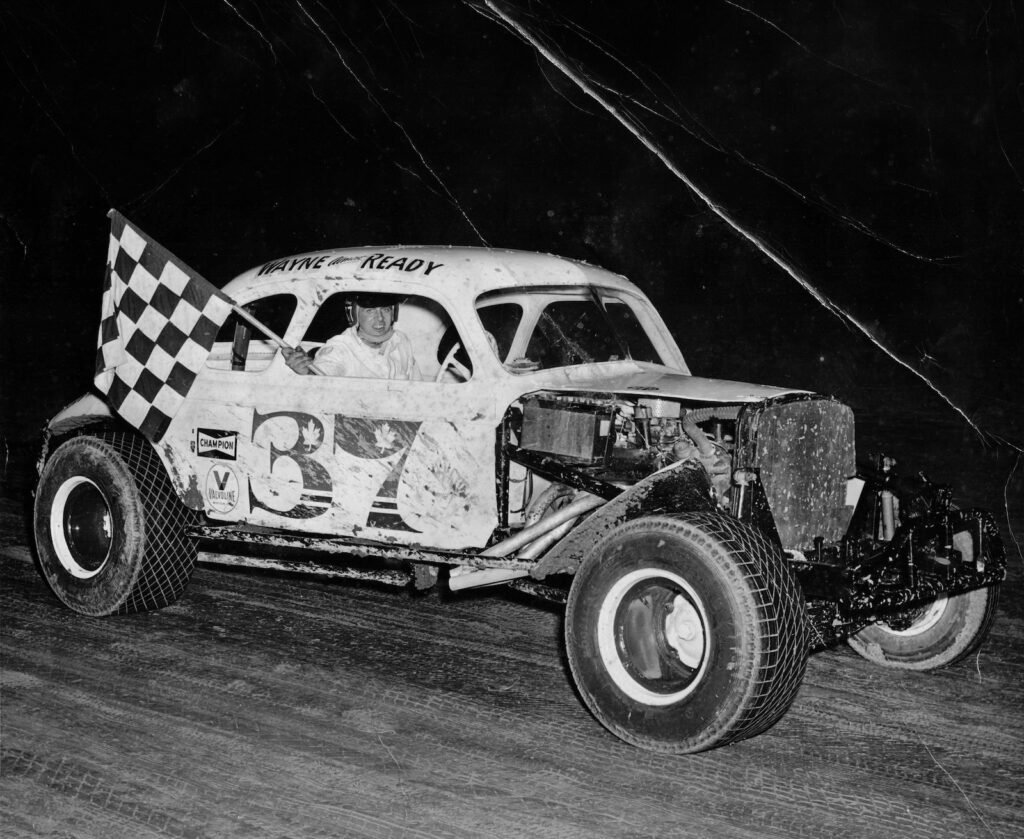
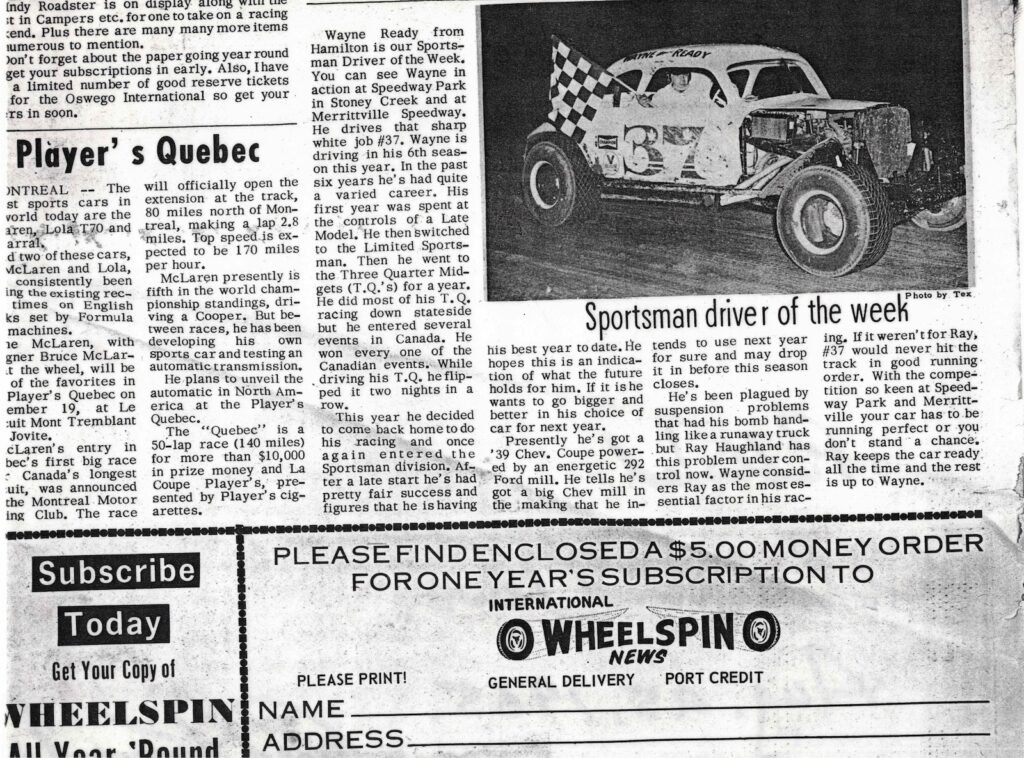
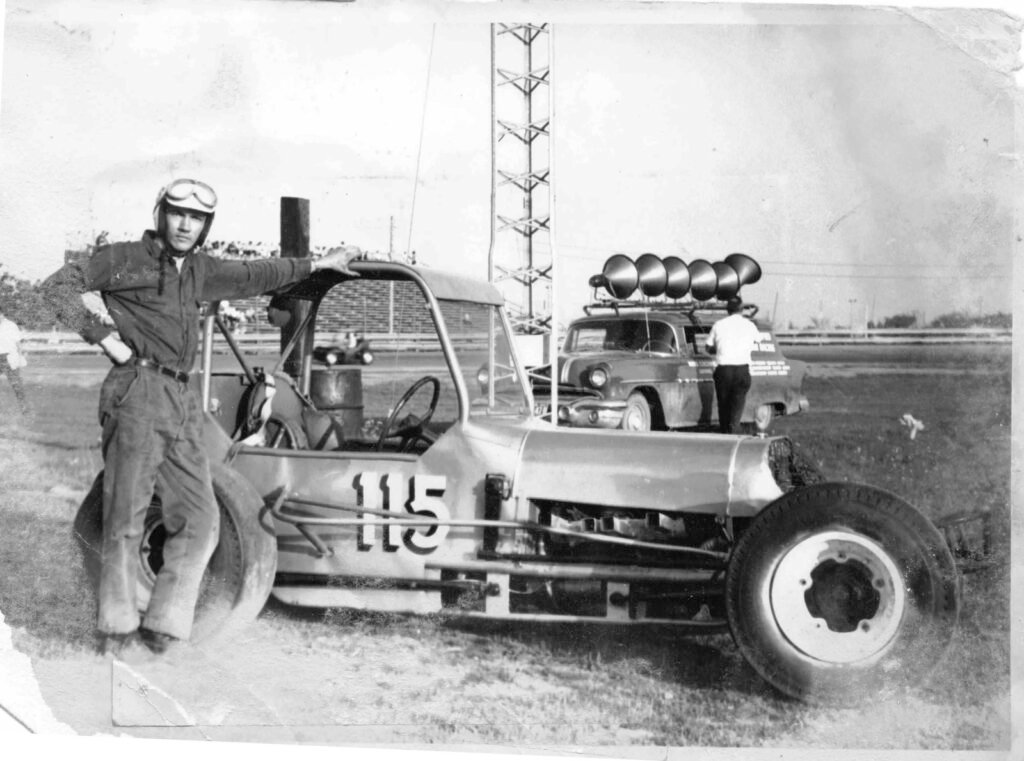
Wayne was always one of the best car builders and the crash gave him the opportunity to start again from scratch and apply all the knowledge he had gained over his decade of racing and experimentation. From Wayne’s short-lived “first-attempt-jalopy-racer” to his two year long, Midget ¾ racing days (while he built the coupe), he continued to push and dream. Early on with the Midget racer he gained experience with high 12.5 to 1 compression and what that did to normal spark plugs. He worked with the manufacturers and discovered specifically that cold plugs were the answer to blowing out regular plugs at every turn. With the increase in power from the high compression, Wayne continued to test the limits of the Midget racer and flipped upside-down in the car, twice. One of those times he watched inverted as aviation fuel fell onto the hot carburetor drip by drip. He considered his current luck in surviving and the knowledge he had gained. Still, “It was like watching the game clock tick down – drip, drip…” Wayne recalls, “but I knew that I was not done and the game was not over.”
Applying his hard-won knowledge to the construction of the newly envisioned 1976 Chevelle, he also had the opportunity to move up a class from Sportsman to Stock Car Division with his brand-new racer. Prophetically, fate’s leading hand did emerge from the dust of the crash and within three days, Wayne and Ray found an ideal Chevelle base, and they got to work immediately. The season-ending coupe crash was mid-run, so they had precious few months to be ready for the new spring schedule. The Midget was the stop gap to keep the information flowing in the interim.
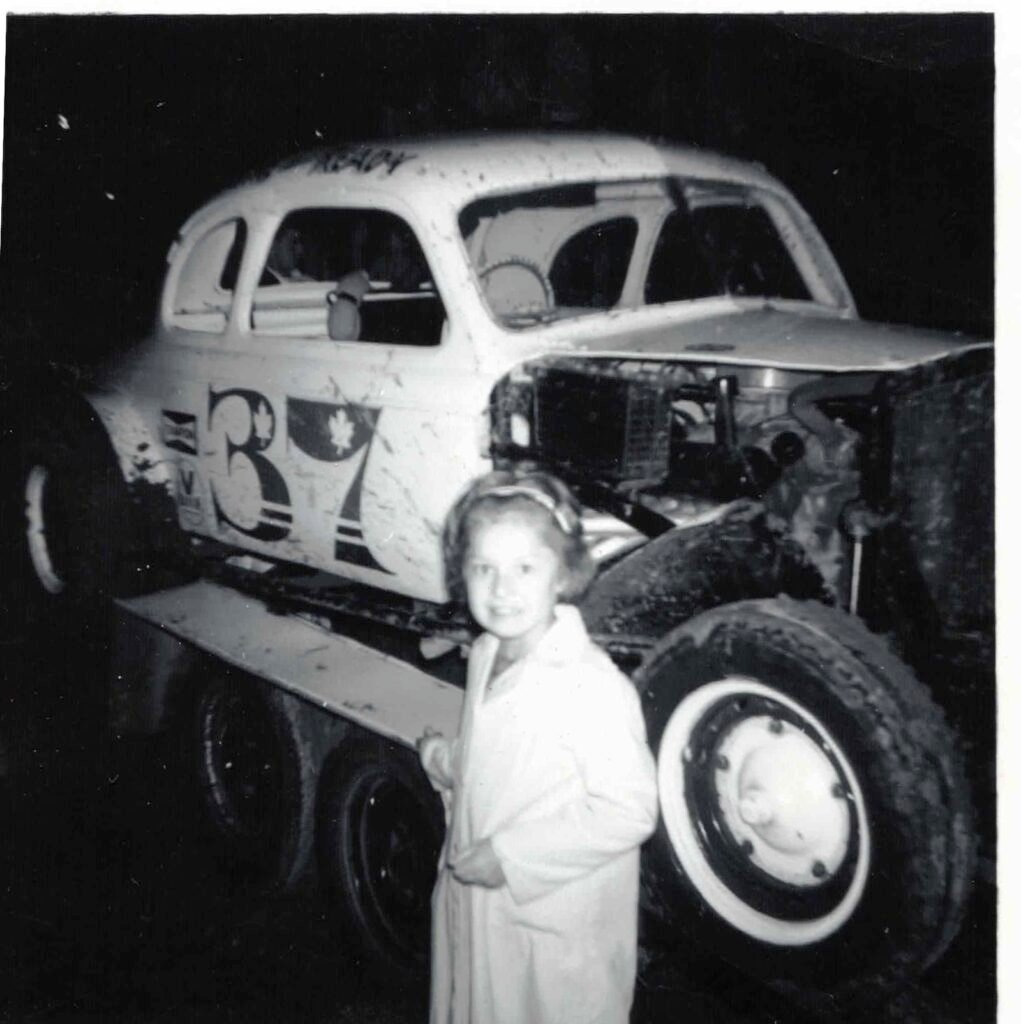
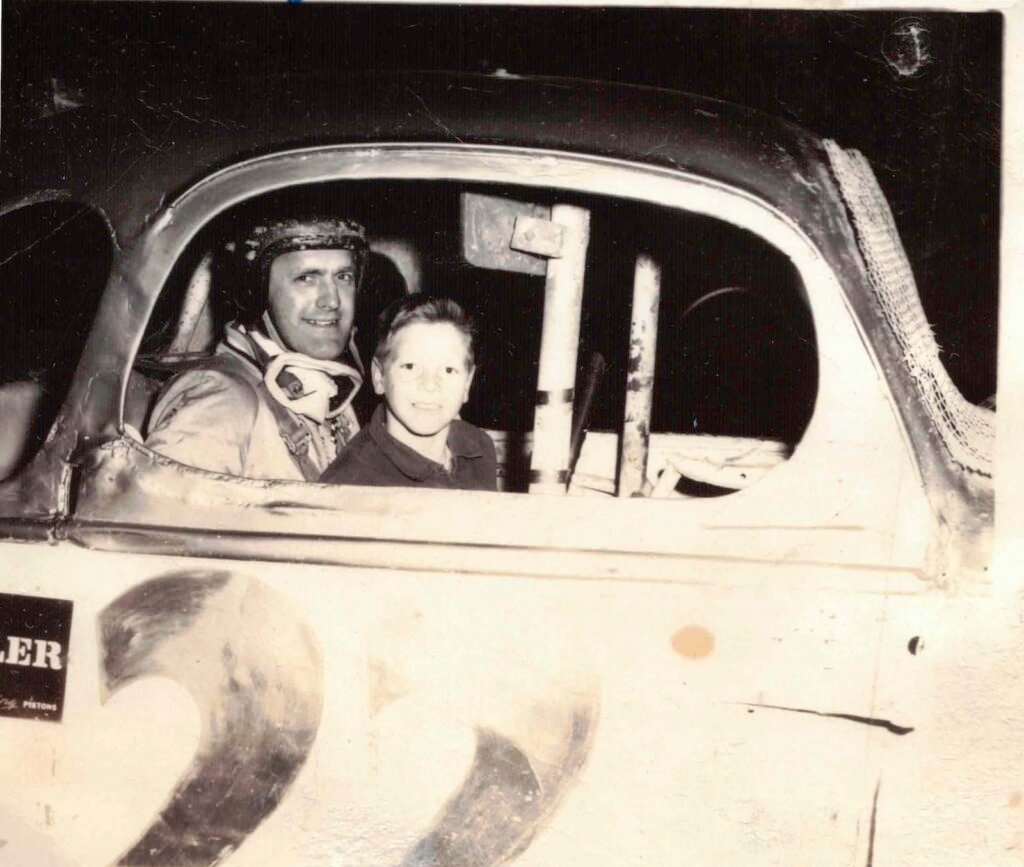
Wayne continued his winning ways with his custom, and constantly upgraded 1967 Chevelle until his retirement in 1975. Wayne was particularly proud that the Chevelle was built almost entirely to “Daytona Standards” and that its look was always impeccable. In its day, that car was considered the machine to beat.
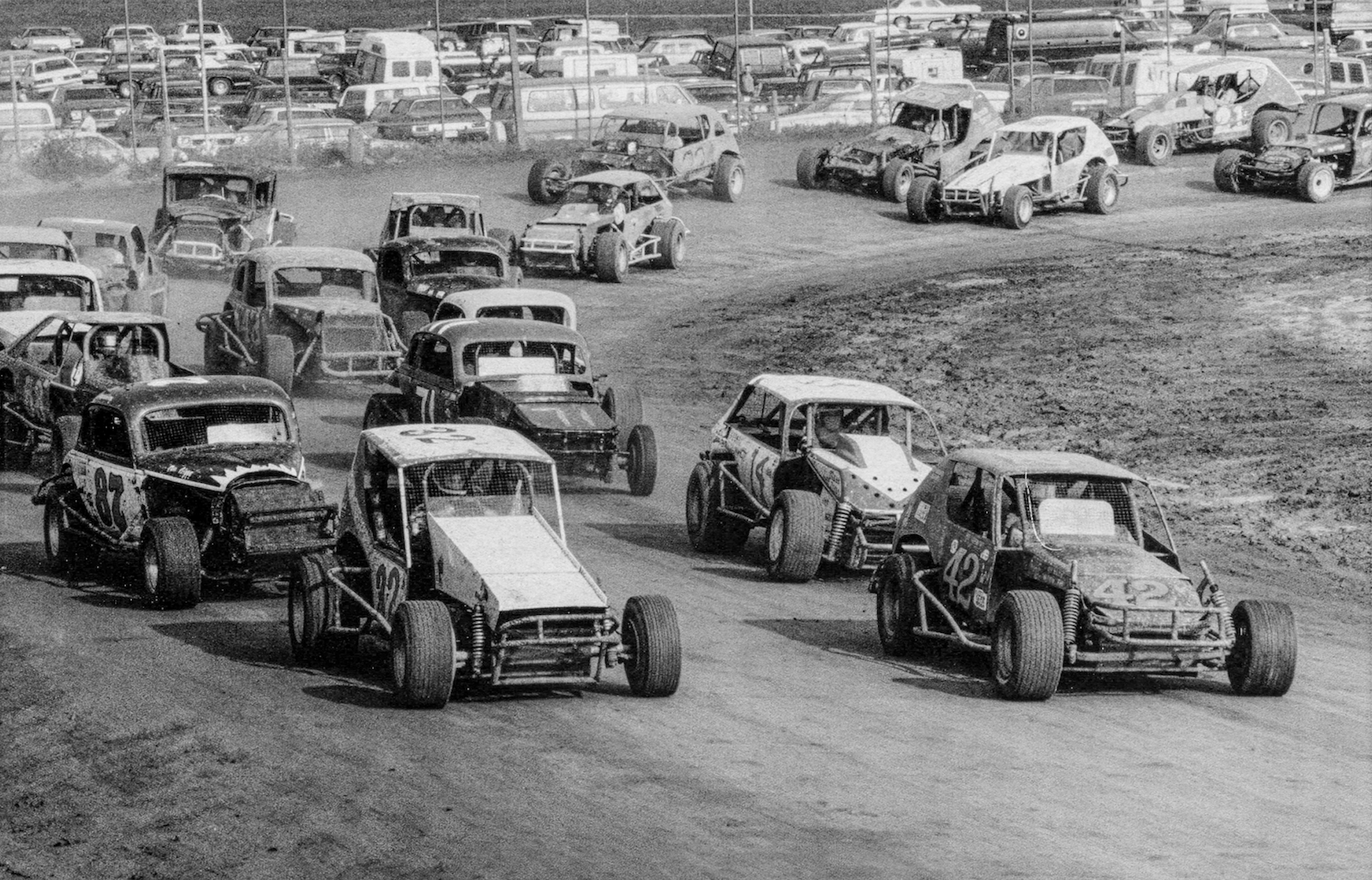
As a lifelong mechanical innovator, Wayne, currently a robust 84 years of age, continues to advise the Shadwell Racing Team. During his 17-year racing career he challenged at Hamilton Speedway Park, Cayuga Speedway, St. Catherines Merrittville Speedway plus journies to Rochester, Waterloo and Buffalo New York. At every race it was always about the car and its performance.
I asked Wayne about his most memorable victory. He paused for quite a while with his chin resting lightly on his hand and I could almost see the parade of checker flags going through his mind. He finally levelled his gaze at me and said, “They were all important – every race – each one taught me something new. One race does not stand above the others. Yet, the constant was always humility, safety, and respect for the sport and drivers.”
Wayne settled back in his chair and with a gentle smile.
“You know, my mom never objected to me racing, even at 17 years of age. She just gently reminded me to be careful. She also followed up with a wink and observed that I was just like my father: full of adventure. Not bad for a momma’s boy.”