Every time Rolex releases a new Daytona reference, it’s a big deal. Among Rolex’s celebrated sports watches, the Daytona sits at the pinnacle of desirability and, thus, market hype.
This year marks the 100th anniversary of the Oyster, the waterproof case that set Rolex apart from its competitors a century ago. With that in mind, fans of the brand expected some special references to mark the occasion.
Anyone who follows Rolex knows it has a history of doing what it wants rather than what people ask for. However, this year’s releases suggest a subtle shift in its ethos. There are some small details that hint Rolex is finally acknowledging the collector community, a task it had, until recently, delegated almost entirely to its sister brand, Tudor.
The modern Rolex approach to watchmaking is a balance of staying true to the models that built its success, while improving them ever so slightly year after year in pursuit of the perfectly engineered timepiece. It is an ongoing process of new patents being filed and new materials introduced to create a more robust and technologically impressive watch. The core DNA of the original design is intact but distinct in each era.
As with Porsche, the design language stays the same while nearly everything else changes over the decades. Until recently, new references have always been forward-looking and Rolex seemed indifferent to the watch enthusiast community. After all, as one of the world’s most recognized brands, Rolex hardly needs to cater to a small group to sell its watches.

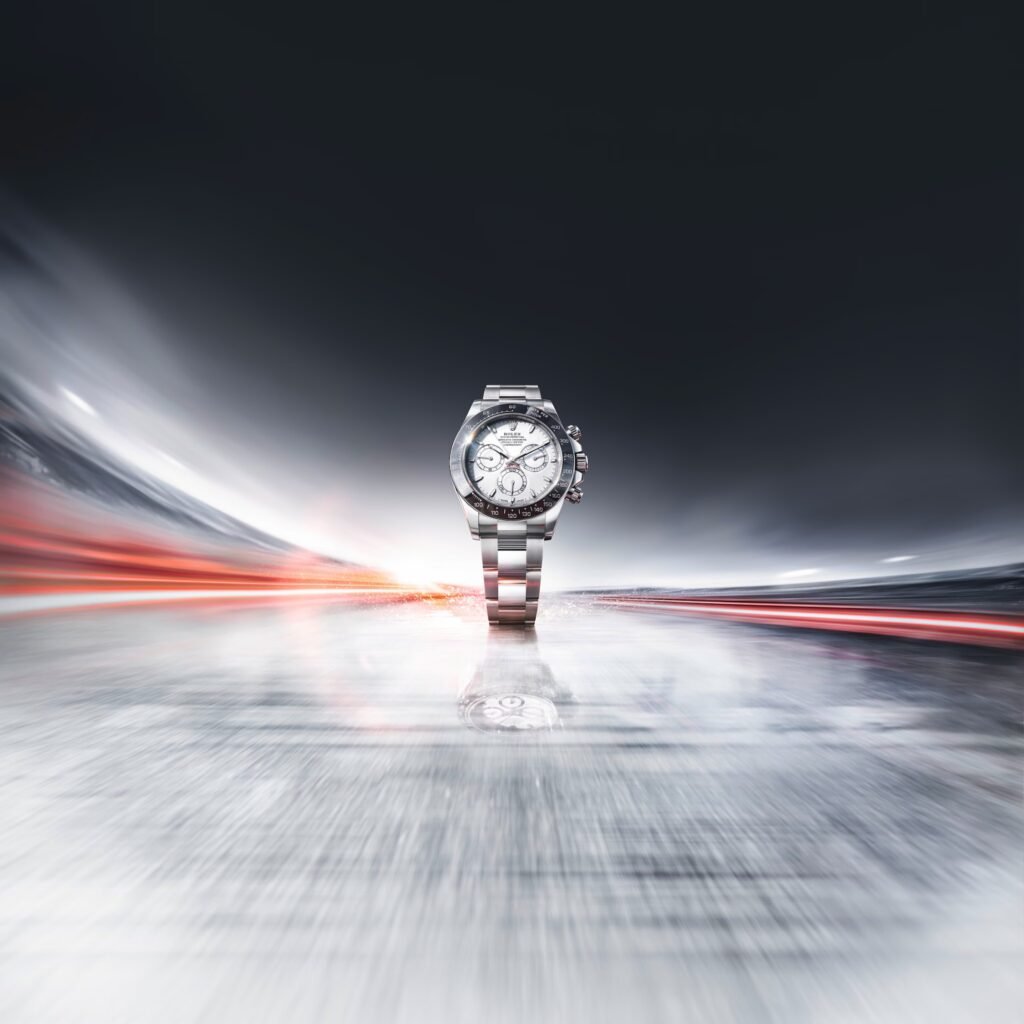
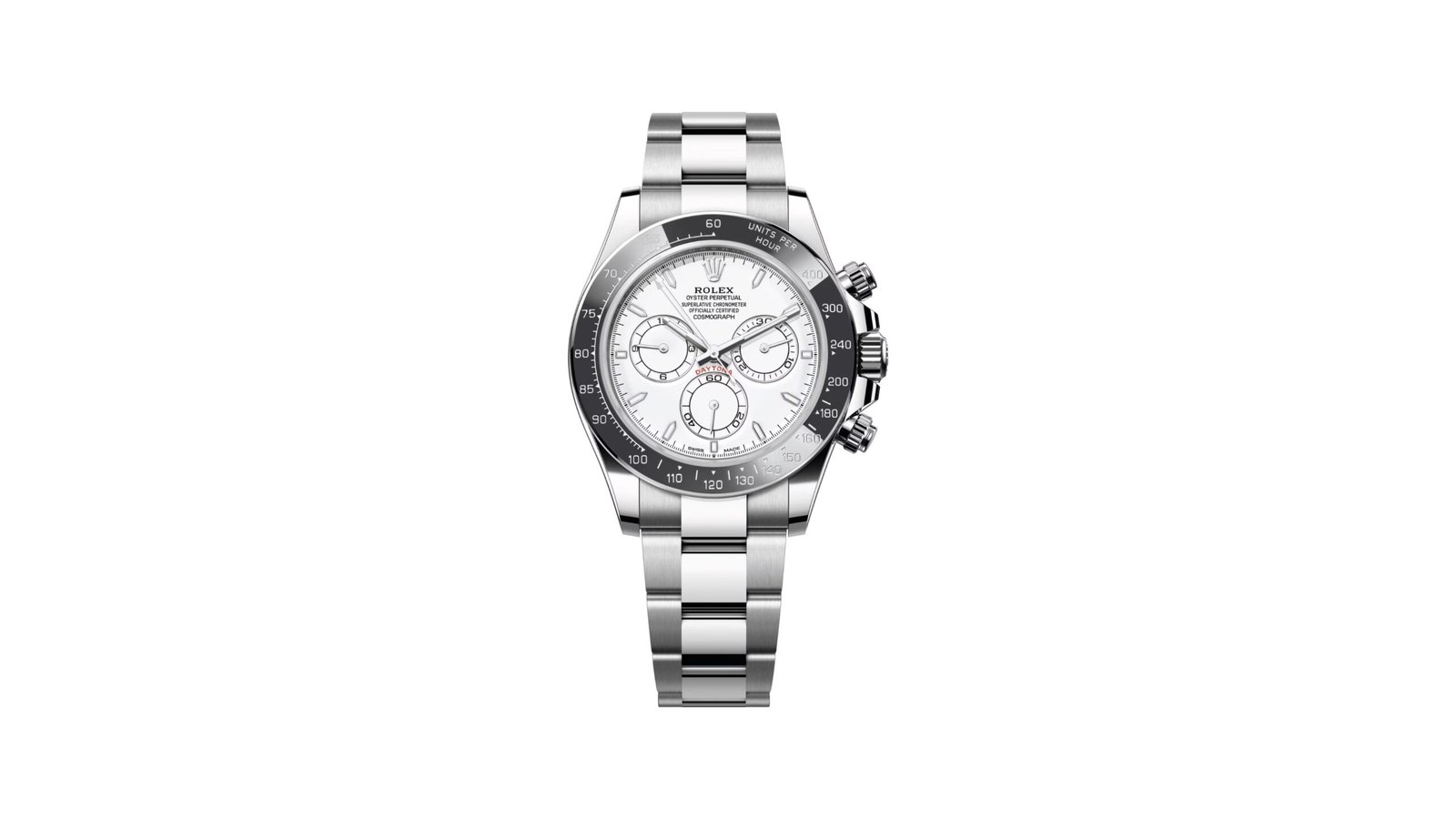
This new reference 126502 looks like a white-dialled Daytona on the surface. The case combines Oystersteel and platinum in a configuration Rolex calls Rolesium – a first for the Daytona. Platinum edges the ceramic bezel and forms the ring securing the sapphire caseback. However, it has several new elements that make it extra special. First, consider the dial.
The dial is created using an enamelling technique called grand feu, in which enamel is applied to ceramic components and fired in a kiln at more than 800°C to achieve its distinctive sheen. Due to the high failure rate, the technique is usually only seen in small-scale production.
There are entire brands that have built their reputation on enamel dials and are able to outsource the rest of the watchmaking. To see it incorporated into in-house manufacturing is a feat, especially when you consider that Rolex controls every other aspect of the production.
Offsetting the dial is the Cerachrom bezel in a new anthracite shade. To achieve this new metallic colourway, Rolex developed a new process of enriching the ceramic with tungsten carbide. The tachymetric scale on the bezel is a signature of the Daytona. Developed to measure speed, it is in fact what makes this a racing watch. Without it, the Daytona is just a chronograph.
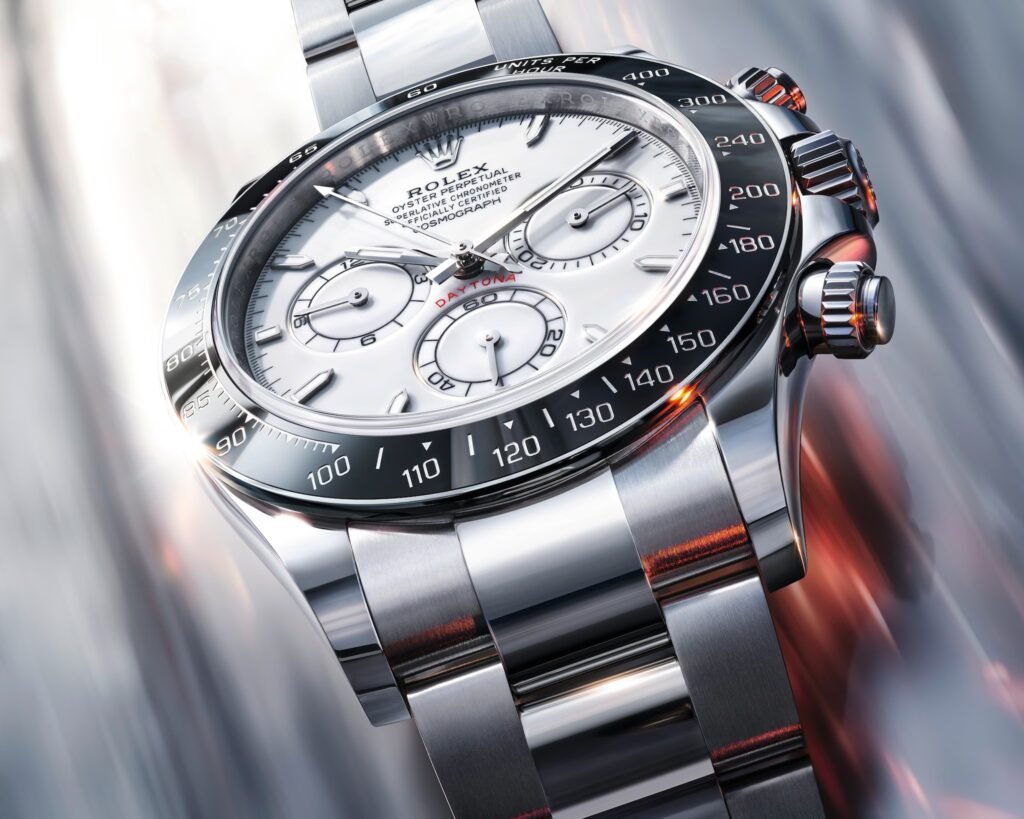
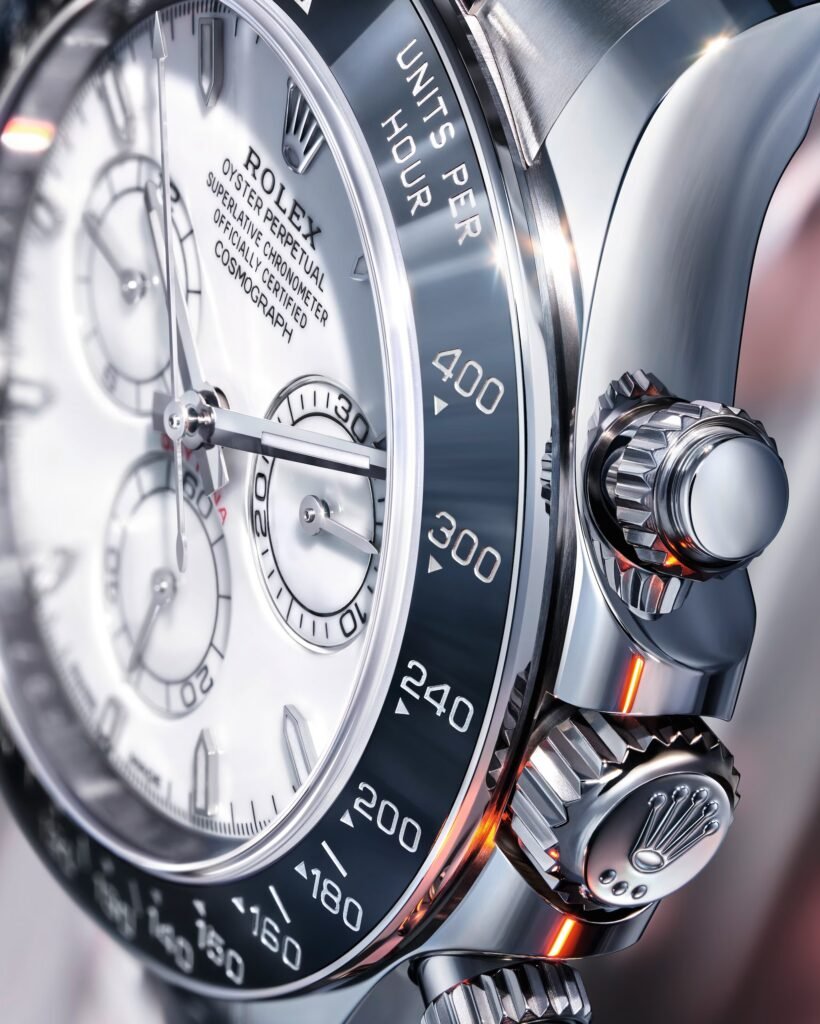
On all modern Daytona models, the numerals run around the bezel and invert as they go around. Breaking tradition with all modern references, the numerals on this watch now stay upright without inverting, a direct nod to the original 1963 model. As a watch enthusiast (read: nerd), these little details feel like a wink from the notoriously austere brand.
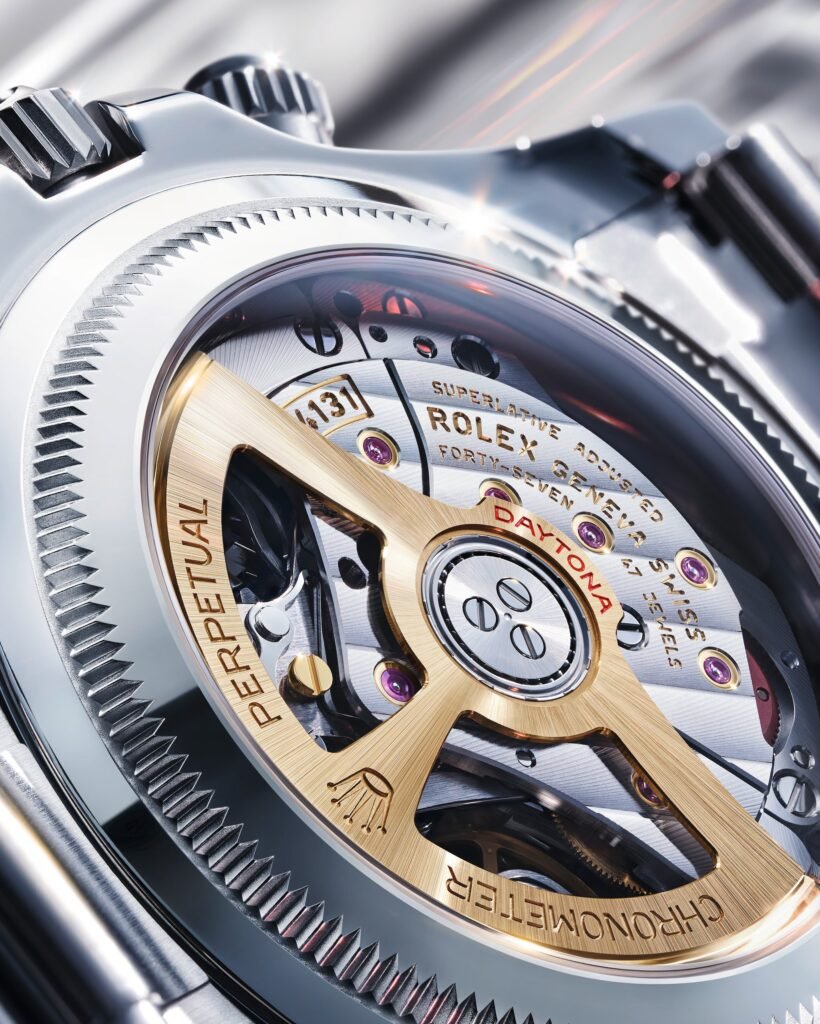
Another special feature is the sapphire caseback that allows owners to see the mechanical movement. Previously seen on the platinum Daytona and the gold references celebrating the centenary of the 24 Hours of Le Mans, it’s particularly noteworthy on a (mostly) steel watch. The sapphire features an anti-reflective coating on the inside, which is a very Rolex thing to do.
Given that the caseback is hidden when the watch is on your wrist, taking the extra step to reduce glare when gazing at the calibre 4131 movement is as awesome as it is unnecessary. The trade-off with a sapphire caseback is that you often add unnecessary thickness to a watch. At just over 12 mm thick, this Daytona will still slide comfortably under any cuff.
Speaking of movements, this modern chronograph movement is resistant to magnetic fields, can run for 72 hours without being wound or worn and features Rolex’s signature Chronergy escapement. The openworked yellow gold oscillating weight is visually interesting and the bridges are decorated with Rolex’s own version of the Côtes de Genève.
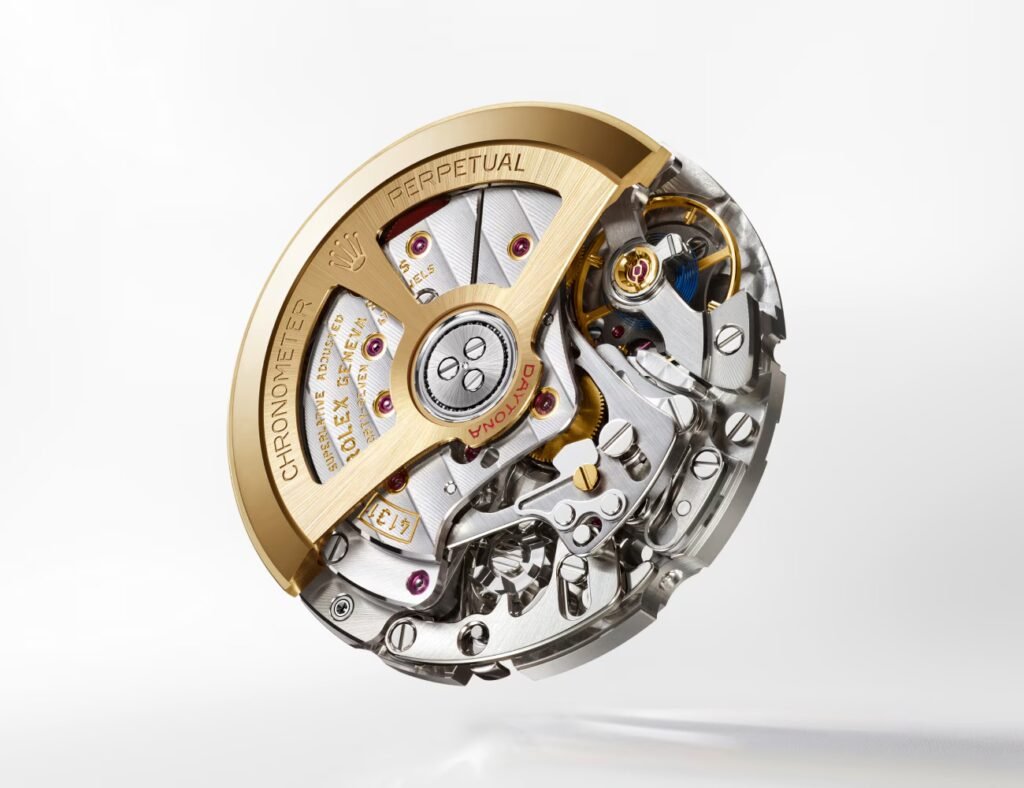
These finishing details, introduced with the calibre 4131 in 2023, address some earlier criticisms of the movement lacking the high-end finishing. For decades, these workhorse movements, arguably the most robust mechanical movements on the planet, have been hidden behind solid casebacks so there was no reason to decorate them, a fact that other luxury watch brands have thumbed their noses at. In a real “hold my beer” moment, Rolex has started to step out to show that not only can it play the same game as these boutique brands but it can remain true to itself while doing it.
There truly is a lot to like about this watch. One could argue it is the ultimate expression of the modern Daytona. To be clear, this is an off-catalogue watch, though Rolex has taken the unusual step of showcasing it on its website as one of this year’s exceptional watches.
Production numbers will likely be small relative to other Daytonas, but it remains a true sports watch. As such, it incorporates everything that makes Rolex great.
They make a watch that you should be able to put on and never have to take off again, something you can wear skiing without thinking twice about it. A watch that could time a race car or your pasta and hopefully makes you smile every time you look down at it. It’s something that disappears into your everyday wardrobe and can be passed down. One day, your kids will look back and see photos of it on your wrist.
Arguably, that is the reason behind all these tiny points of progression that Rolex chases year after year – to build a superior watch that will last as long as you do. For those of us fortunate enough to own these luxury pieces, it’s comforting to know that the brand continues to refine its watches every year right up until you are able to acquire yours.