
Photography by Kenny Kroeker
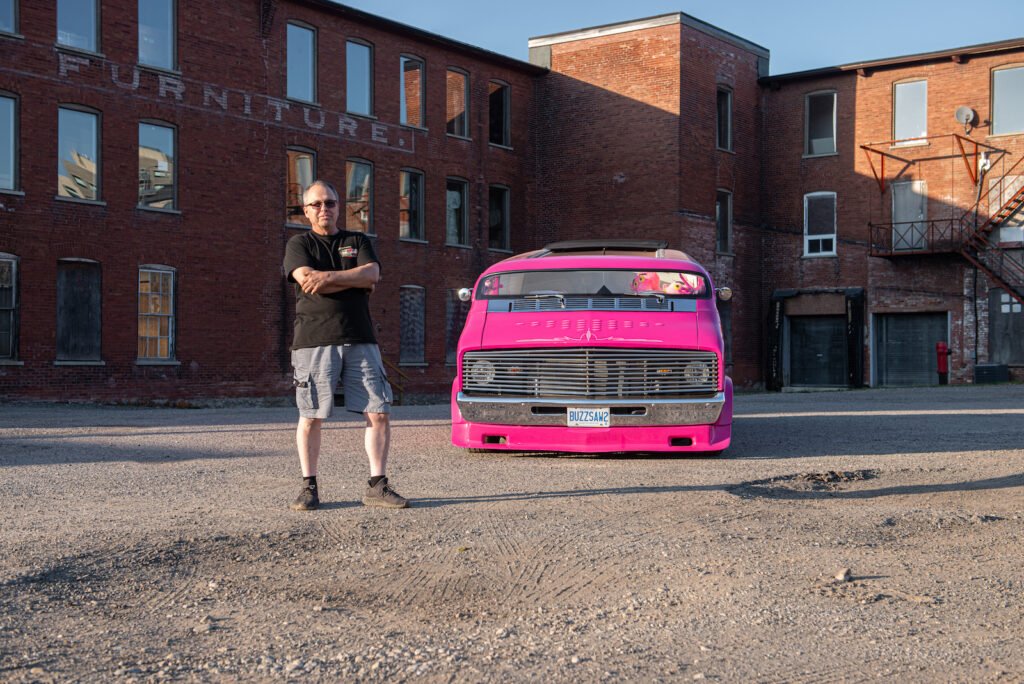
Time is an inescapable reality of life. Clocks tick on, indifferent to any protests otherwise. The passage of time is both a teacher and a thief, wisdom is shared with those willing to learn the lessons and opportunities are stolen from those who are not. Ken McCarl hasn’t discovered a way to defy time, but he has found a way to revisit the past through his automotive creations.
At fifteen, McCarl was offered two modes of transportation from his parents; a brand-new 5-speed bicycle or a well-loved 1967 Volkswagen Beetle. Despite the fact it didn’t run je chose the Beetle, setting his future passion and profession into focus. By high school, he had moved on to muscle cars, developing a particular loyalty to Mopar. “Mopar or no car,” McCarl says, recalling how his insurance company eventually issued him a generous open policy instead of redoing his paperwork bi-weekly. “I have the attention span of a three-year-old,” he jokes, describing his short-lived relationships with most vehicles.
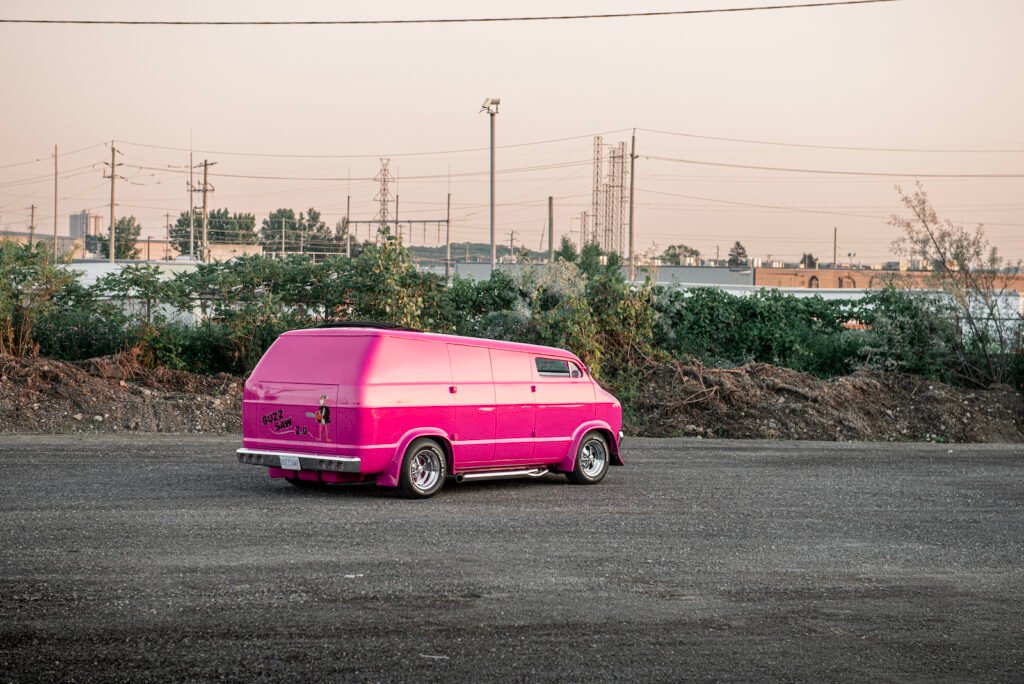
Most of McCarl’s teenage years coincided with the heyday of Vannin’, a segment of the automotive hobby whose creativity is nearly unmatched. Magazines, books, and documentaries have all tried to capture the spirit of Vannin’, but it’s a genre that really has to be appreciated in person. The Vannin’ freewheeling approach to customization resonated with McCarl, inspiring him to create his first show van, Buzz Saw.
If the first Buzz Saw is to be compared to its successor Buzz Saw 2.0, it’s best described as a rough sketch. Both vans share the same foundation—a 1976 Dodge B100—and were shaped by the same hands, but the similarities end there. McCarl, always proud to be hands-on, handled the lion’s share of both builds himself. Yet, he’s the first to admit that the original Buzz Saw was built on a modest $4,500 budget with skills lacking in refinement. He has often referred to the build as “crude,” a fitting description for a project that served more as a launch pad than a final destination.
Despite its rough edges, Buzz Saw was McCarl’s pride and joy until he sold it in 1988 at his then-wife’s request. By this time, McCarl was working as a mechanic and building custom vehicles by night. His daily work with vehicles steadily expanded his skill set, and eventually, the time felt right to bring Buzz Saw back to life.
After some searching, he located the original van, but time had taken a heavy toll on it. Water intrusion had caused rust to eat away at the bodywork, and Buzz Saw ultimately met its end in an Ohio scrapyard.
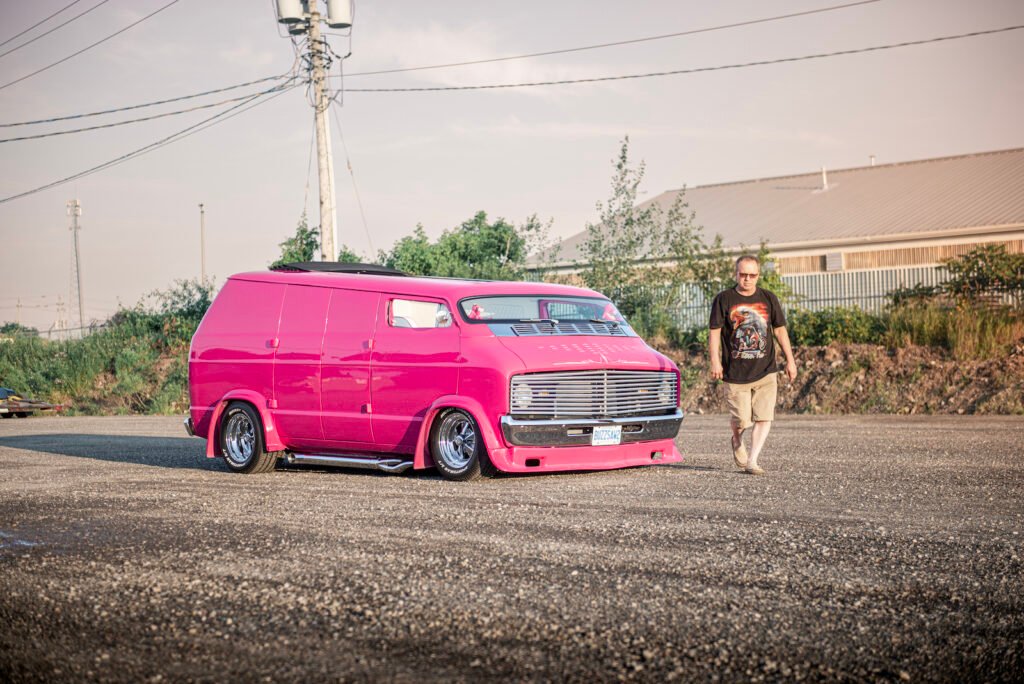
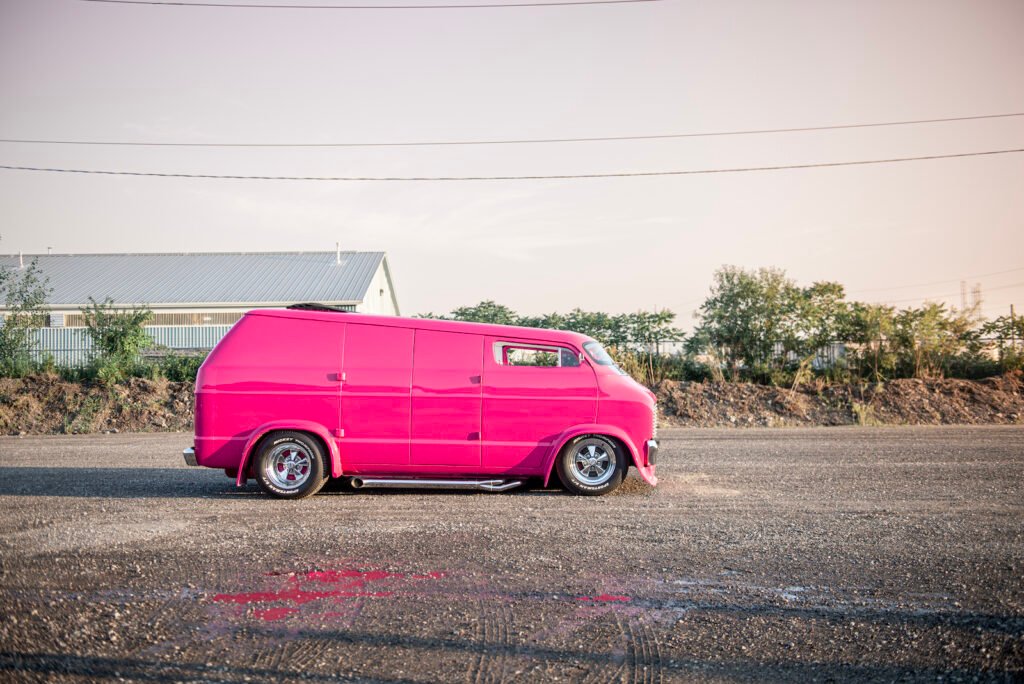
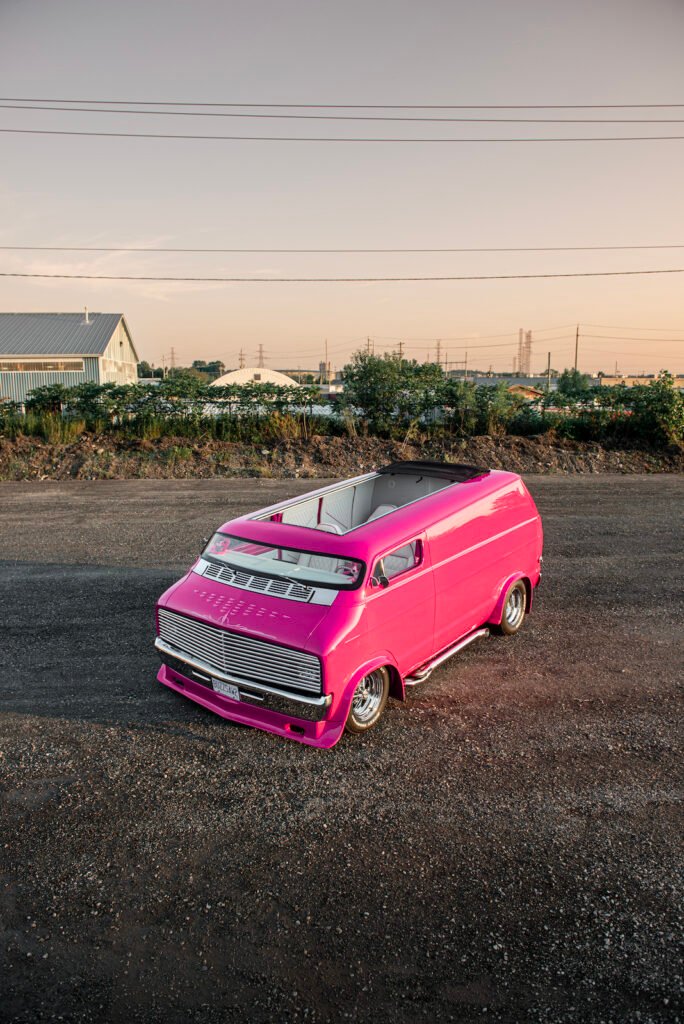
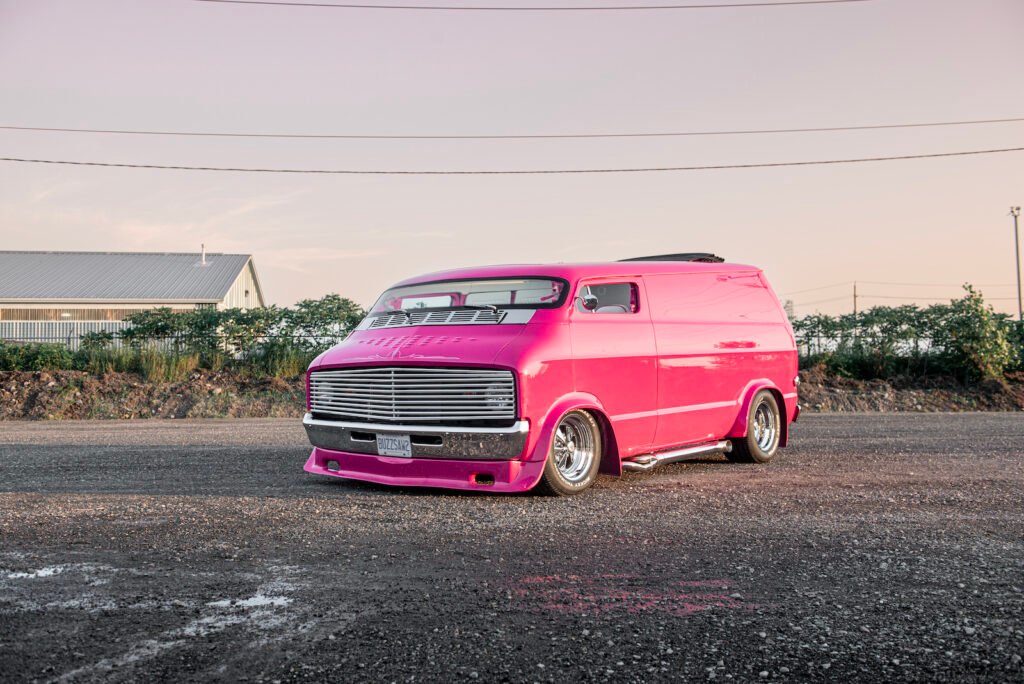
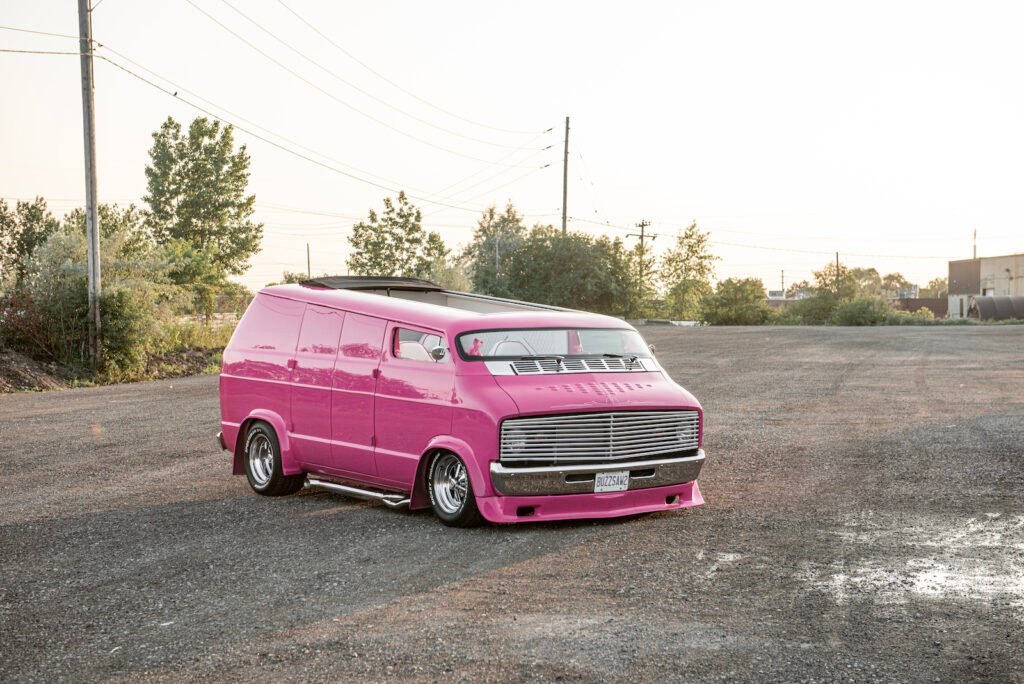
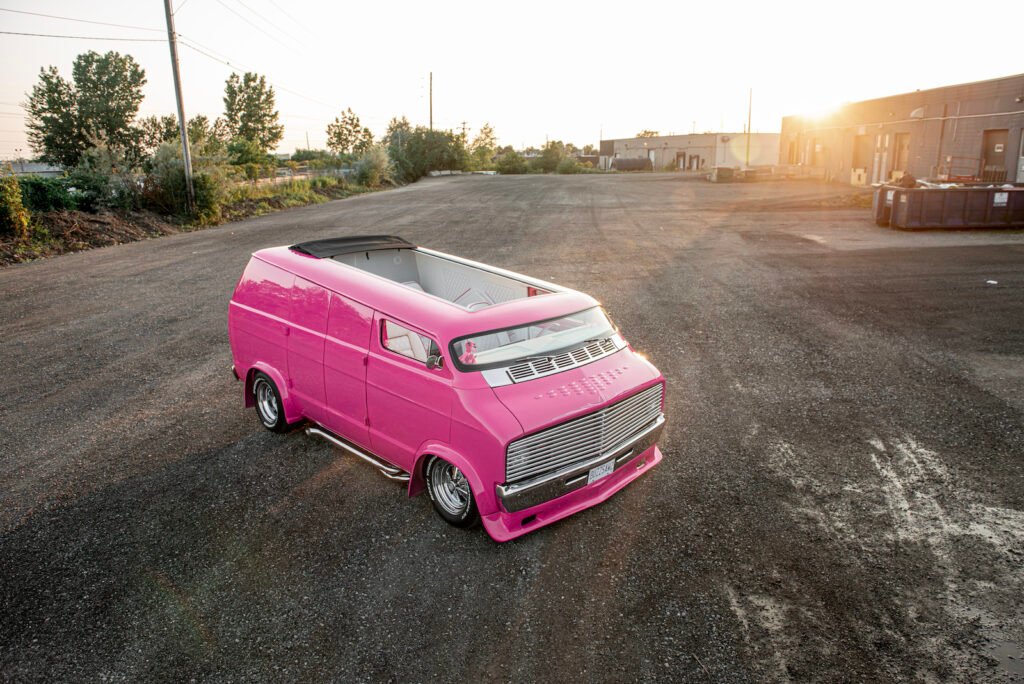
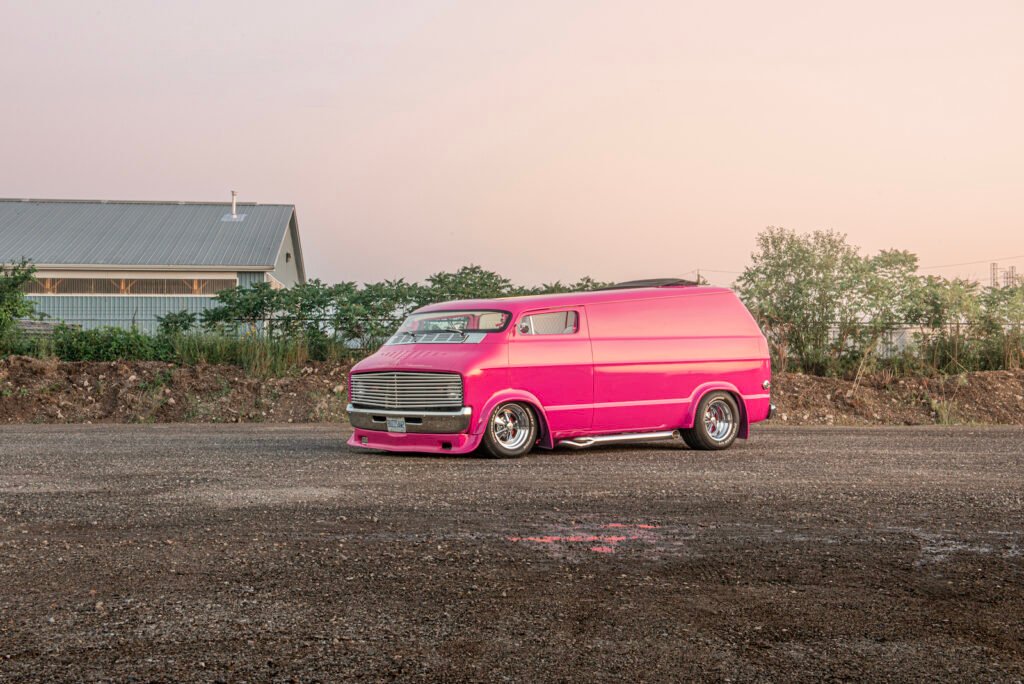
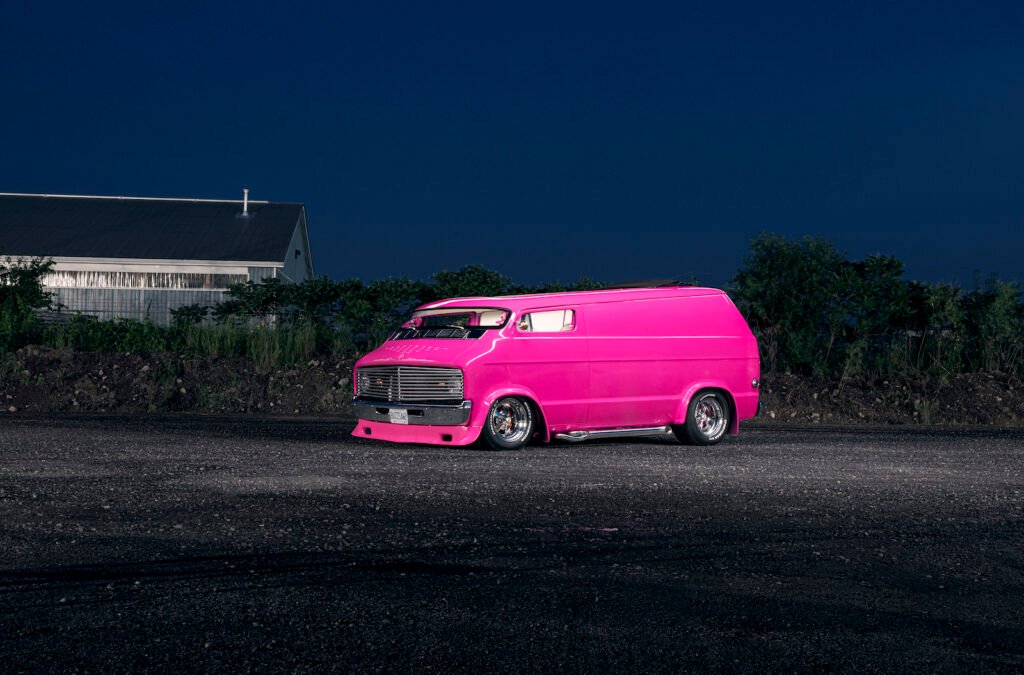
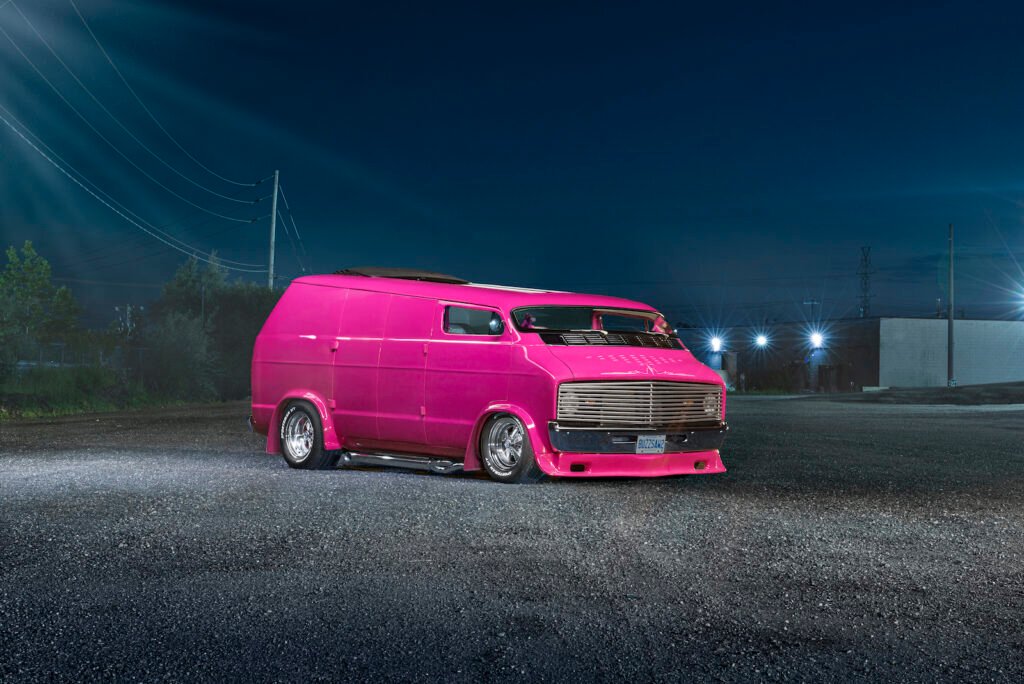
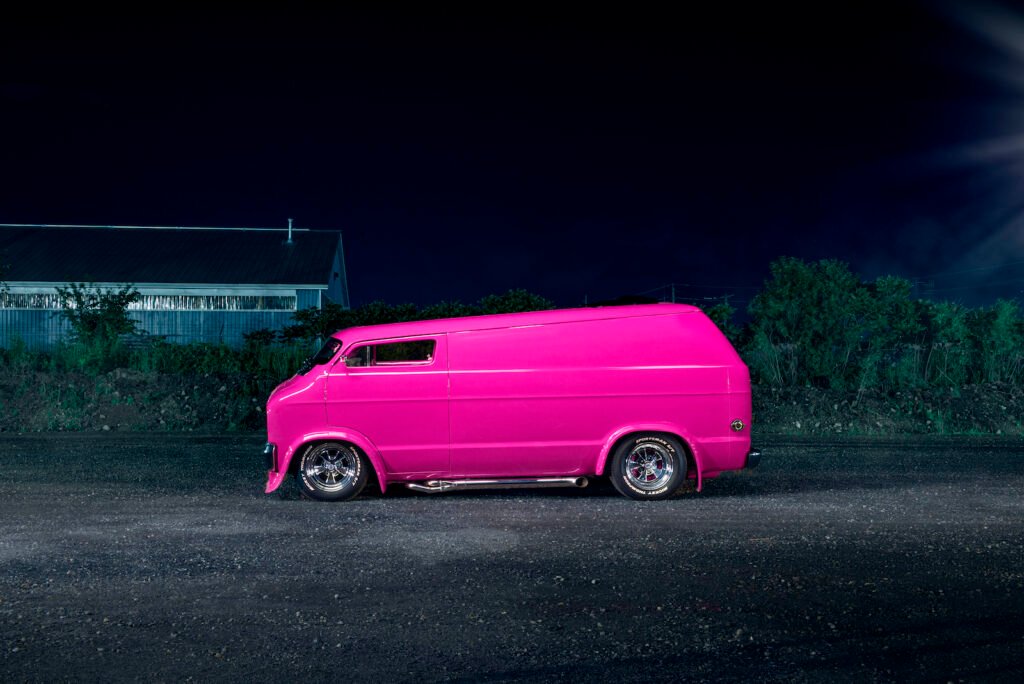
Determined to see Buzz Saws rebirth through, McCarl found a pristine donor van from California. On Christmas Day 2019, he started Buzz Saw 2.0 by cutting off the new van’s roof, crafting the drastic new profile between basting the holiday turkey. This transformation lowered the roofline by an impressive 14 inches, creating a sleek, aggressive stance that commands attention. “It looks like it’s going fast sitting still,” McCarl says, describing the dramatic chop.
The scale of this modification posed a considerable challenge, as every panel connecting to the roof required extensive adjustments. Naturally, the doors were shortened, and McCarl also tipped the van’s rear pillar forward—a technique often seen in modern SUVs to give a sportier silhouette.
Block sanding a vehicle this size is not for the faint of heart. McCarl belongs to the rare breed who genuinely enjoys bodywork. “I don’t do bodywork in my 9-to-5 just so I don’t hate it,” he notes, explaining how he handled nearly everything himself.
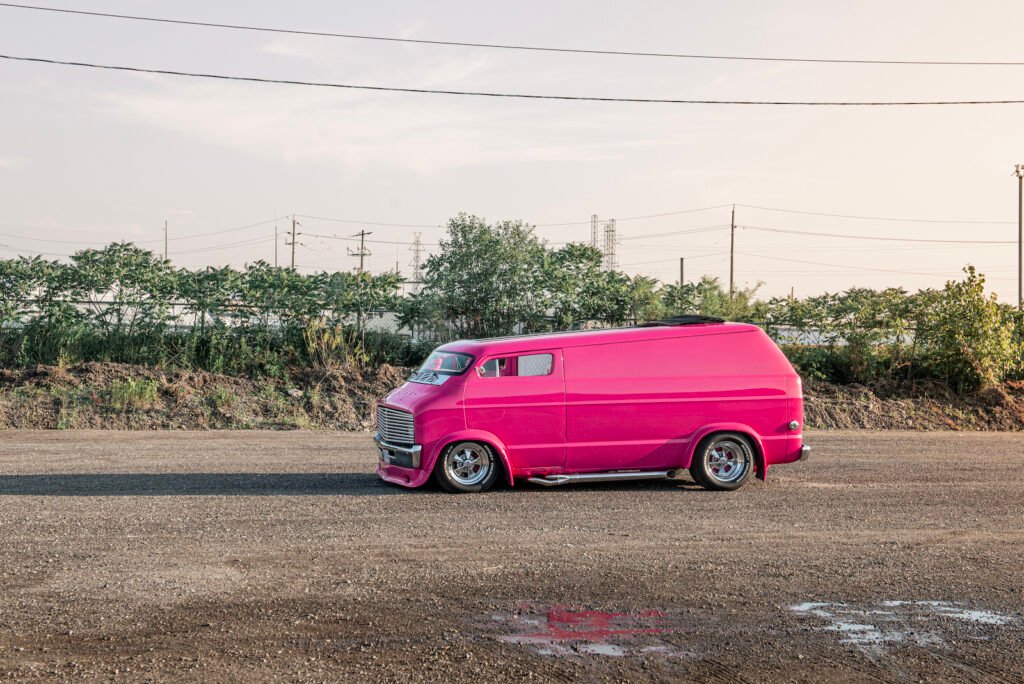
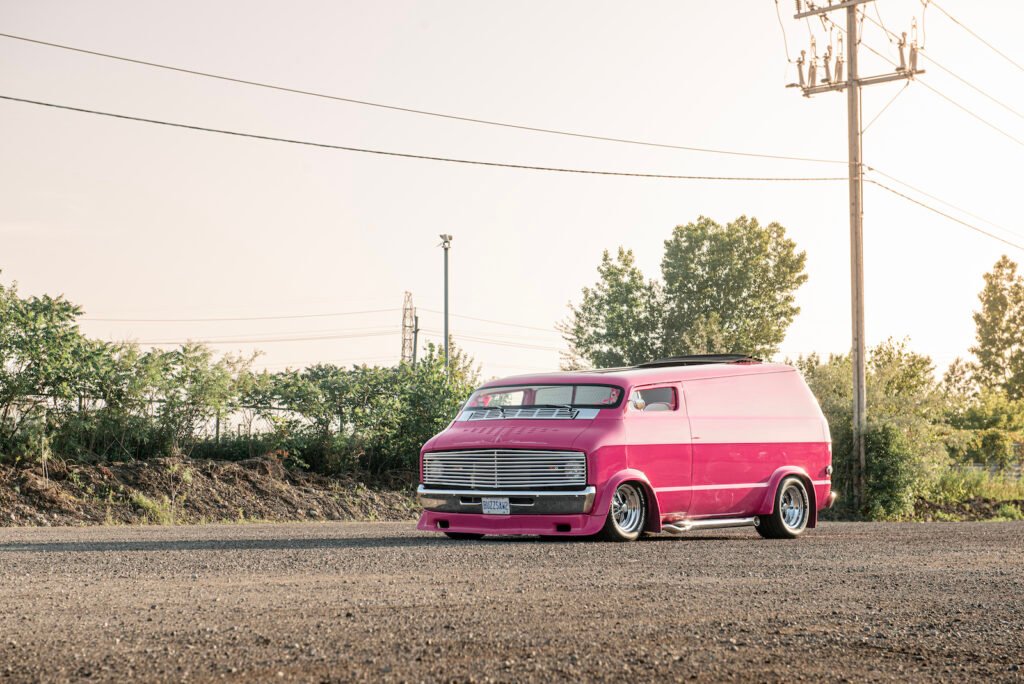
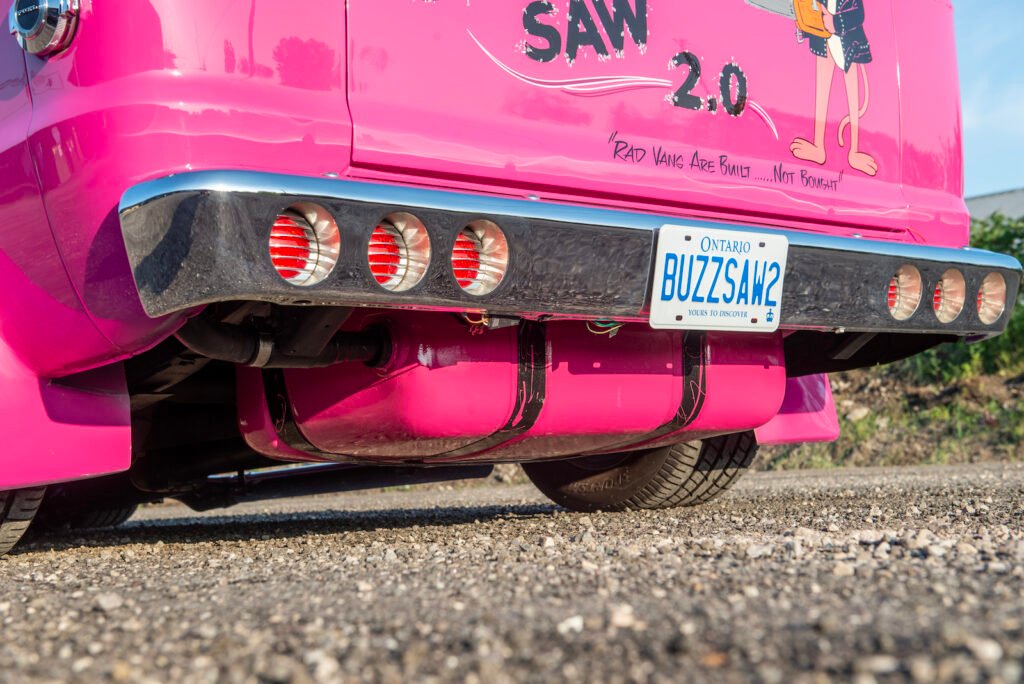
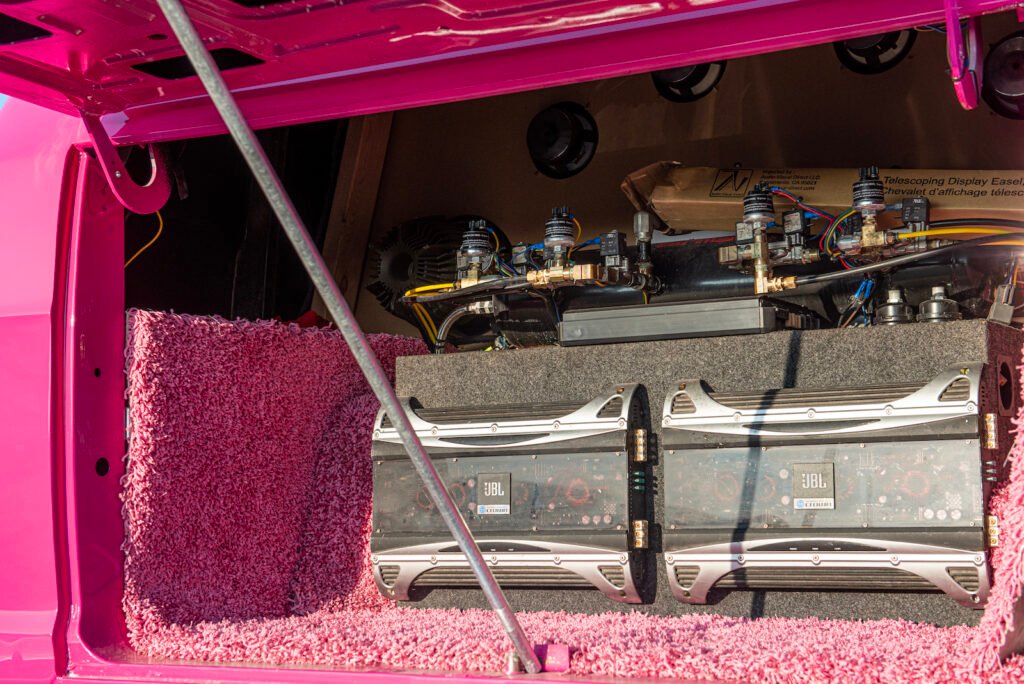
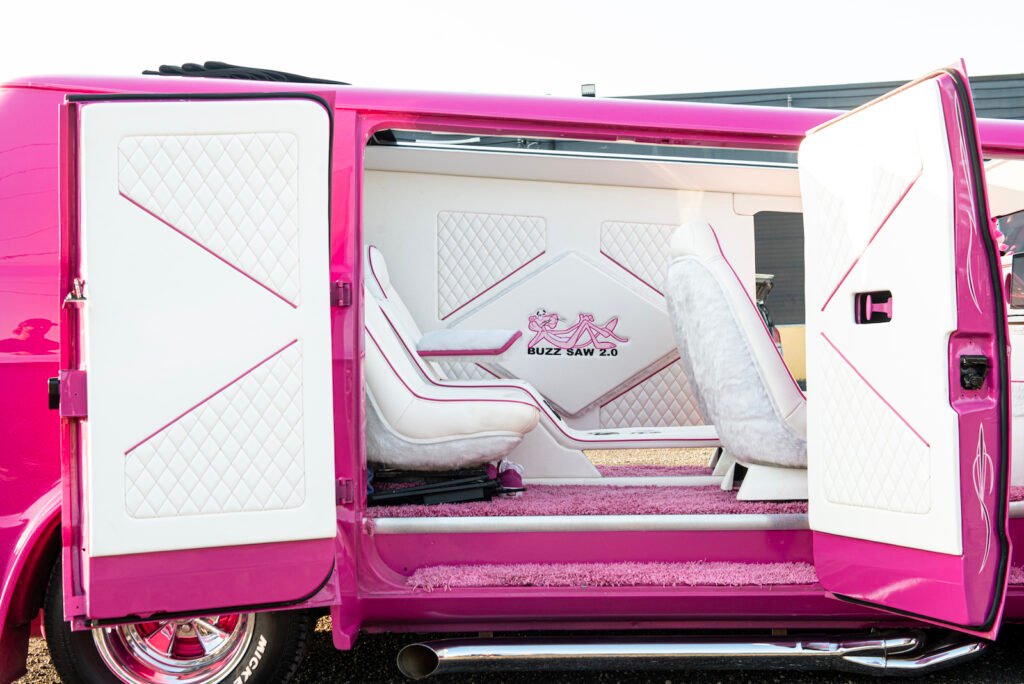
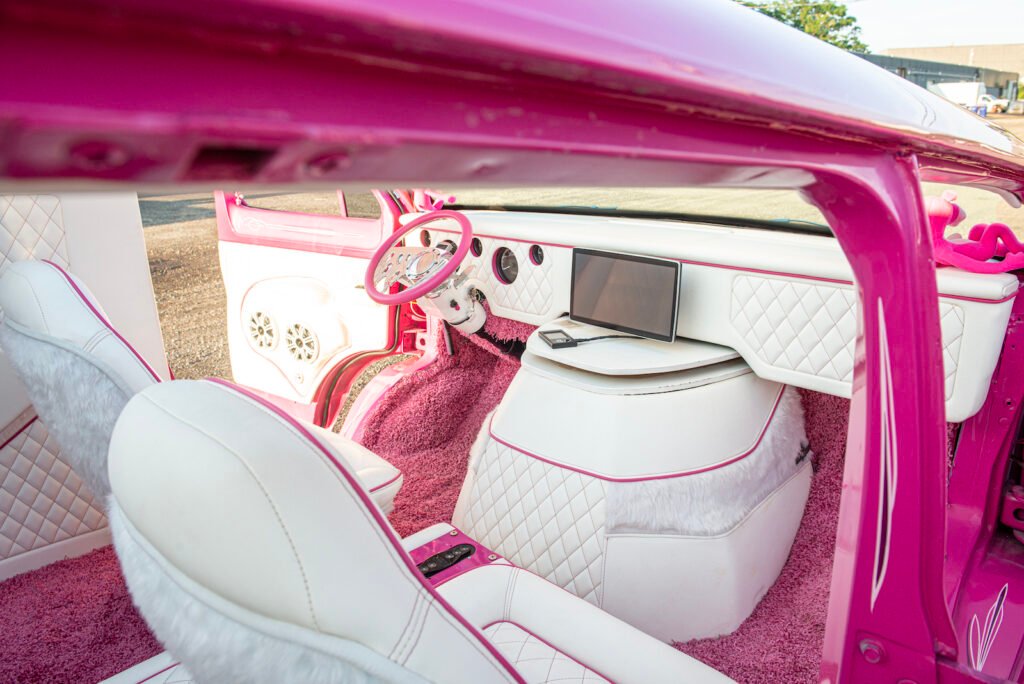
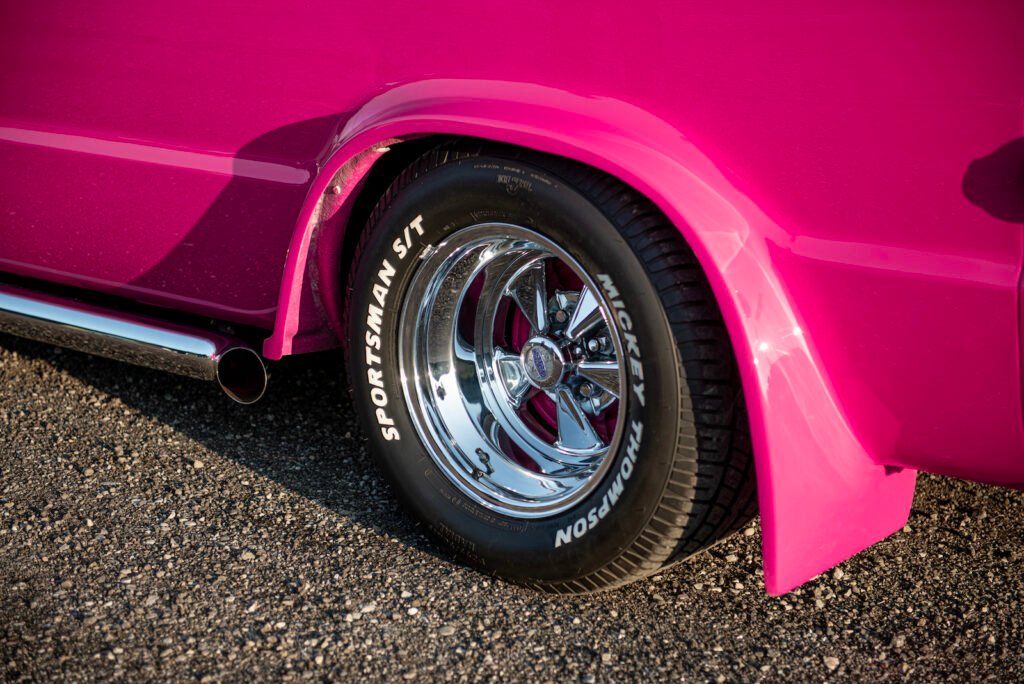
While sanding his evenings away, but before he sprayed the paint, McCarl added custom touches like flared wheel wells and a front air dam, giving the van a retro-aggressive look.
With the roof skin, he took a different approach: instead of welding in a panel, McCarl opted for a massive 44-inch-wide by 110-inch-long ragtop, inspired by classic Volkswagen buses. This unique addition creates an open-air feel, making the van perfect for leisurely cruising.
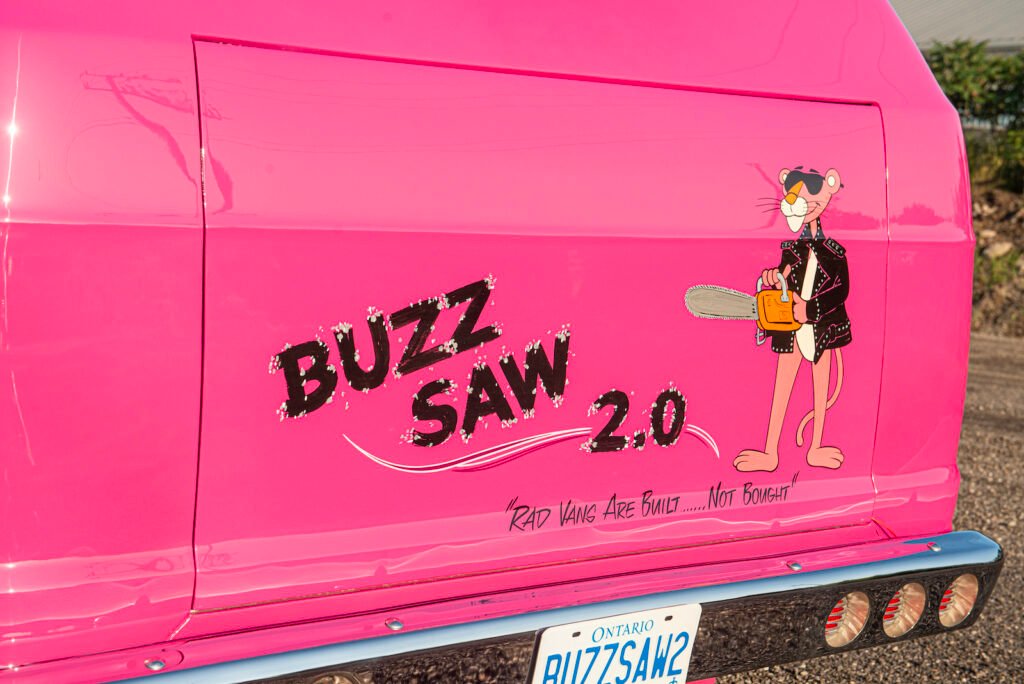
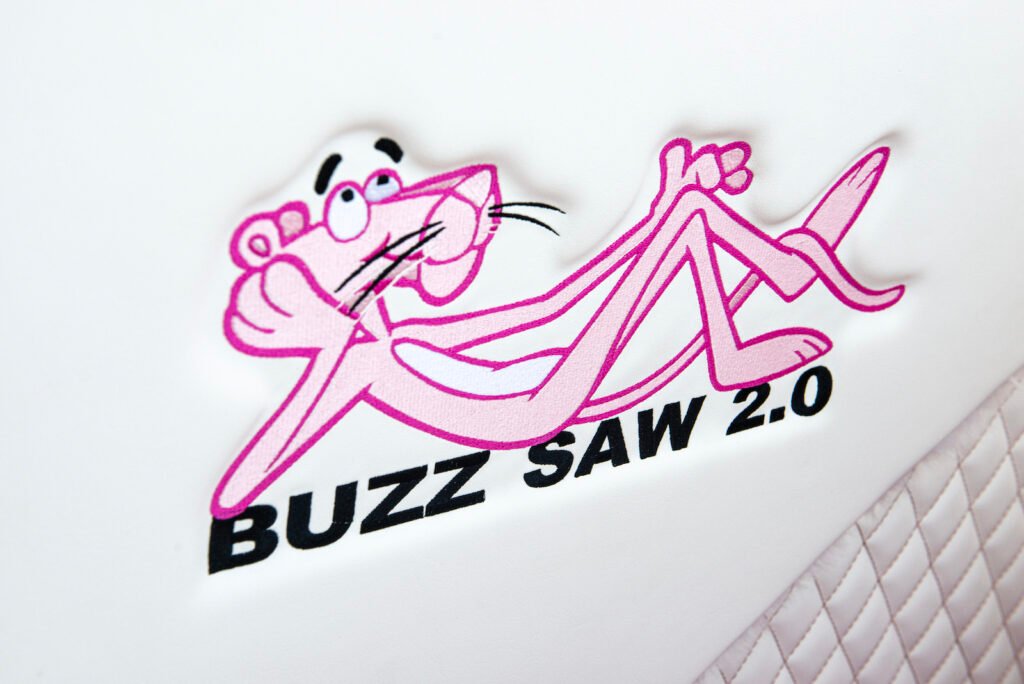
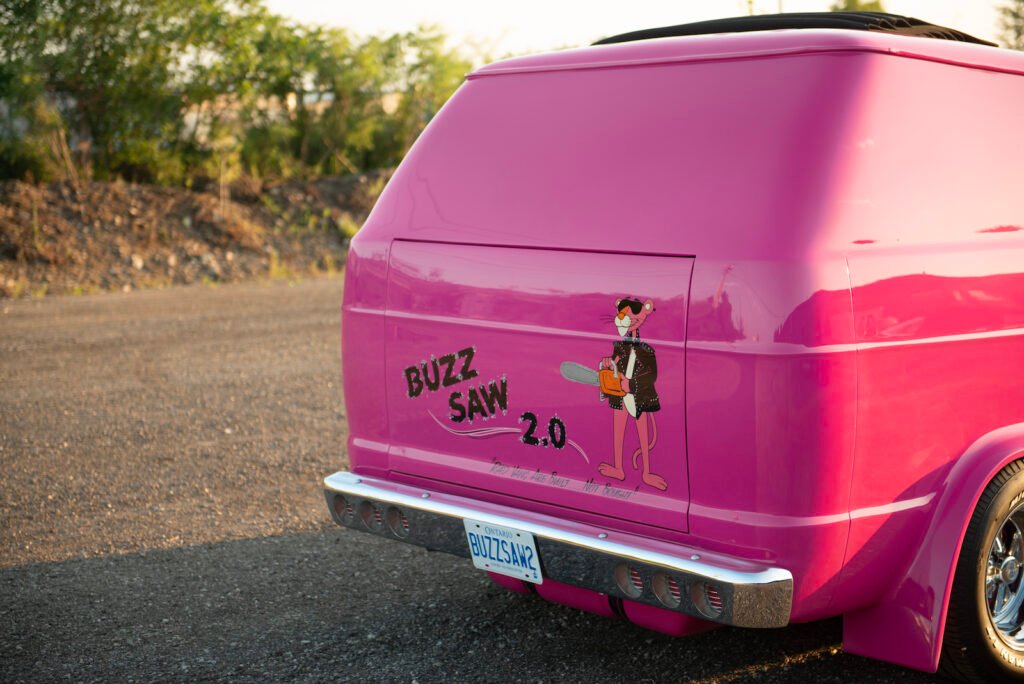
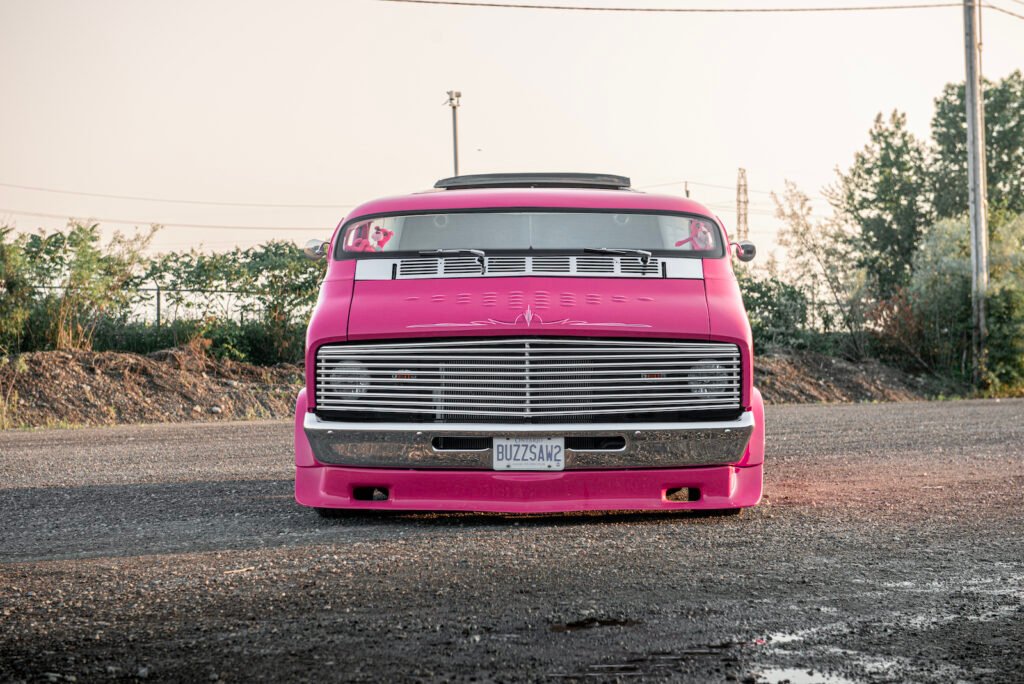
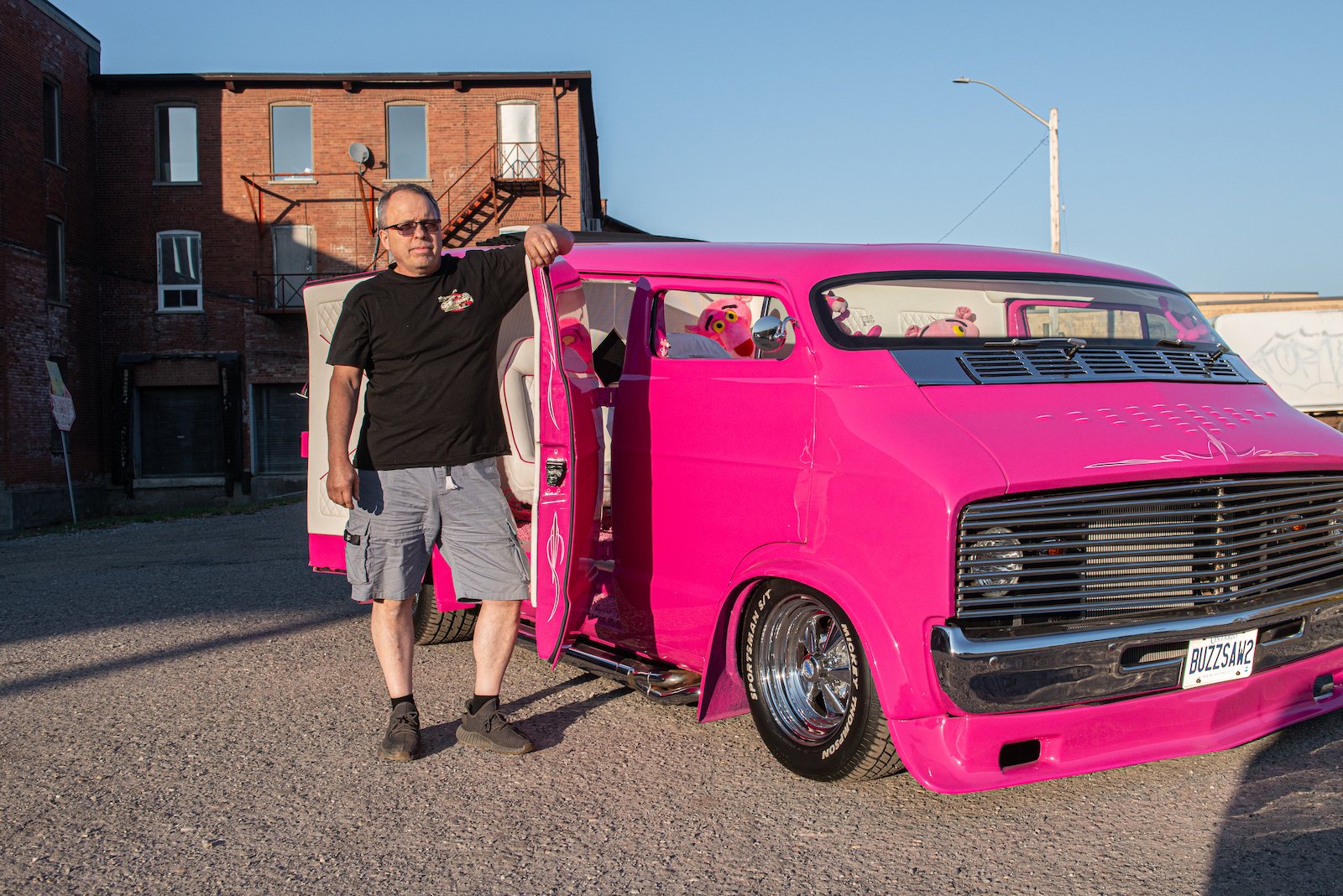
The Pink Panther theme throughout the van wasn’t McCarl’s idea. When Buzz Saw was chosen to appear on an episode of The Nashville Network’s Truckin’ USA, McCarl handed creative control over to an eccentric artist who wanted to bring something unique to the project. Given the van’s already pink colour, the artist requested a picture of the Pink Panther and a saw as inspiration. McCarl provided both, and the Buzz Saw aesthetic took shape. For Buzz Saw 2.0, McCarl enlisted Ontario pinstriper Rollie Guertin, whose vibrant work stands out boldly over the custom-mixed pink paint McCarl calls “Revvin’ Pink.”
The slogan “Rad Vans Are Built… Not Bought” also debuted on the original Buzz Saw, aimed as a lighthearted jab at a fellow showgoer who consistently outplaced McCarl with a van he hadn’t built himself. McCarl takes pride in the many one-off modifications he crafted throughout Buzz Saw 2.0’s evolution, each a testament to his dedication to the craft.
Many of these modifications benefited from the extra time McCarl had during the COVID-19 pandemic. While his business continued to operate steadily, social outings dwindled. He took advantage of this quieter period to focus on the finer details of his work, elevating the quality of the second rendition of Buzz Saw.
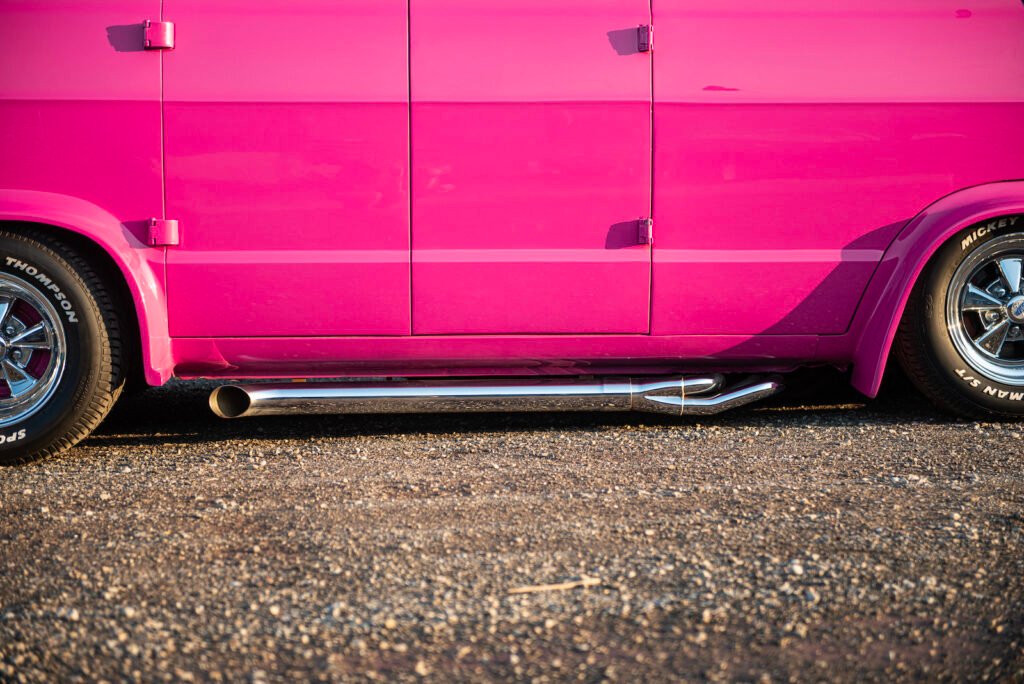
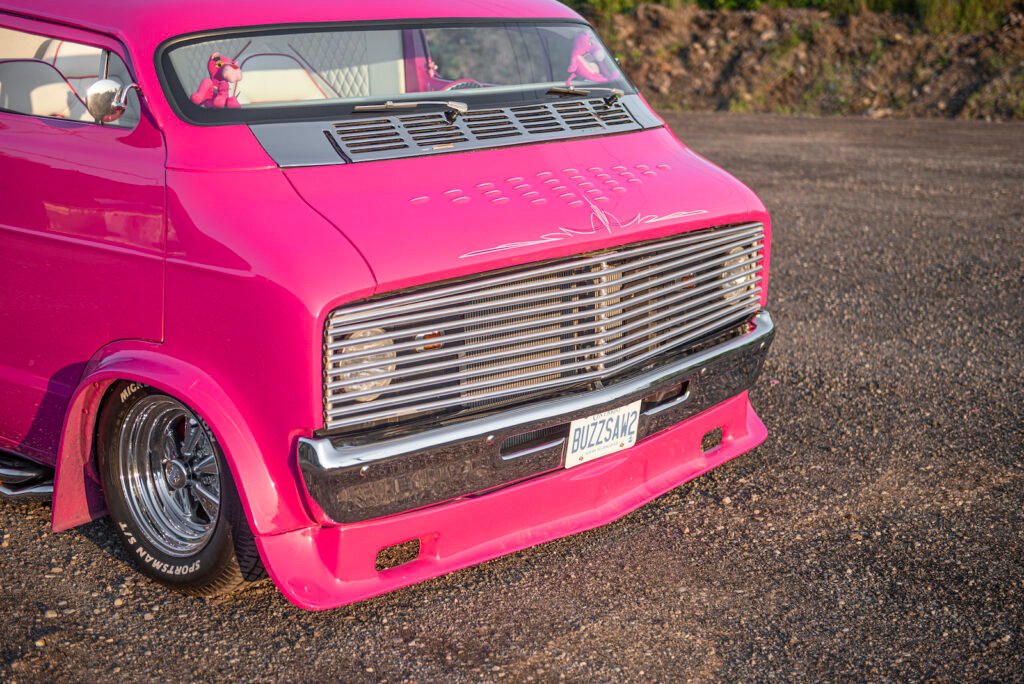
A distinct feature of Buzz Saw 2.0 is the custom grill, formed from electrical conduit and finished in bright chrome. This grill complements the side pipes that run the length of the vehicle, all of which harmonize beautifully with the 15-inch Cragar wheels. The air suspension gives the van a heavily raked stance, creating the perfect era-correct profile.
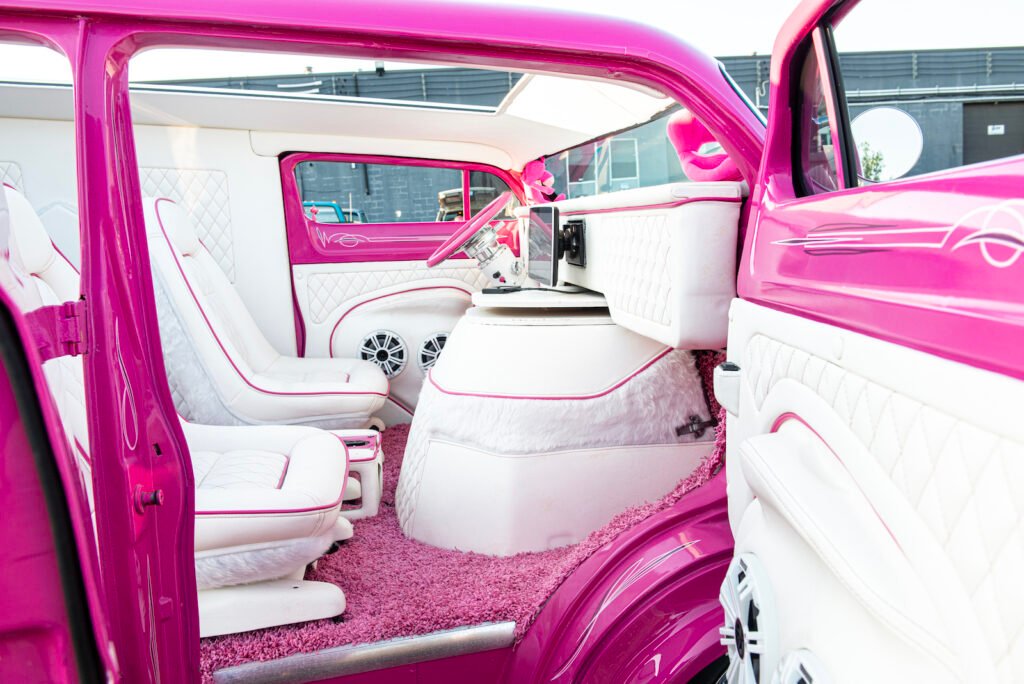
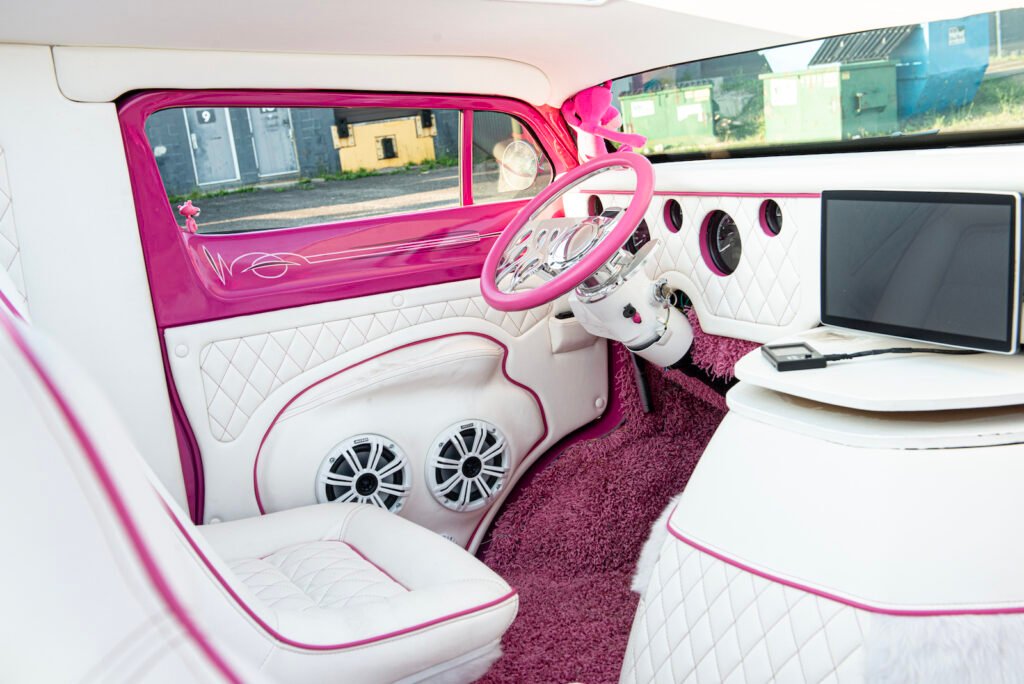
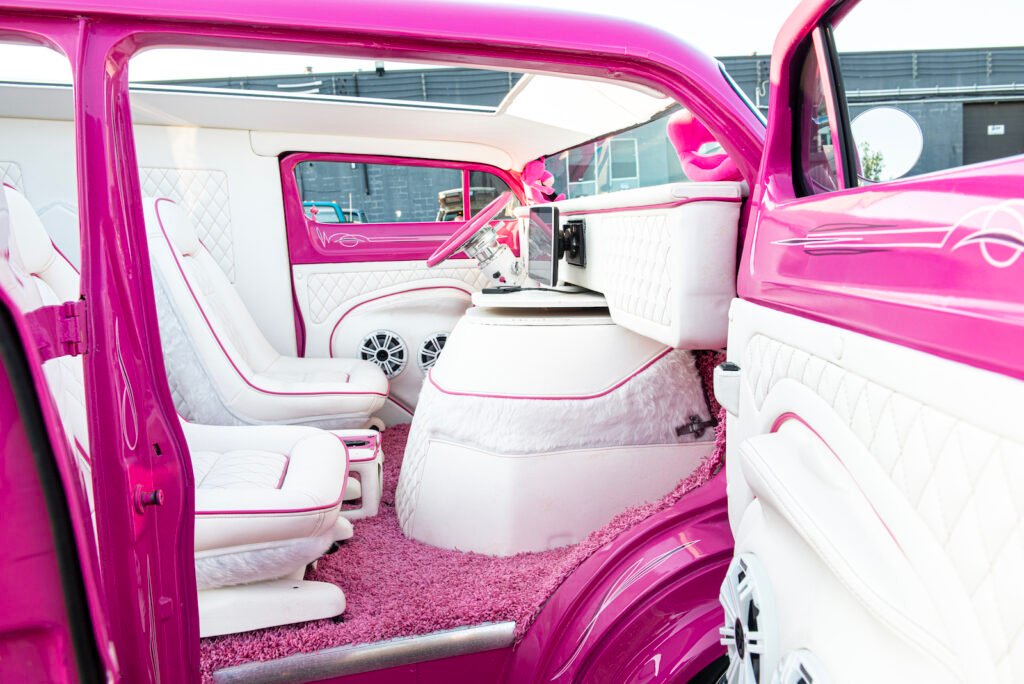
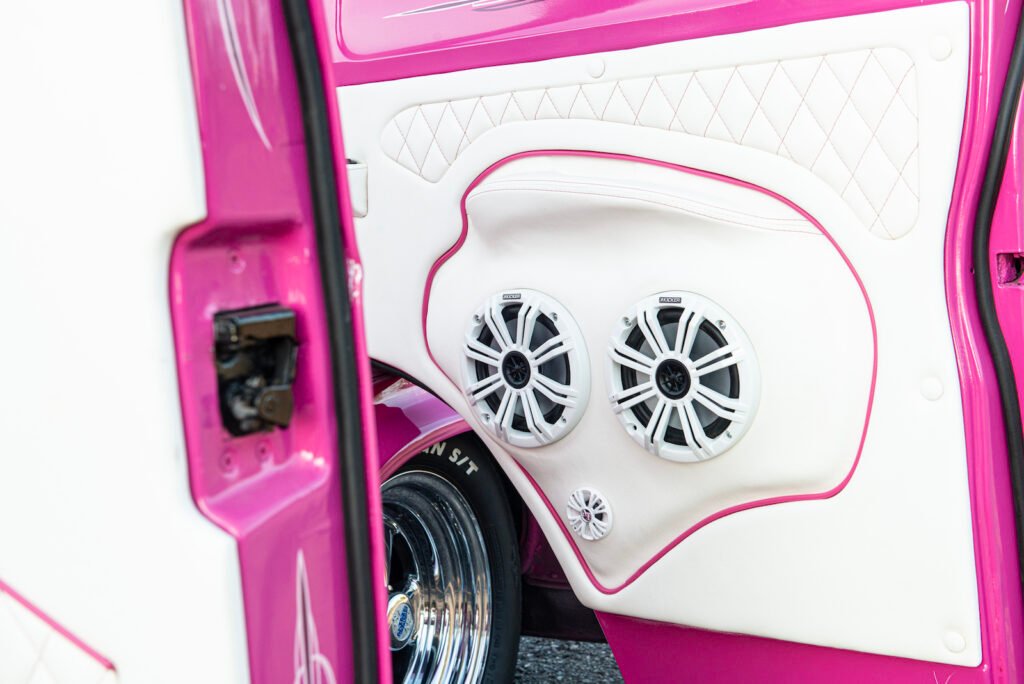
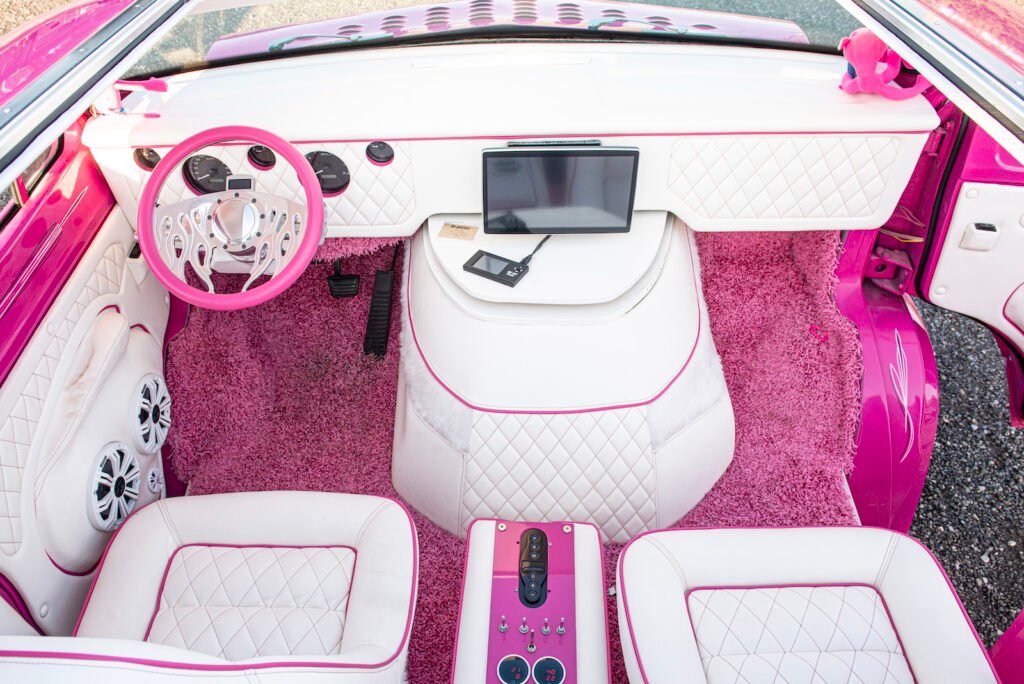
The van’s interior is undeniably bold yet inviting, showcasing a collaboration with Fatt Ratt that emphasizes the Pink Panther theme through striking white and pink tones. Remarkably, pink shag carpeting is still available at the local upholstery shop, adding a nostalgic touch. With room for four occupants, passengers are transported in luxury, surrounded by an extensive audio system featuring 1,000 watts of equipment, including four 16-inch subwoofers.
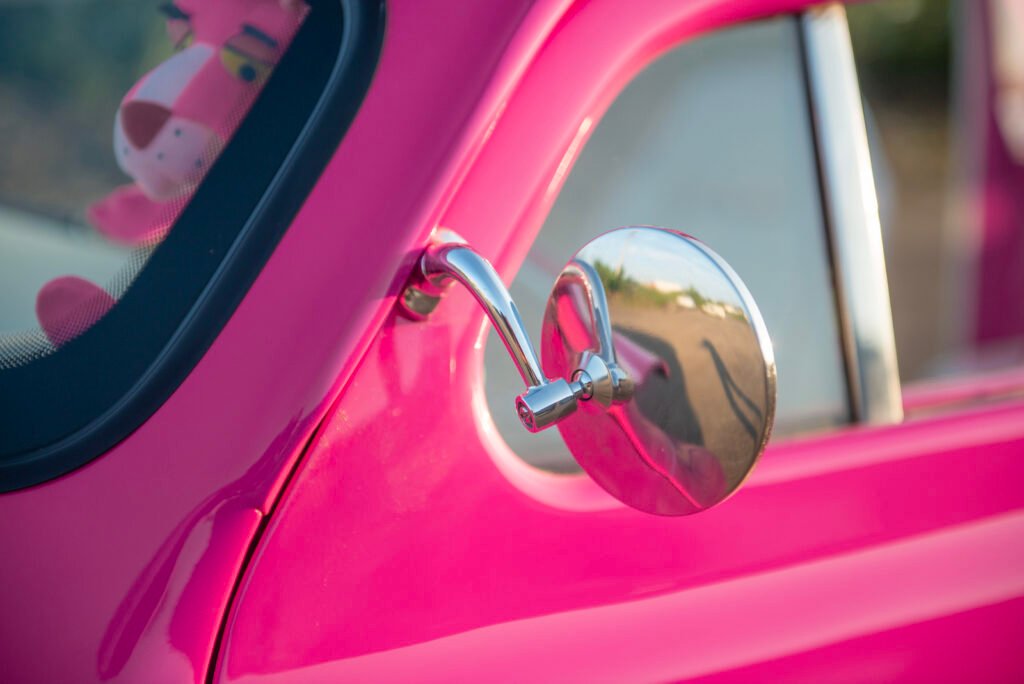
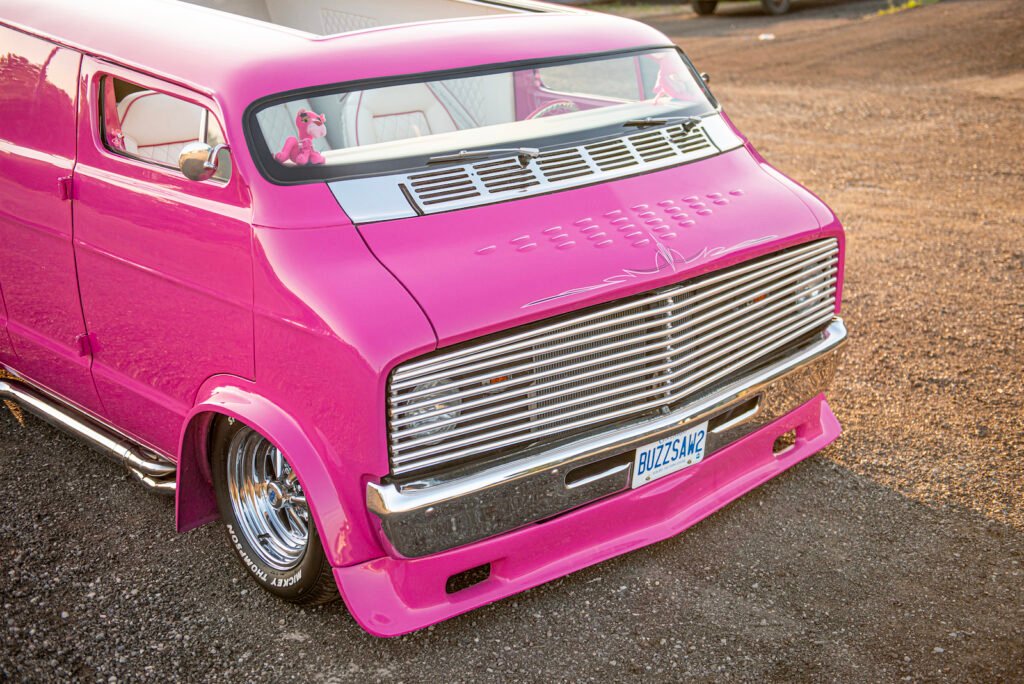
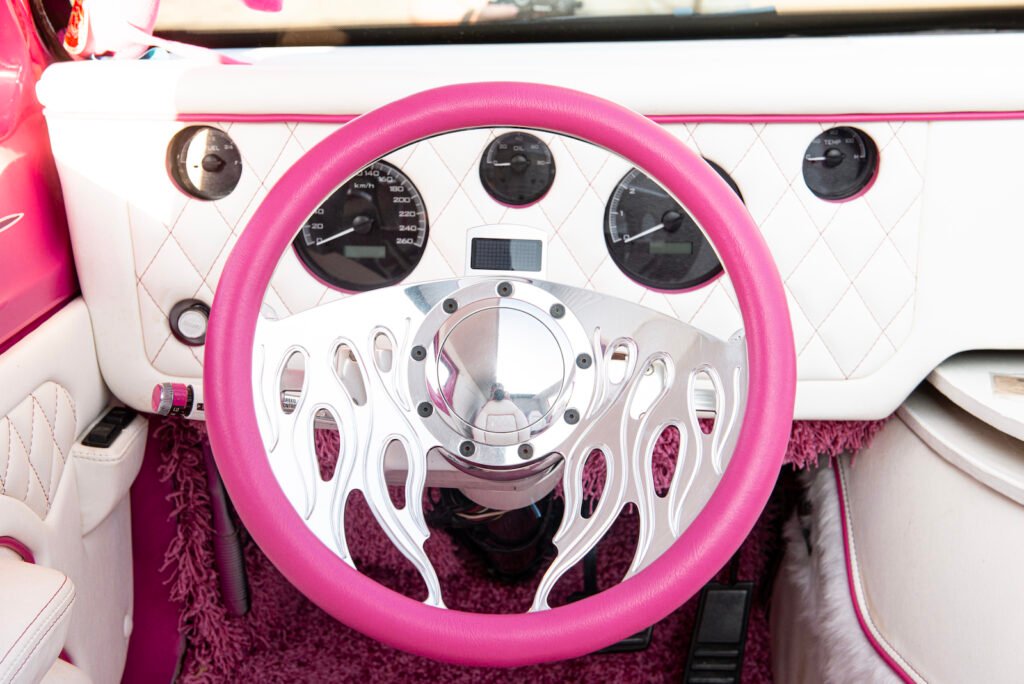
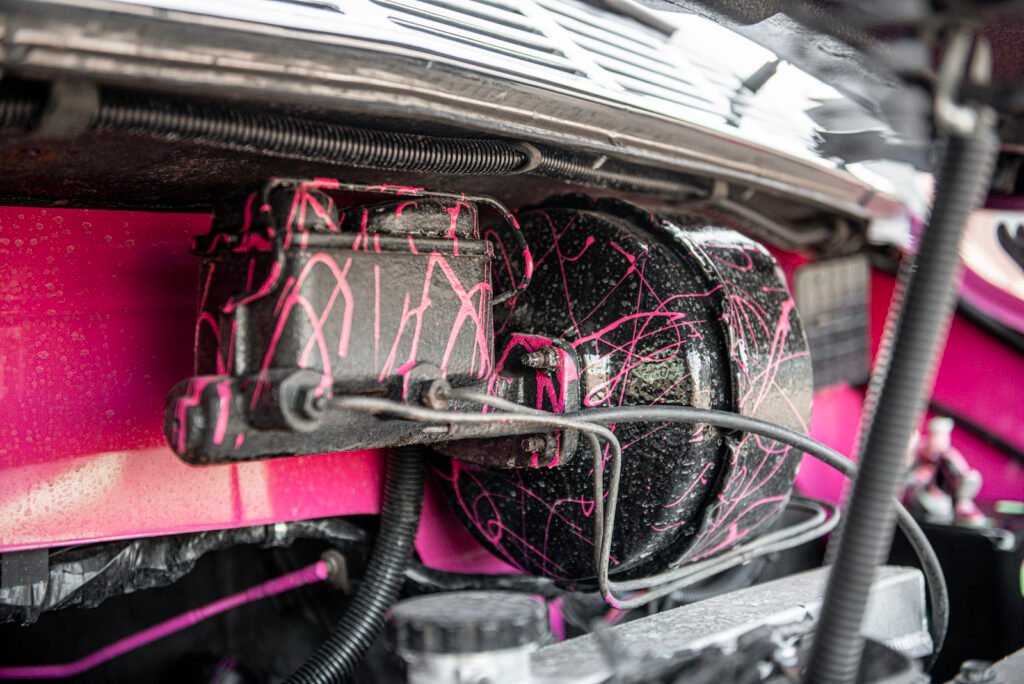
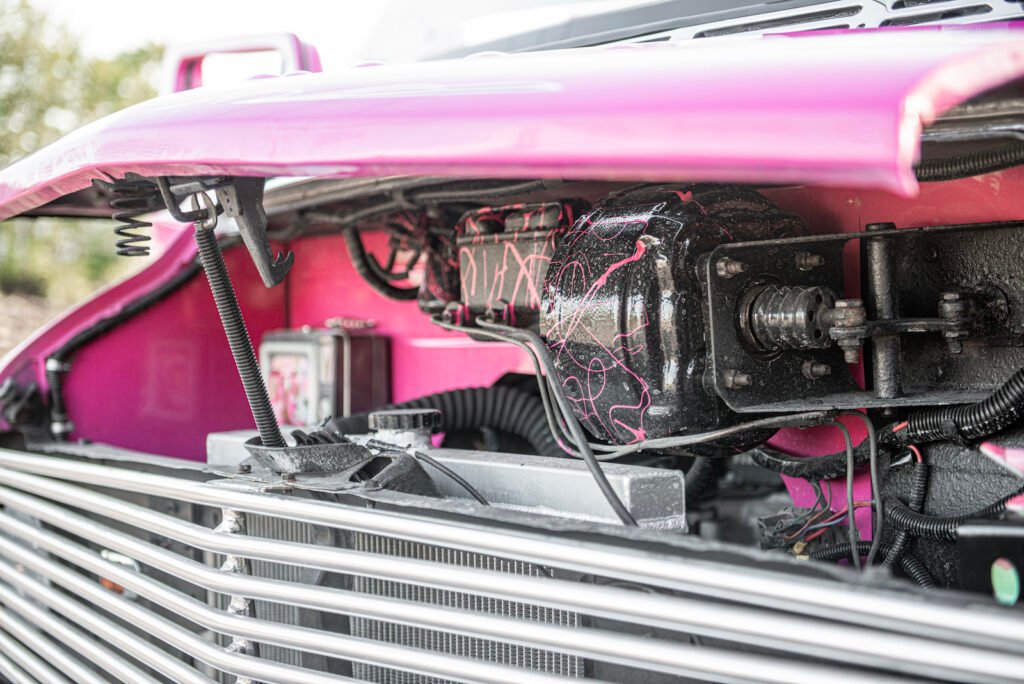
A tablet mounted at the center of the dash controls the robust audio system, while nestled within the doghouse below is a 440 Six Pack motor, upgraded with FiTech fuel injection. From the driver’s seat, McCarl grips a Billet Specialties steering wheel wrapped in leather. The dash is further enhanced by Dakota Digital gauges, blending classic van aesthetics with a modern touch.
One of the build’s greatest challenges lies beyond those gauges: the custom front windshield, which took eight attempts to perfect. Shaping curved glass is no easy feat, and the job ultimately required a water jet to achieve the extreme curvature McCarl wanted when traditional methods fell short.
McCarl takes immense pride in Buzz Saw 2.0, calling it the only vehicle he’s ever truly seen as fully completed. Few get the chance to revisit past ideas with present skills, but Buzz Saw 2.0 is proof that when we do, it can yield something exceptional. Time’s forward march may be unstoppable, but McCarl’s story hints that maybe, just maybe, we can revisit—and refine—the best parts of the past.