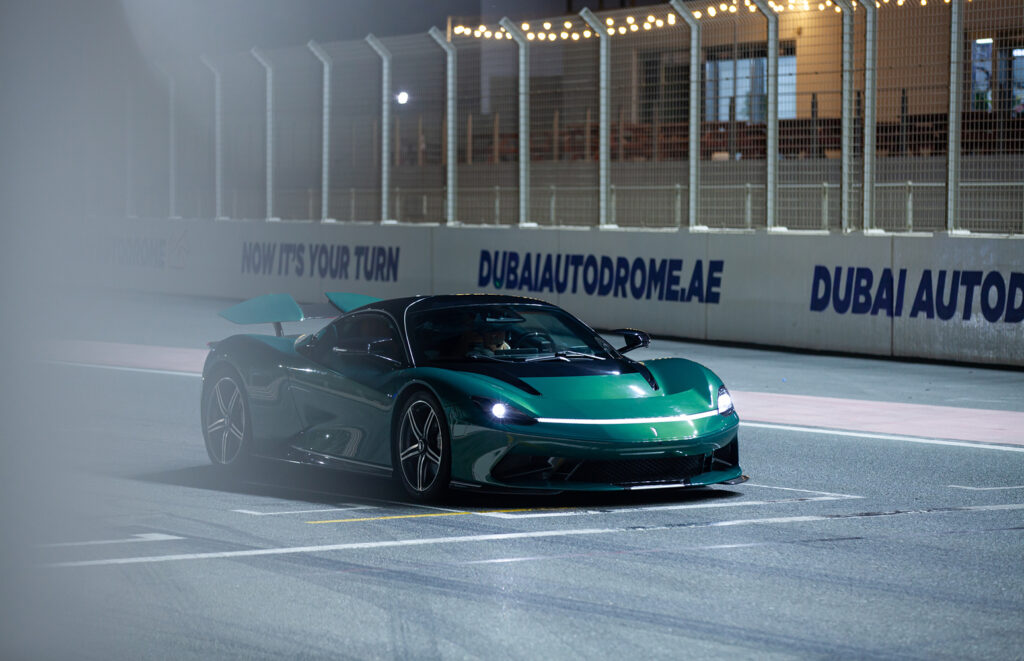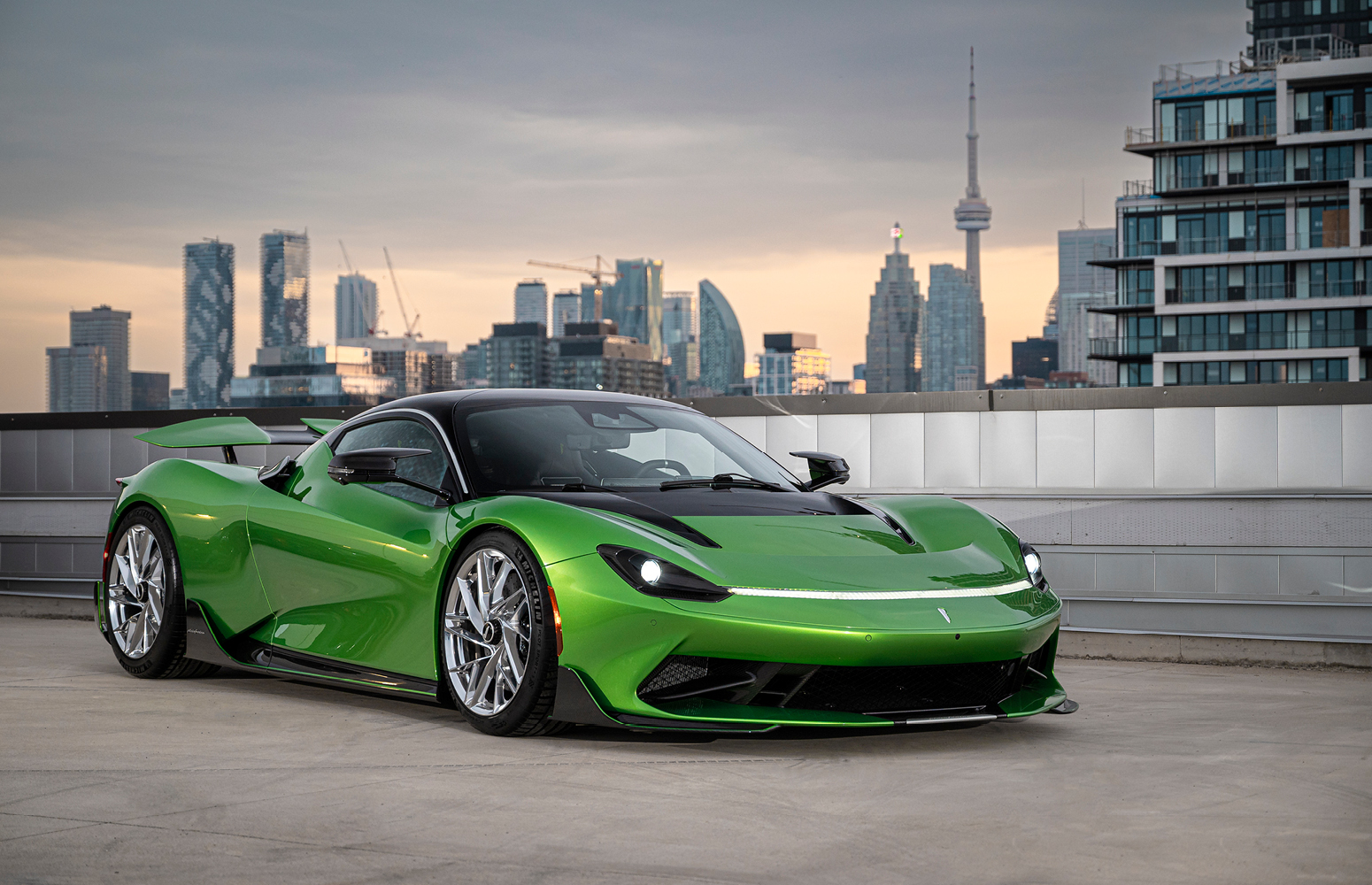
Paolo Dellachà, CEO of Automobili Pininfarina, is tasked with finally fulfilling the dream of founder Battista ‘Pinin’ Farina
On the top floor of Toronto’s Grand Touring Automobiles showroom, surrounded by curtains like The Wizard of Oz, sits an emerald green Pininfarina Battista, the first of these new all-electric supercars to be delivered in Canada. The car is perched above the city, overlooking the grey downtown and the crush of traffic on the Don Valley Parkway. It almost seems a shame to put a machine as otherworldly as Battista down there in city traffic. But, like so many of the cars designed by Pininfarina over the last 93 years, the Battista seems like a vision from a better future yet to come.
Paolo Dellachà, the new CEO of Automobili Pininfarina, is in town overseeing the handover of this precious machine. That’s the kind of attention you get when you purchase a car that costs, in this particular case, roughly 2.9 million euros. It’s one of only 150.
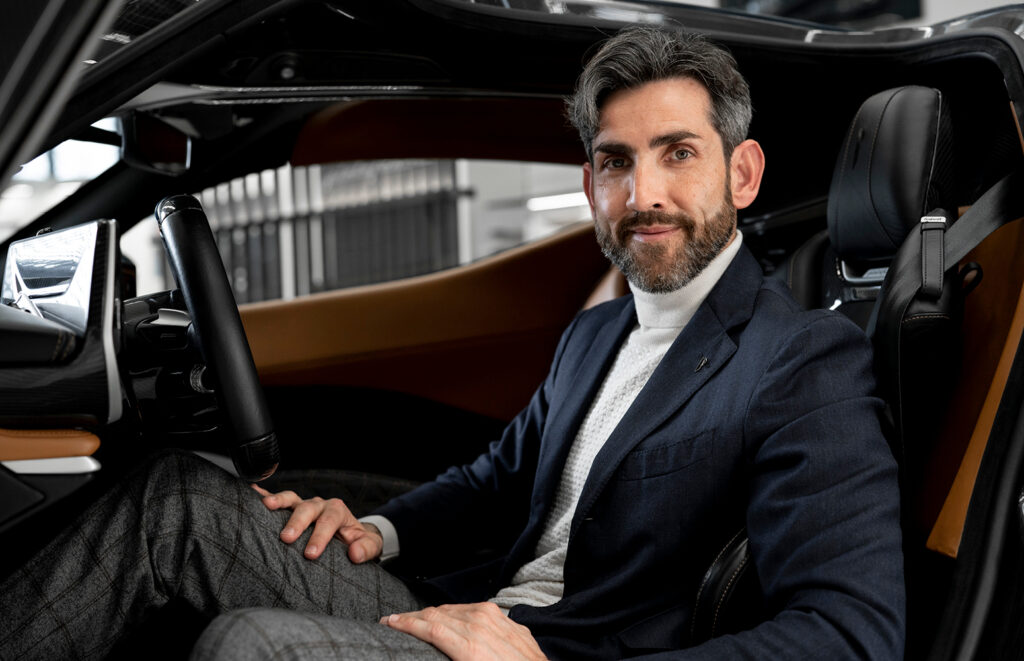
“We want to make the customer feel special,” Dellachà says. “It’s a limited production car, but each single one of them will be bespoke. There are, of course, endless possibilities just in terms of premium colours and materials, but still: we are Pininfarina. Pininfarina has been making one-offs [for decades] so we can go up to the level of a one-off if a client wants it.”
Even before Paolo Dellachà became the CEO of Automobili Pininfarina earlier this year, the Battista was his baby. He led the car’s development in his previous role as the company’s chief product and engineering officer.
As a self-described “proud Italian,” this is a dream job for Dellachà. He grew up in the town of Pavia, south of Milan, not far from Italy’s famed Motor Valley. “I like everything about speed,” he says.
His first job after university was with Ferrari, in 2000. There, he worked on vehicle dynamics simulation, before moving into the testing department. He had a hand in the F430, and the 612 Scaglietti, and worked on the all-wheel drive system of the FF, before taking a job at Maserati.
Then, in 2018, he joined Automobili Pininfarina. “One of the reasons I decided to move to Automobili Pininfarina is because of the possibility of creating something unique,” he says. “On one side you had the heritage of the brand, which was powerful, especially for me. And, on the other side, there was this idea: let’s do the first electric hypercar, or one of the first. And I just couldn’t say no.”
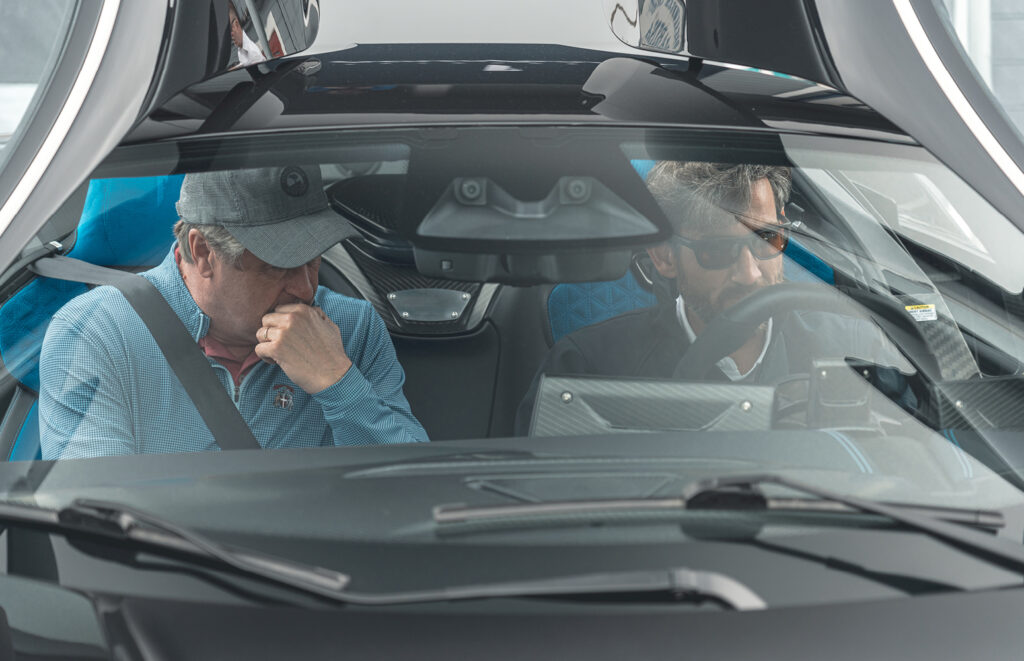
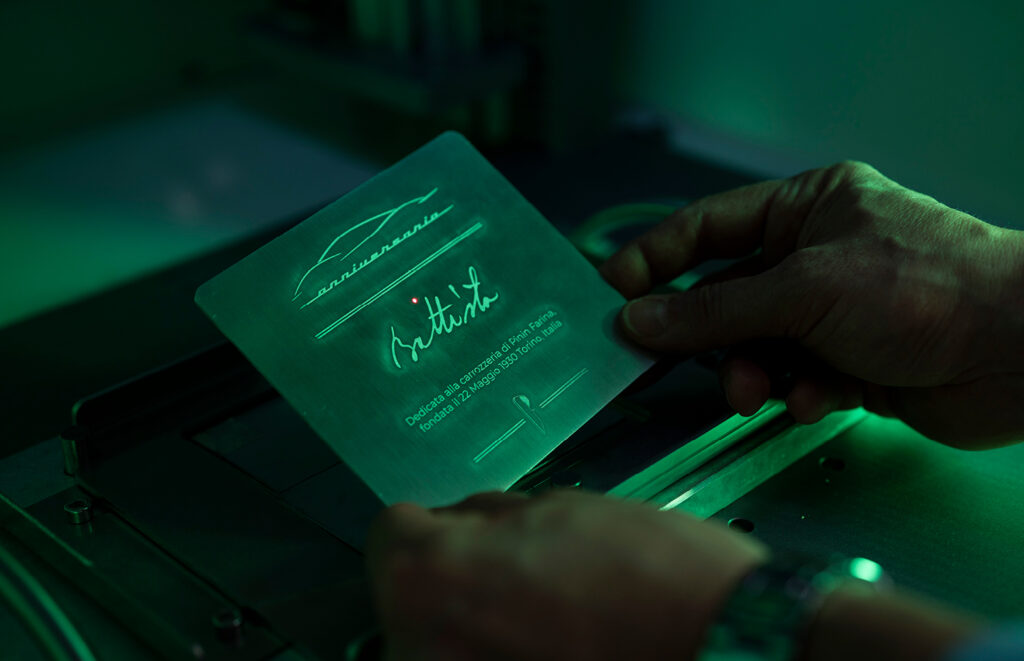
As a result, Dellachà is now facing the monumental task of making good on the dream of company founder Battista ‘Pinin’ Farina, who always wanted his namesake carrozzeria to produce a car of its own.
“[Battista ‘Pinin’ Farina] became, in a way, a victim of his success,” Dellachà explains. Farina began working in his brother’s body shop when he was just 12 and it was there, so the story goes, that he became enamoured with cars. By 1930, Farina had founded his own company — Carrozzeria Pinin Farina — in Turin to make car bodies for other brands, including G.M. and Renault. The resulting designs mixed rare form with function. “For example, in aerodynamics, Pininfarina was really advanced already in the ‘40s and in the ‘50s; they were the first one to build a wind tunnel,” Dellachà explains.
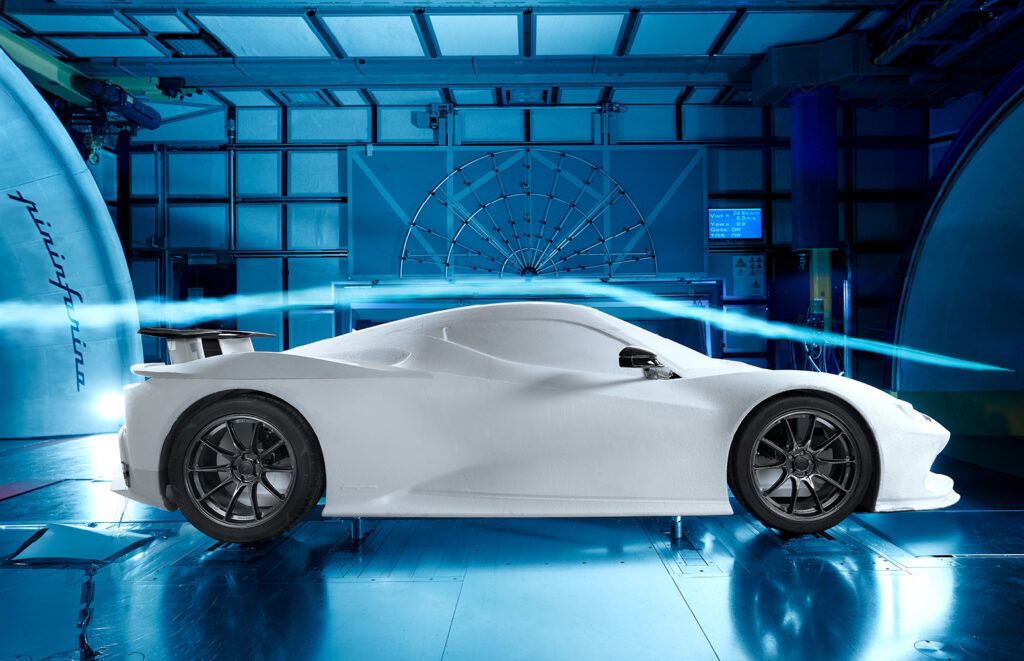
But it was really the firm’s post-war work leading up to and through Italy’s Economic Miracle that made the Pininfarina one of the greats — if not the great — of automotive design. Farina’s 1946 Cisitalia 202 GT was the first car in the Museum of Modern Art’s collection. And, in 1951, he struck a deal with Enzo Ferrari that saw Pininfarina design every one of Ferrari’s roadgoing cars right up until 2013.
For Dellachà, his favourite Pininfarina design is the Ferrari 246. “It’s the curves and shapes; you could say sexy, but there are many other favourites too: Aston Martins and Maseratis and Alfa Romeos,” he adds.
There are too many all-time classics Pininfarina designs to list here, so we’ll just pick a random sample: 1955 Alfa Romeo Giulietta Spider, 1959 Ferrari 250 GT SWB, 1966 Fiat 124 Spider, 1968 Ferrari Daytona, 1970 Ferrari Modulo concept, 1983 Peugeot 205, 1995 Bentley Azure convertible and on and on.
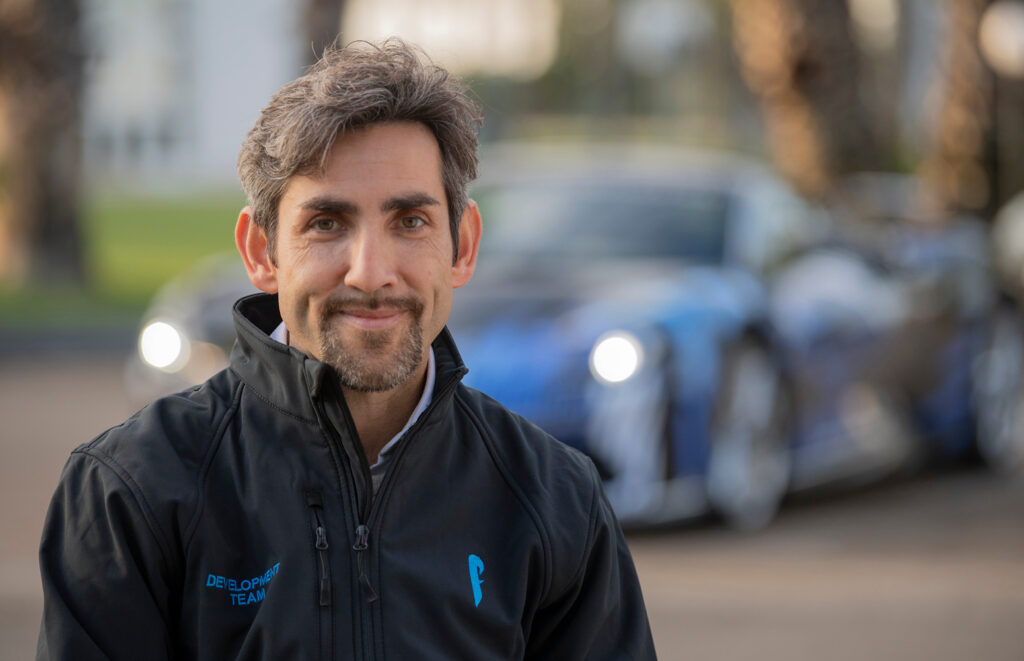
“When you look at the history of Pininfarina, you see the cars, and of course they are beautiful,” says Dellachà. “But if you think about when the cars were designed, they were [ahead of] the time. I mean, think about the Cisitalia. It was 1948, but it was looking like a car from the 1960s. So, there is this capacity of anticipating the future, envisioning the future. When you do that right, then you have the possibility to create an icon, a car that will stay beautiful, and therefore also valuable, for many years and decades to come.
To hear Dellachà tell it, that anticipation, that ability to create the future, is what distinguished Pininfarina’s designs over the years and made the firm what it is today. Nevertheless, Pininfarina was always making cars for others. Battista Farina died in 1966, never having a chance to build a car for his own brand. So you’ve got to imagine that now, finally having his name on a car — let alone this wild all-electric wonder-car — would’ve made Battista smile.
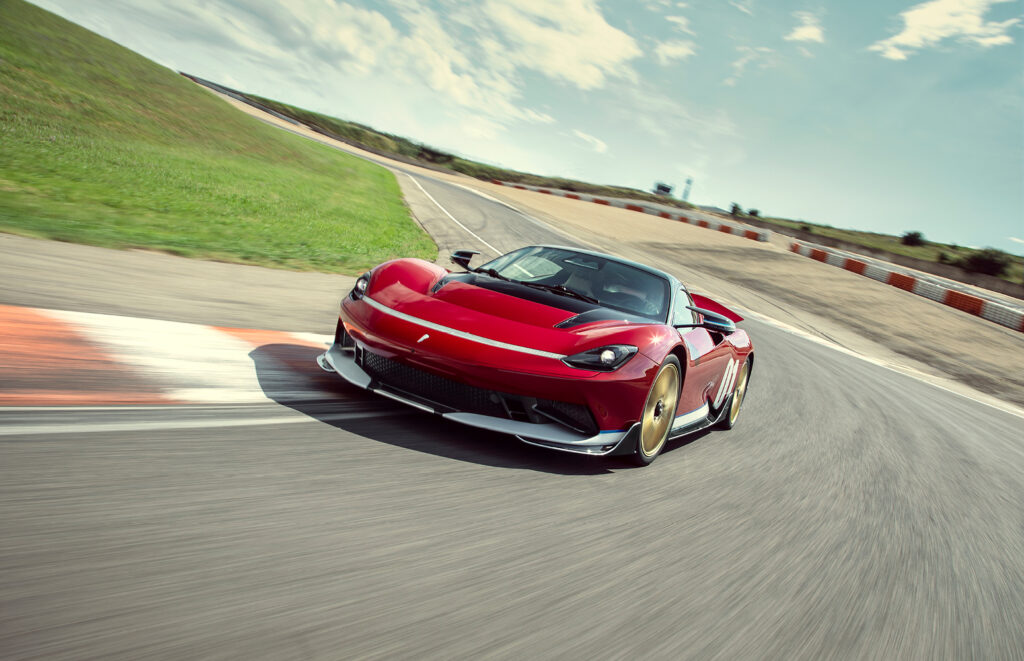
In case you’ve been living under a rock, the Battista is an envelope-pushing 1,900 horsepower, quad-motor, electric supercar built around a carbon-fibre monocoque and clad in carbon bodywork. It weighs around 2,000 kg but can nevertheless shoot to 100 km/h in 1.86 seconds (!!!) and 200 km/h in 4.75.
Much of its EV underpinnings come from the Rimac Nevera, but don’t mistake this for a coachbuilt car. “We co-developed together the rolling chassis,” Dellachà says. “They took much more responsibility on the e-powertrain. We took more responsibility on our own chassis. So, actually the cars drive differently; they are not only different in terms of the body and the interior, they actually are quite different in terms of the overall performance attributes.”
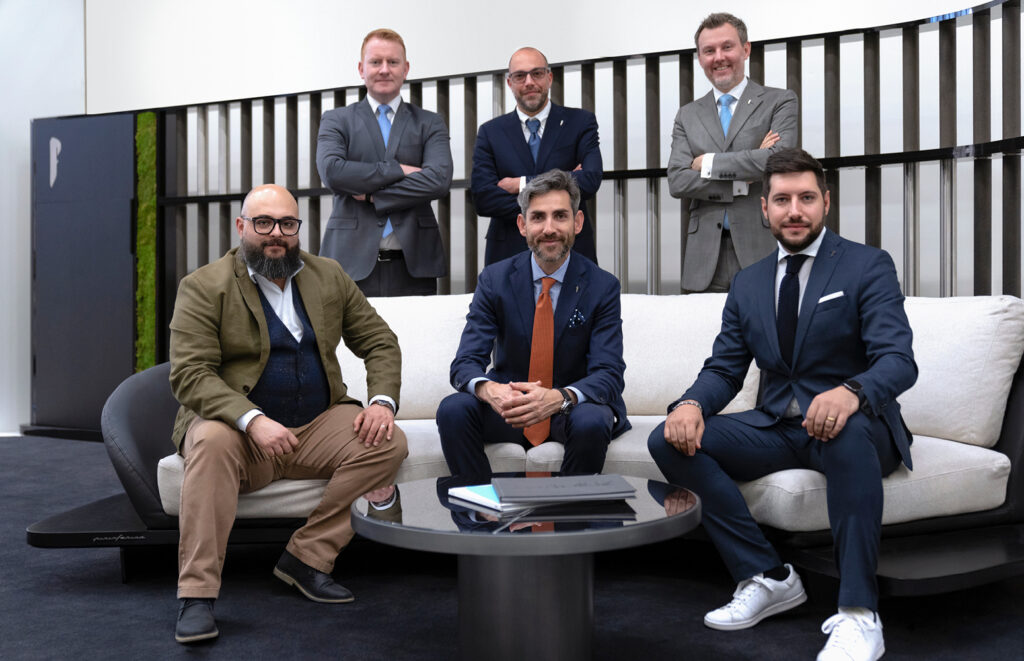
The new car company — Automobili Pininfarina — has its corporate headquarters in Munich, but the Battista was designed, engineered and built in Cambiano, Italy, the home of the Pininfarina Group.
The Group is a leading automotive and industrial design firm, roughly 700 people strong, creating everything from concept cars to sneakers, furniture, espresso machines, e-scooters, branded condo towers, yachts, and some very beautiful bicycles for De Rosa.
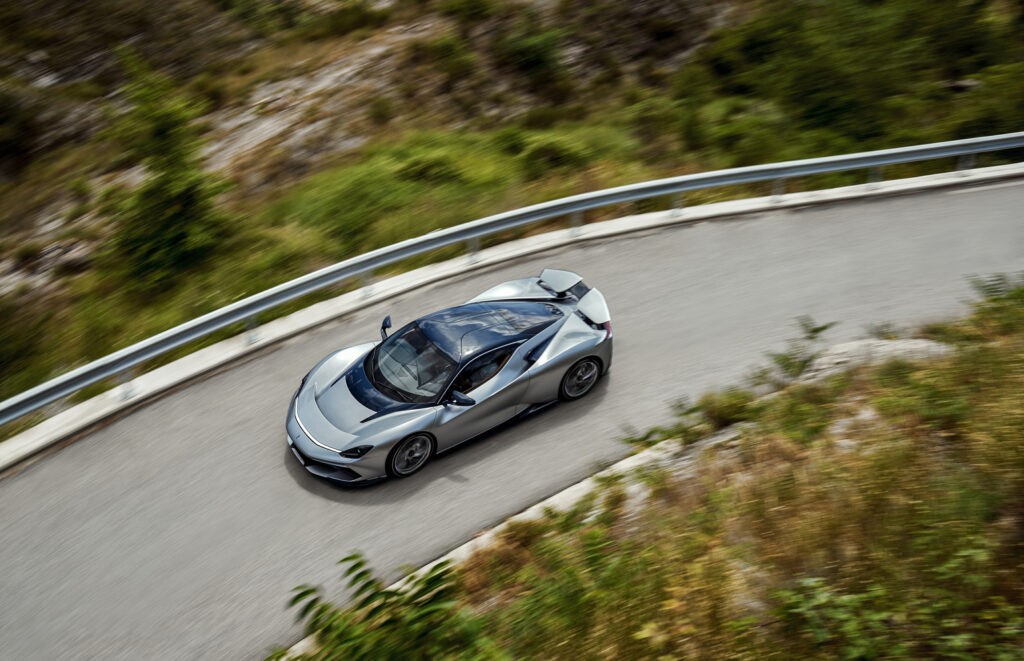
Automobili Pininfarina, however, was launched in 2018 by the Group’s parent company, Mahindra & Mahindra Ltd. in order to, “craft a series of beautiful and thrilling electric cars,” Dellachà said in a press release.
These cars would finally get to be a Pininfarina, not just a Ferrari or a BMW designed by Pininfarina.
As the company explains, “The Battista is the first car to exclusively wear the Pininfarina badge, but it is the latest in a long line of elegant, beautifully proportioned vehicles stretching back over 91 years. Some of the most valuable cars ever designed were penned by Pininfarina, ranging from masterpieces like the classic Cisitalia 202 to modern icons including the Ferrari F40.”
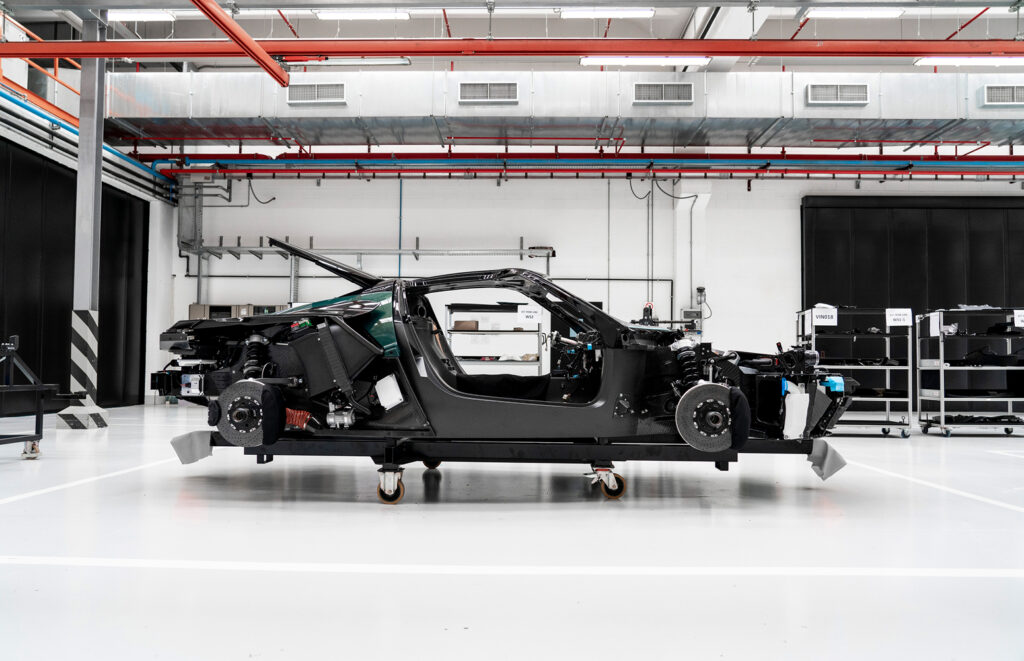
Of course, Dellachà’s job and the very existence of the Battista would not have been possible without the financial backing of India’s Mahindra & Mahindra Ltd. After years of losing money while major automakers (including Ferrari) gradually brought design in-house, Pininfarina was eventually bought by the Indian giant at a steep discount in 2016.
Launching a car company is a big gamble, even for a company with the history of Pininfarina and a pile of fresh capital. But, if all goes well, the Battista is only the beginning for Automobili Pininfarina. Asked what might come next, Dellachà delicately changes the subject. We’ll have to be patient.
An engineer at heart, he’s clearly excited about the future potential of automotive technology, and what it can offer drivers.
“I’m definitely one of the guys that really likes to do something in advance rather than waiting,” Dellachà says. (Remember that he left a good job at Maserati to take a chance on an all-electric supercar from a brand new company. ) “Still, I have the passion, especially for classical old cars. So, I keep that passion — and by the way, [EVs] are not a substitution — but the point is that I realize electric is, of course, about the chance to change mobility. In in our case especially, it is about being able to achieve a level of performance that was unseen.” EVs don’t have the limitations Dellachà had to push against during his years as an automotive engineer. You’re not bound by the thermal dissipation of a combustion engine anymore, he says, or the limitations of a transmission with clutches and differentials. As Dellachà is talking about this, his excitement and optimism is palpable, and exactly what Pininfarina needs.
One day, quad-motor electric sports cars might be commonplace. (I can only hope!) Today, once again though, Pininfarina is ahead of its time.