
Brace yourselves. Now it’s Bentley’s turn to reinvent itself for the future. Reinvention for a car company typically means new designs, a fresh look, a bold vision. It also means rolling out the brand’s classic cars from the museum. There’s inevitably talk of EVs and attracting younger buyers.
Car companies need to do this every few decades, but it doesn’t always go well. Need I remind you of Jaguar’s half-baked attempt? Change is much harder than status quo.
On the other hand, BMW’s Neue Klasse launch earlier this year has gone rather well — at least when measured against the brand’s unfortunate oversized-grille era. Volvo’s mid 2010s revival was a masterclass in good design. And, make up your own mind, but I’m personally very fond of Ferrari’s new sci-fi style.
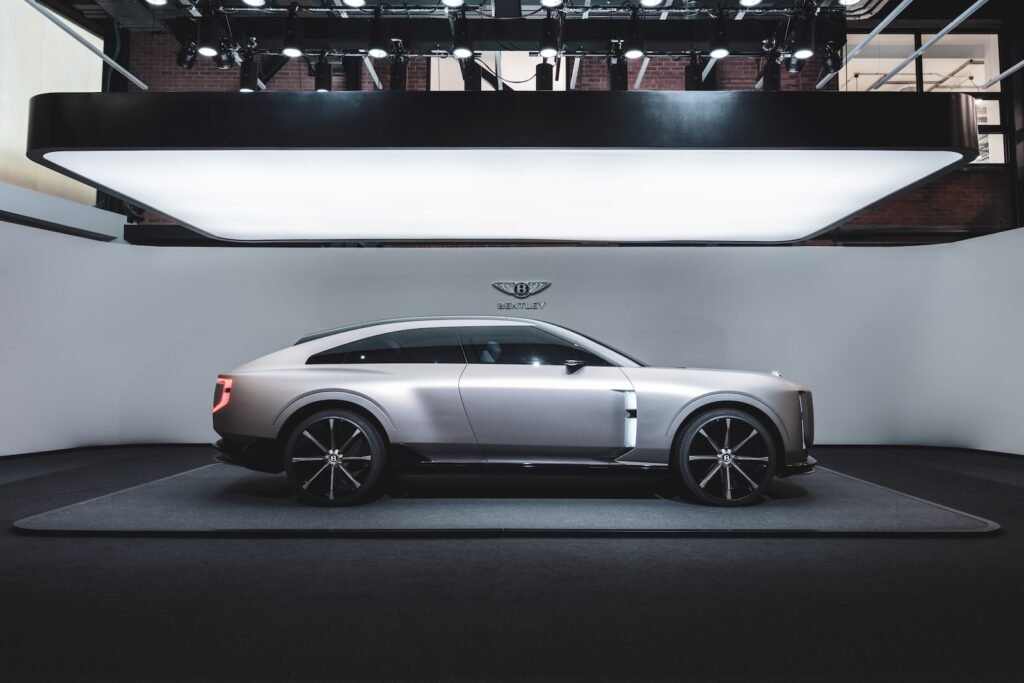
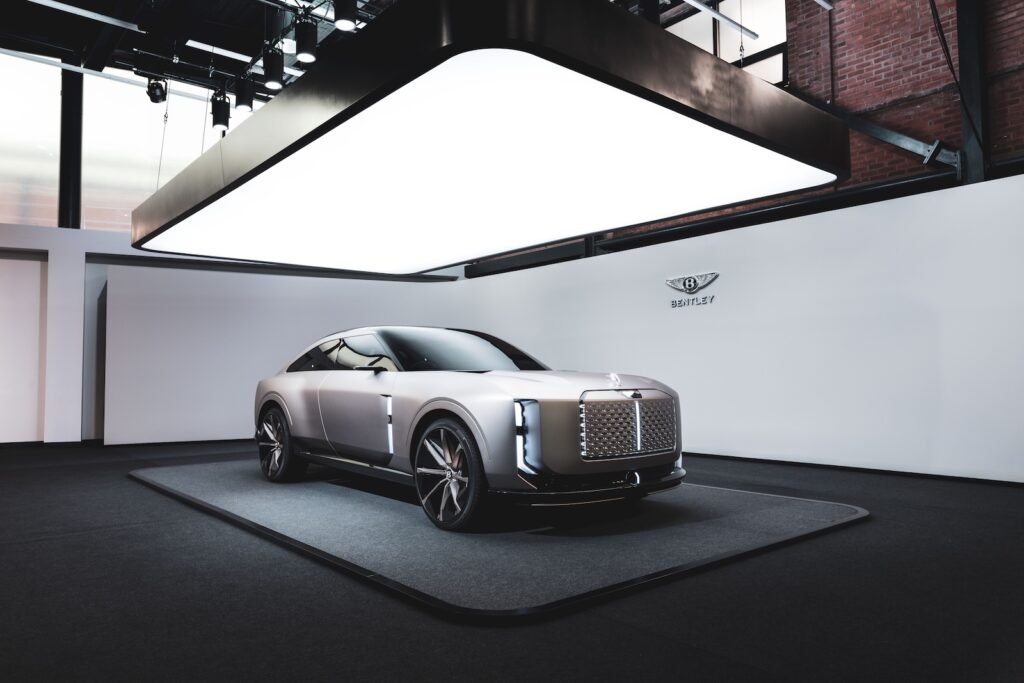
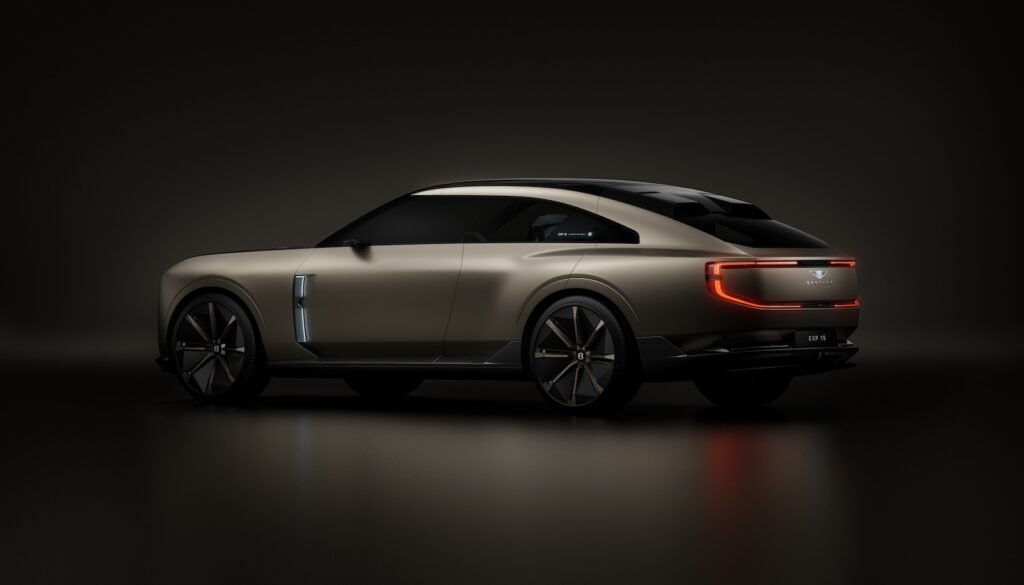
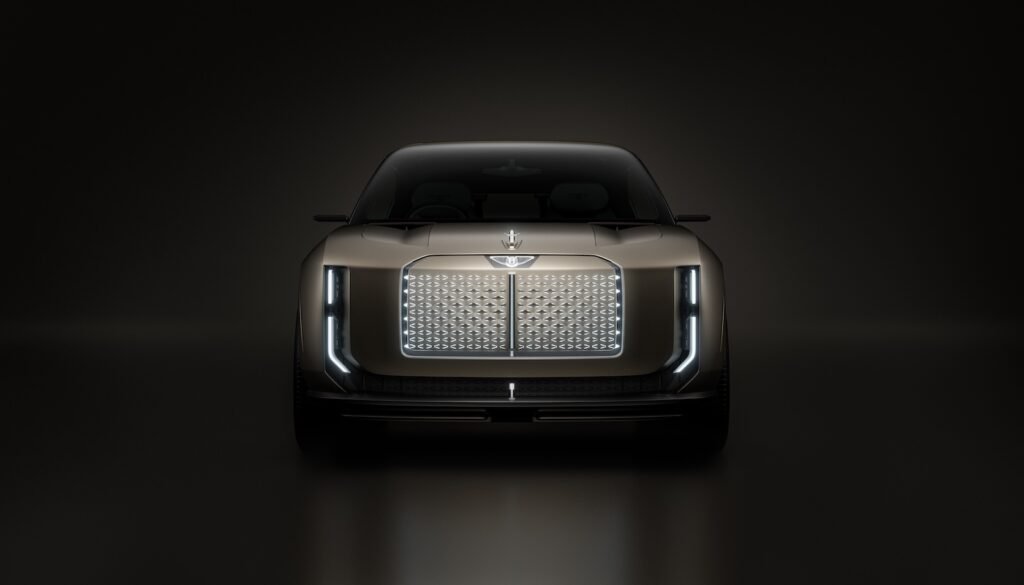
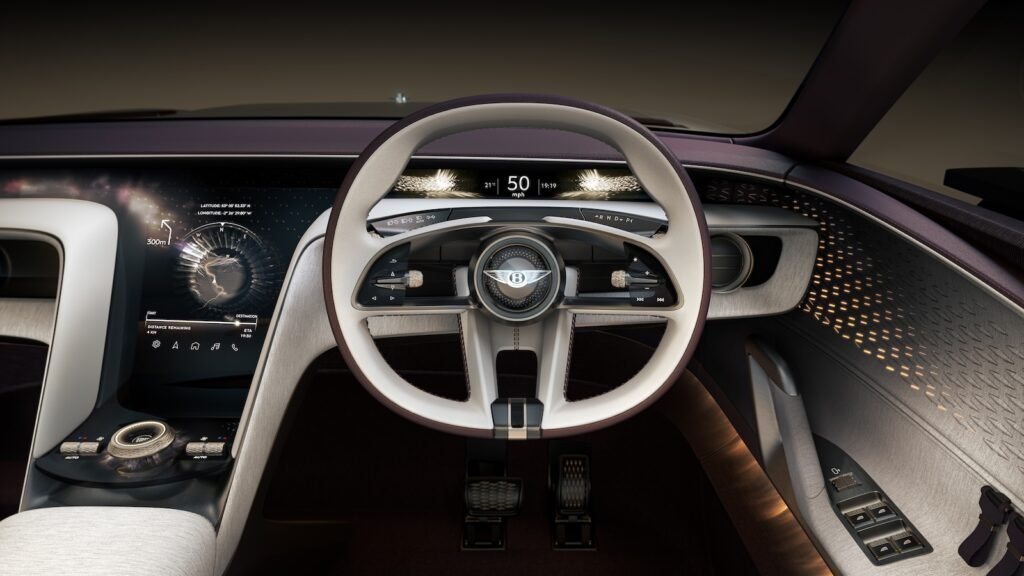
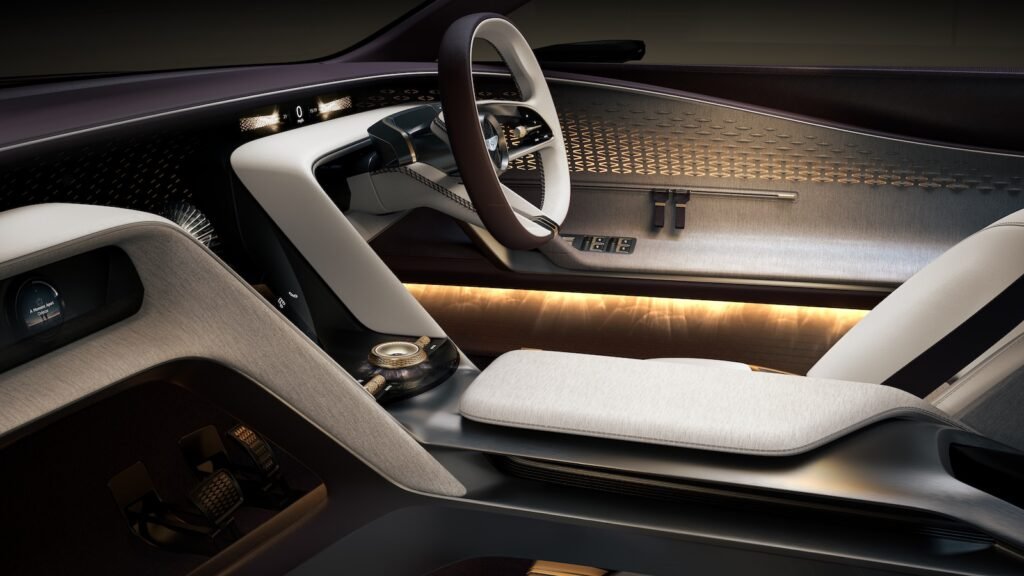
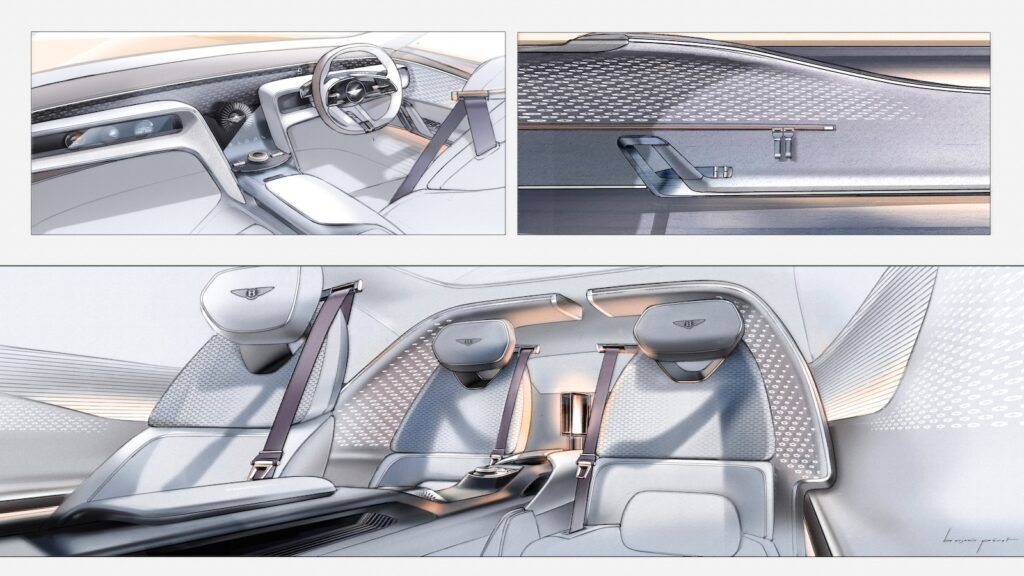
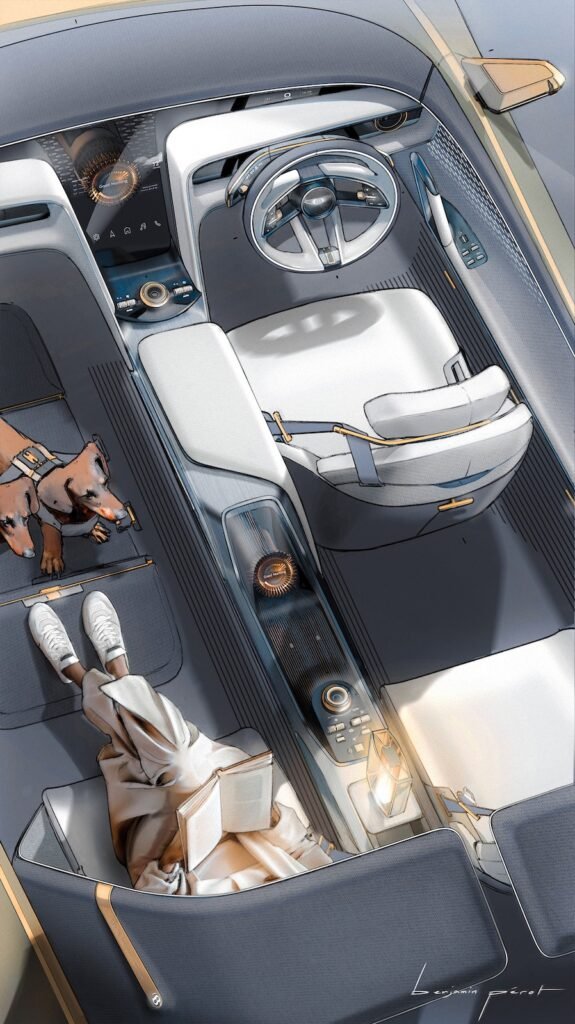
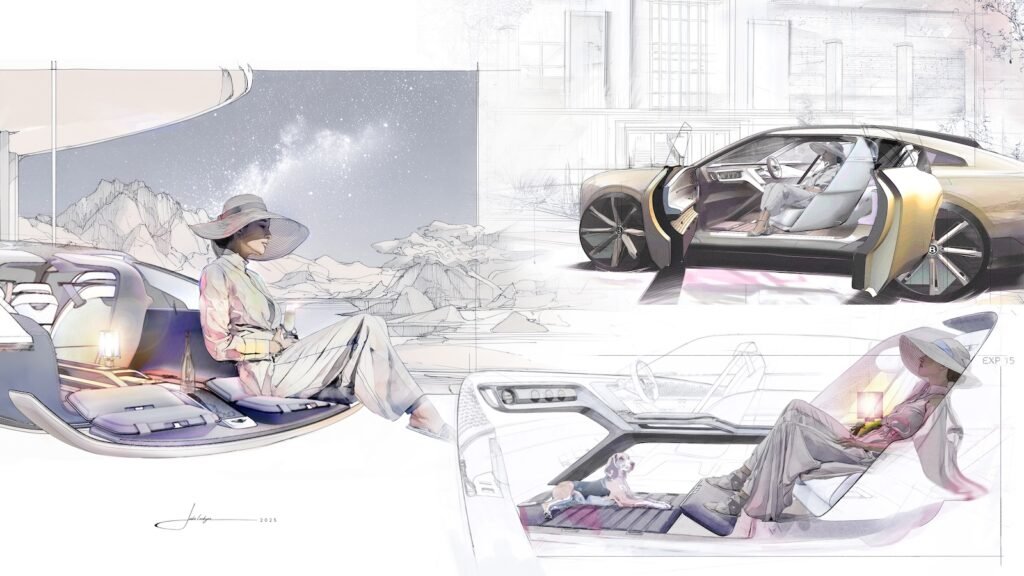
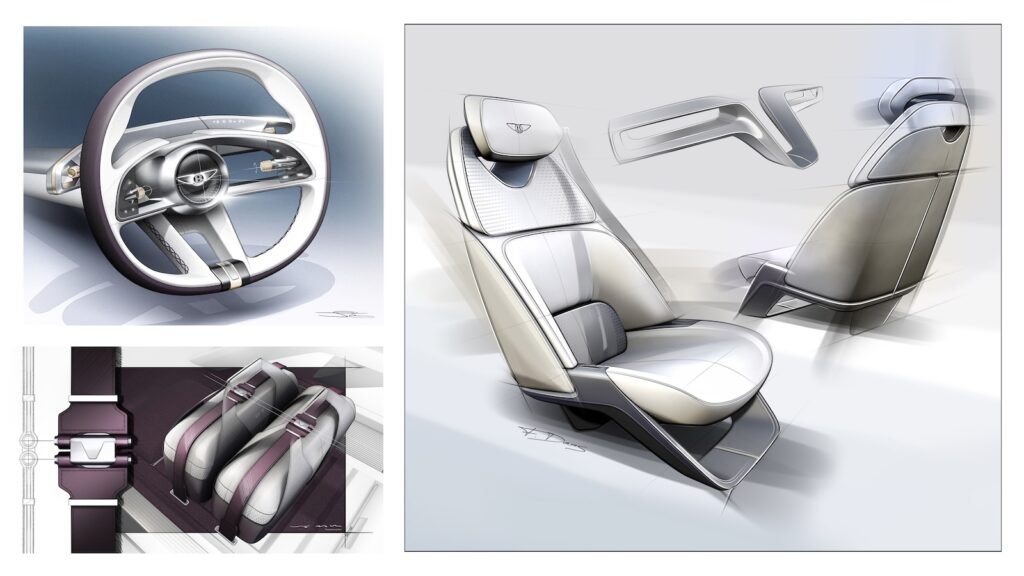
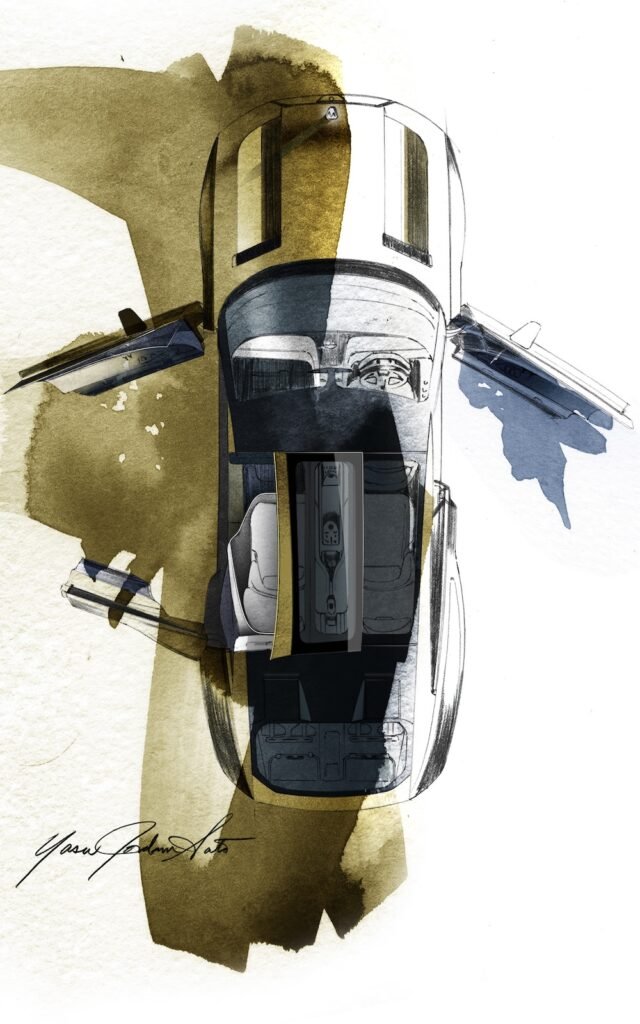
As for Bentley, its new EXP 15 concept, unveiled this summer (2026), points the direction forward. It’s not quite an SUV but not a sedan either. (The brand calls it an “elevated sporting sedan.”) The concept is more than five-metres long, with an unusual three-seat layout. It’s meant as a grand tourer. As such, it features a first-class robotic recliner that turns to greet occupants and a luxurious built-in dog carrier for your favourite hound.
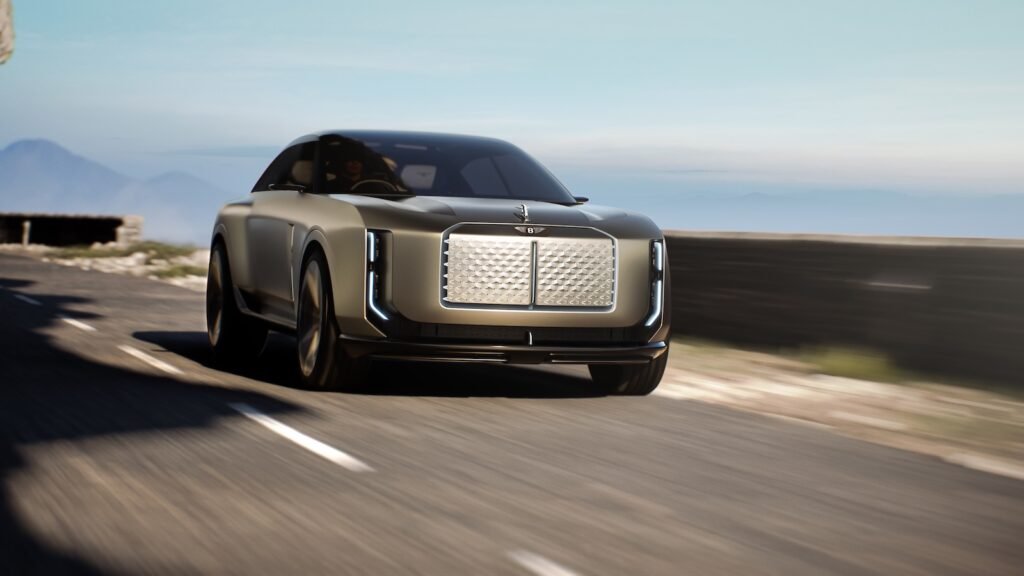
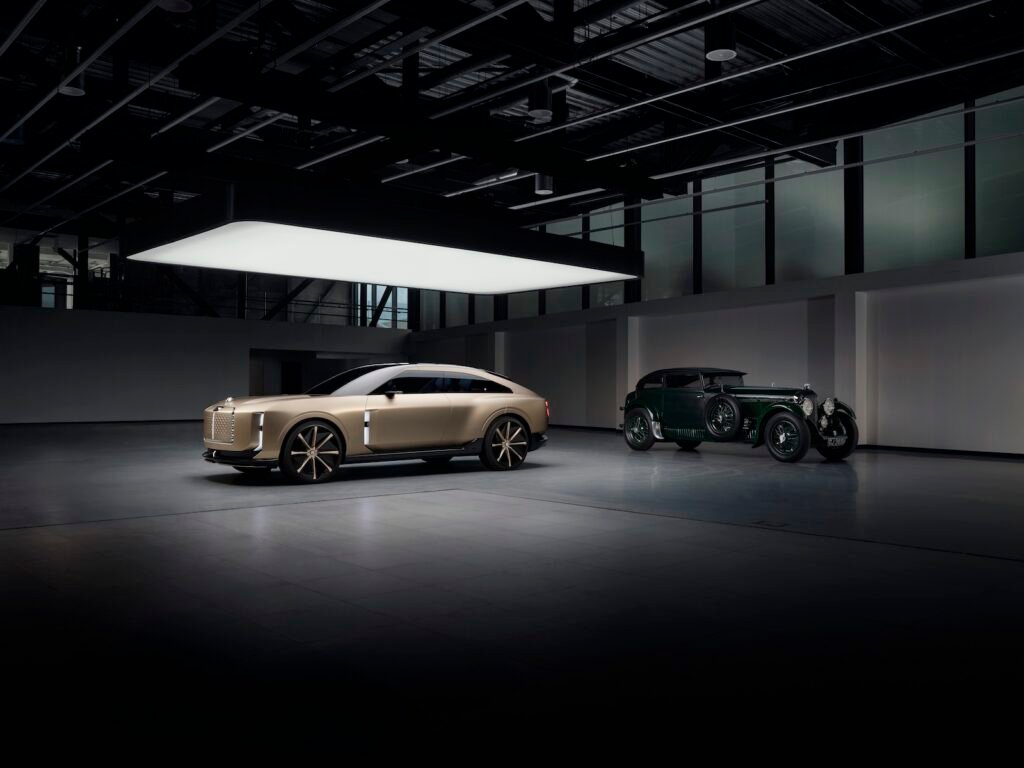
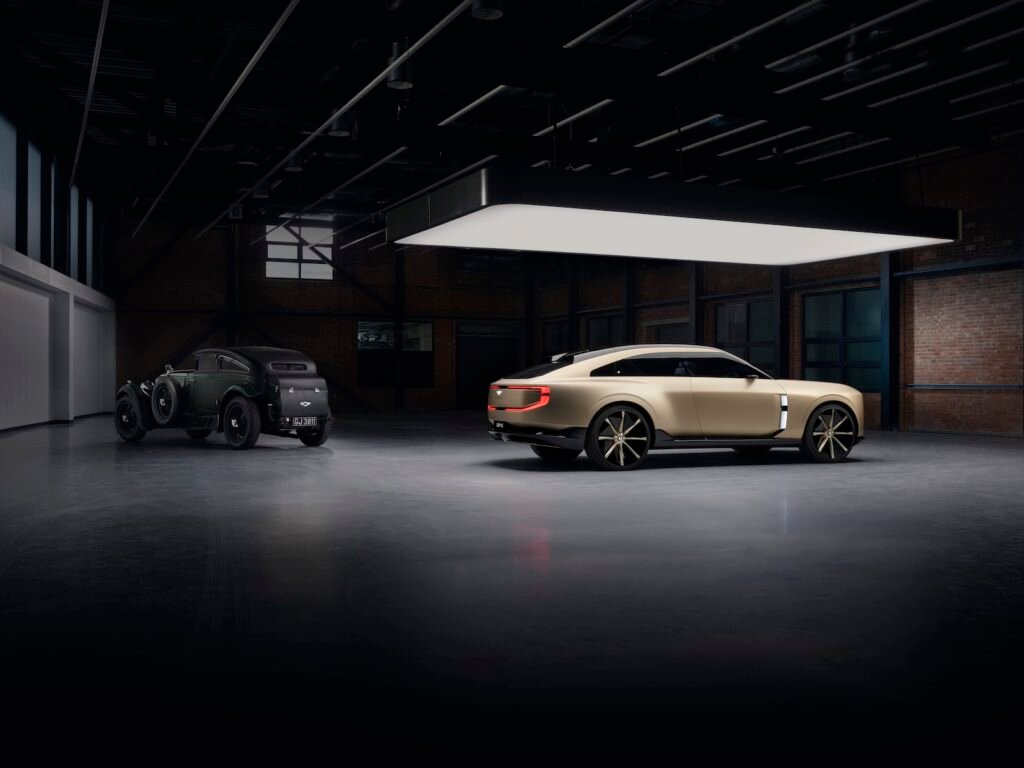
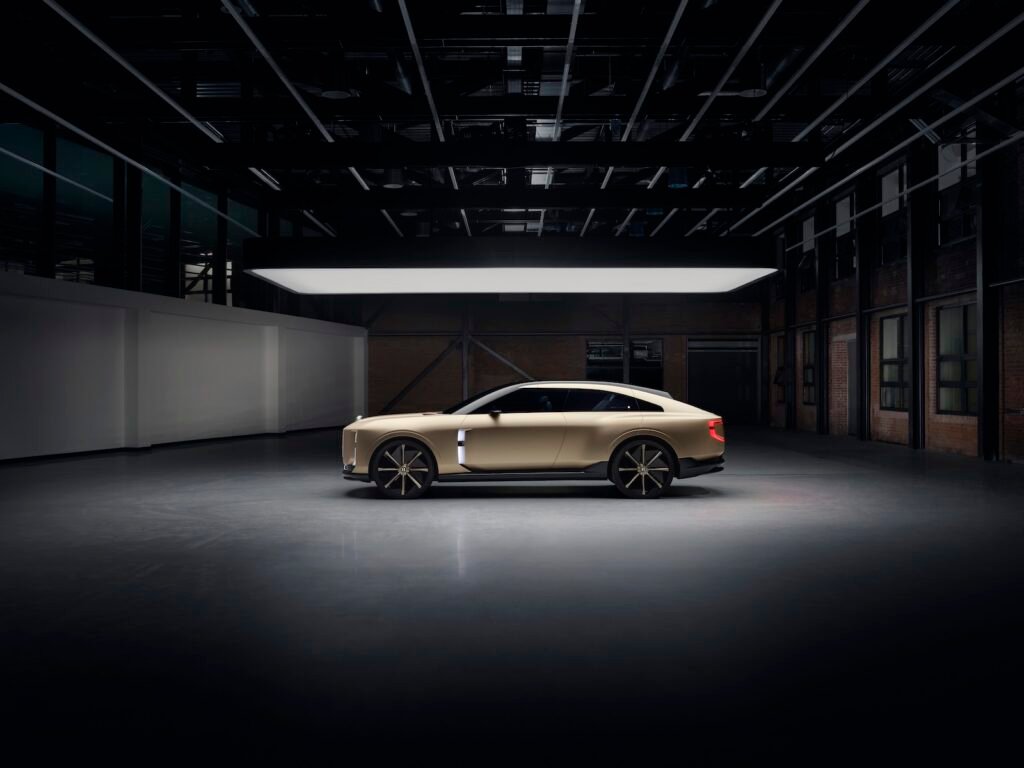
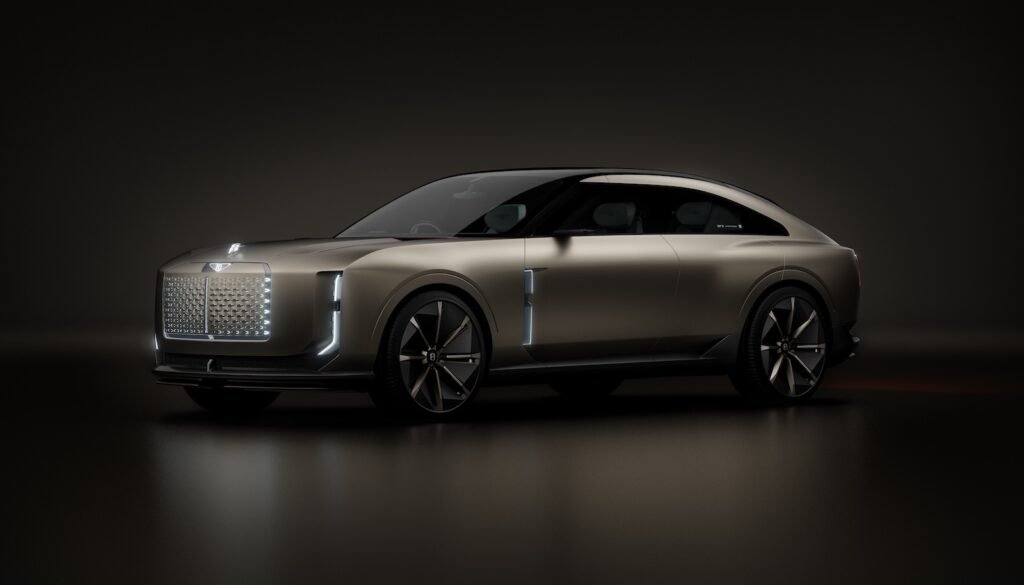
“We want to create the grand, grand grandfather for the future Bentley family,” says Domen Rucigaj, the brand’s head of exterior design, on a video call from Bentley’s new design studio in Crewe, England.
The concept is all-electric, but Rucigaj makes clear this is not a preview of Bentley’s first production EV. That car, which the brand is describing as an “urban luxury SUV,” will be revealed next year.
“We are teasing the design direction, the taste,” explains Rucigaj. It’s not about one car, but the whole future lineup. “There are a lot of elements that we will apply to future products. Of course, also for us, it’s important to see how the public reacts.”
Yasu Sato, Bentley’s lead manager for advanced and bespoke design, was also on the call with Rucigaj. Both of them are obviously passionate about the EXP 15 concept, and about Bentley. They understand what’s at stake. They’ve both risen through the ranks of the car design world to be where they are now.
“I’m originally from L.A.,” said Sato. “I started studying [car design] in high school, and then I went to the ArtCenter College of Design in Pasadena. I did a lot of internships, but the most memorable one was at Mercedes. That was my first taste of designing luxury cars. So that kind of stayed with me, in my mind. My first job out of school was at Calty, which is Toyota/Lexus in Newport Beach. I was there for only a year, until I moved to Paris, France to work for Renault. I was there eight years, and I did some production cars, like the Clio, and a show car.”
Sato’s concept for Renault was the 2018 EZ Ultimo, unveiled at that year’s Paris show. “It was basically a Bentley,” he says, smiling. The concept was nearly six-metres long, and had an interior resplendent in marble and velvet with a beautiful herringbone parquet floor. It’s like Sato was already rehearsing for his future job. After doing the EZ Ultimo, “I was like, I always wanted to do luxury cars,” he adds.
“It was monolithic Bentley with the wrong logo on,” laughs Rucigaj.
For his part, Rucigaj started his career at Volkswagen in 2007. “I had different job options, but at that time, the best school to learn car design was at Volkswagen. It was an amazing team of the designers, which are now spread around the world. […] But at that time there was some particularly big names at the Volkswagen studio.” (Among them legends like Walter De’ Silva, Klaus Bischoff, Flavio Manzoni and more.)
“Some of my babies are Arteon, the Touareg. Then a few show cars for Gran Turismo. In 2015 I wanted to move, so I moved to Audi from 2015 to 2022. There I also did few show cars, and a few production cars, some of which will still be coming in the future from Audi,” he explained.
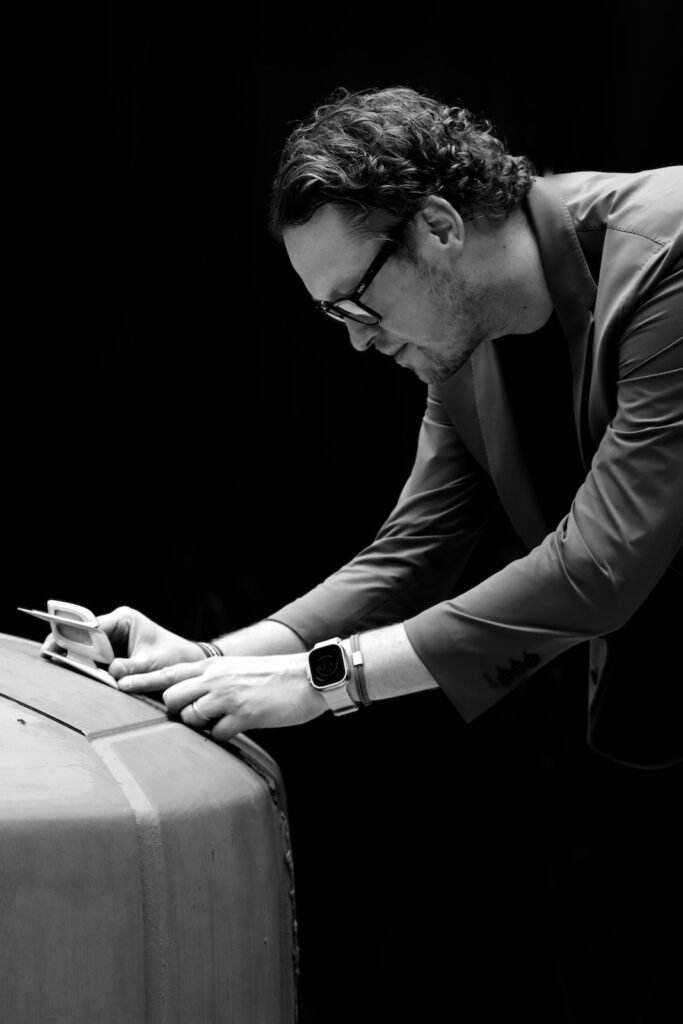
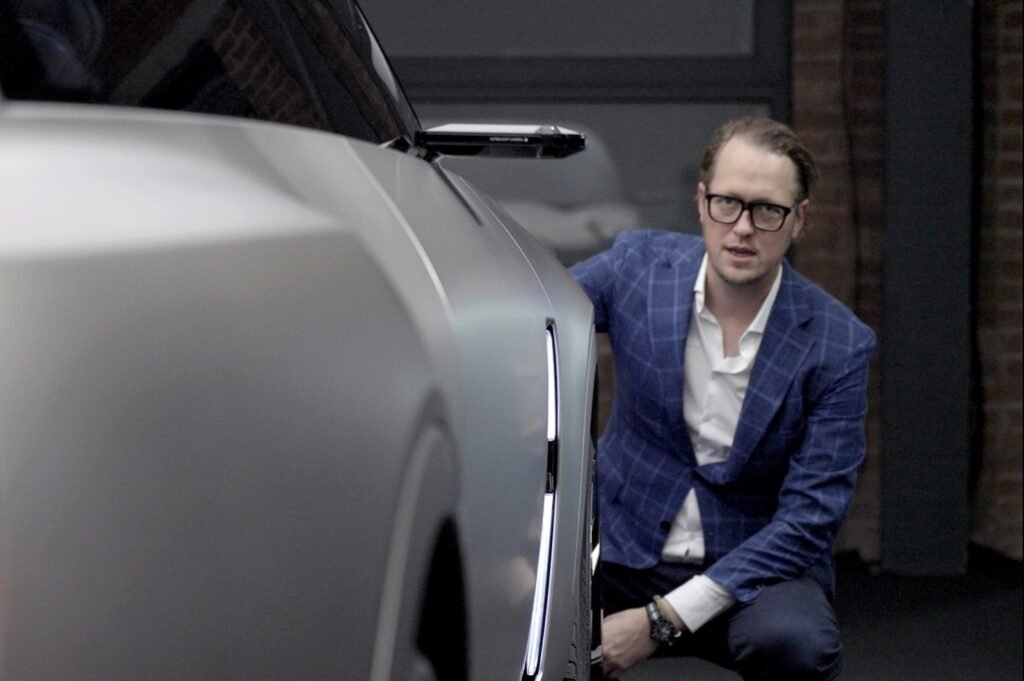
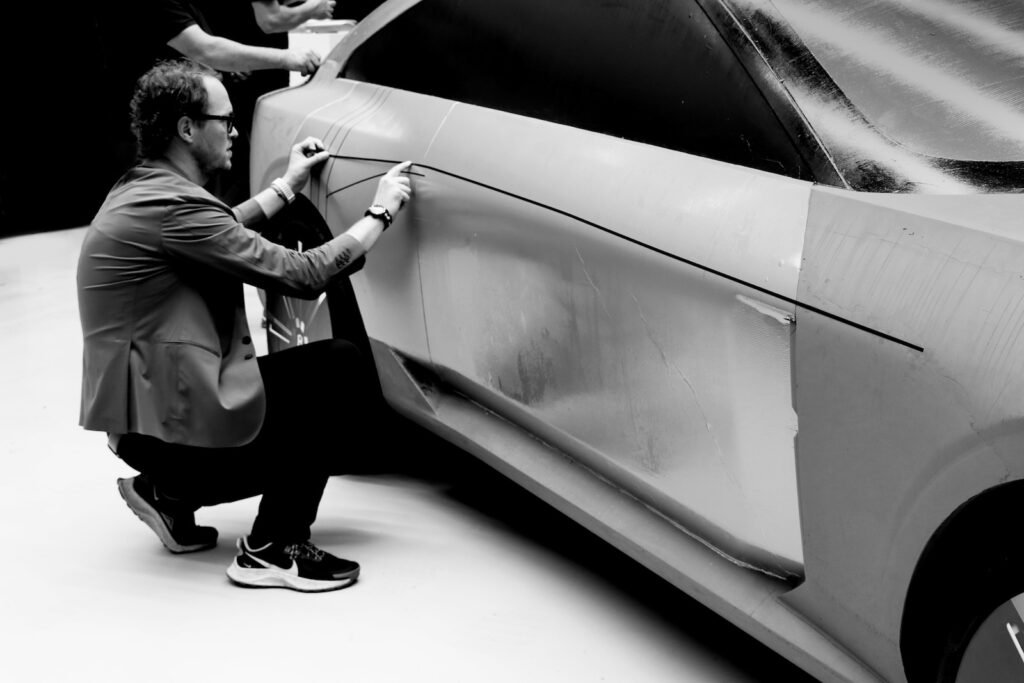
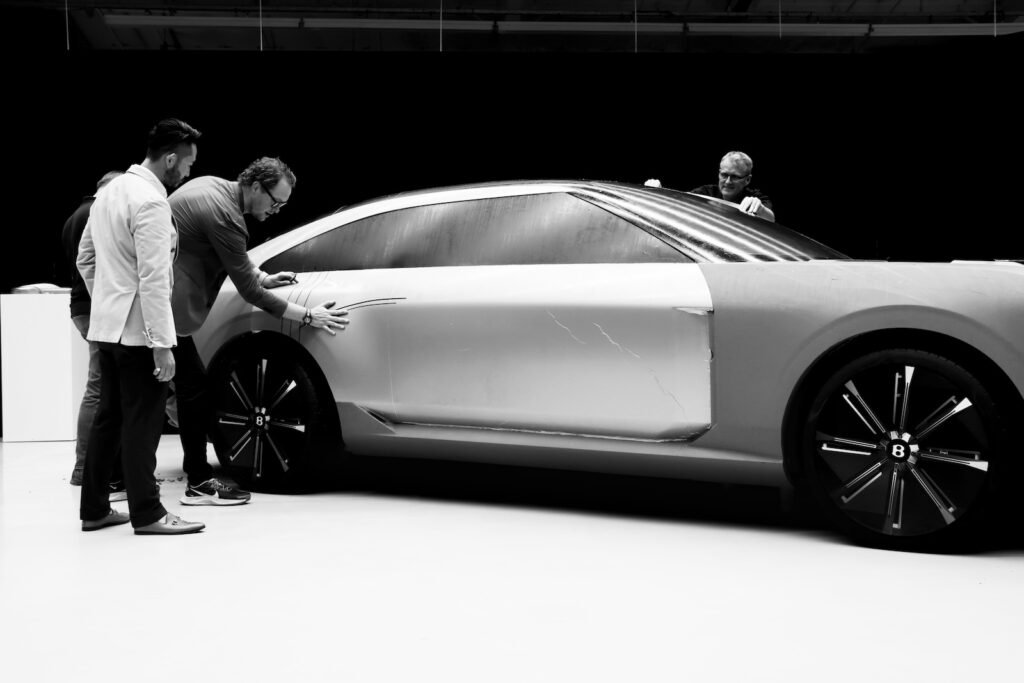
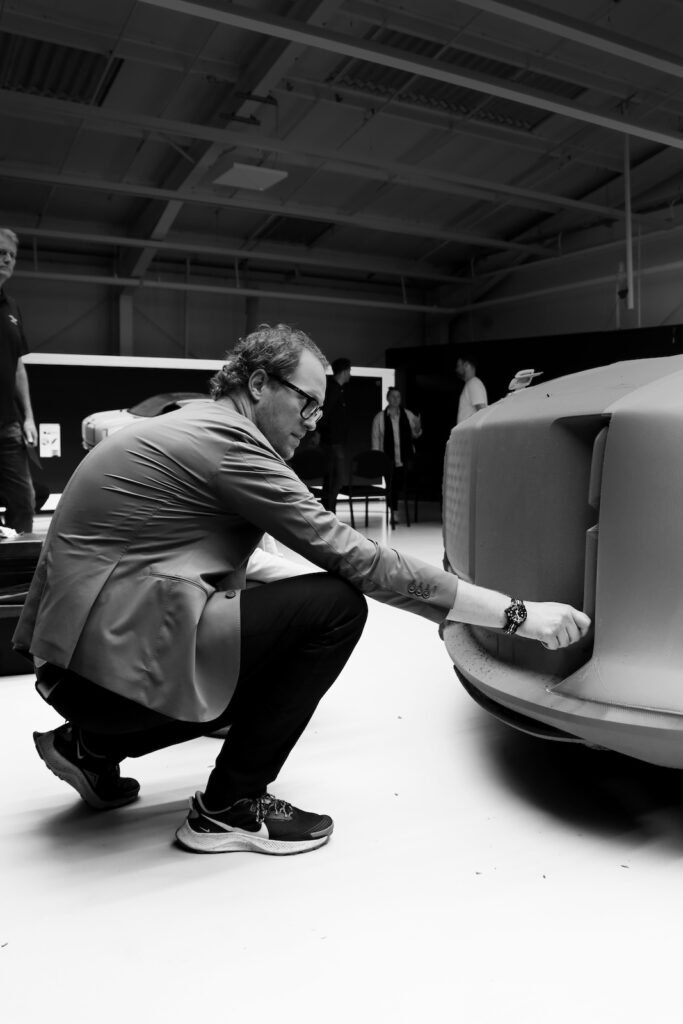
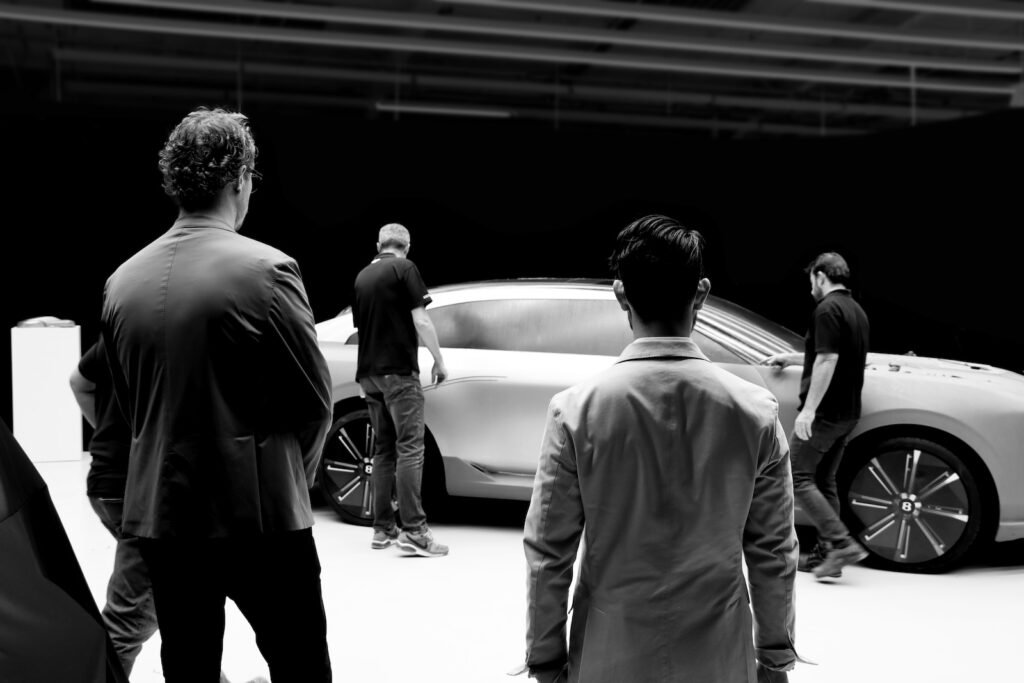
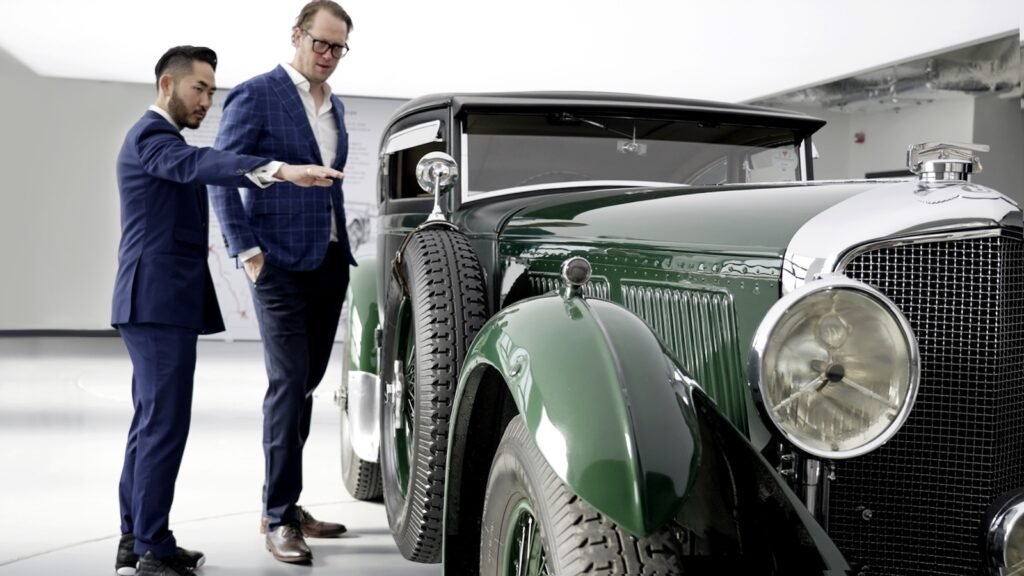

“You know, I started with the fundamental school [Volkswagen] then you go to university, which was Audi. And after ‘university,’ I said to myself, ‘okay I need to do a PhD.’ And a PhD is Bentley. It was really exciting for me to join Bentley in 2022, because I see the brand moving in very strong direction, modernizing, and we want them to be much more progressive and dynamic.”
It’s a critical juncture for Bentley, but an exciting one.
The brand found its way back to financial health and profitability under the reign of chairman and CEO Adrian Hallmark. But he left in 2024, and was succeeded by former Porsche executive Frank-Steffen Walliser.
“Frank brought lot of positive movement into Bentley. He’s a very passionate car enthusiast, and he loves Bentley,” Rucigaj said.
You may recognize Walliser’s name; he’s a long-time Porsche exec and the man considered the “father” of the 918 supercar. So, it seems Bentley is in good hands. But he has his work cut out for him.
Ever since the flagship Mulsanne sedan was dropped from the lineup, it’s been a three-model brand: Continental coupe/cabriolet, Flying Spur sedan, and the Bentayga SUV. The SUV is getting a bit long in the tooth. Everyone is wondering: what’s next?
Part of the goal will be to broaden the appeal of the brand, to find new buyers. Or, “expanding the bandwidth,” as Rucigaj puts it. “And that’s why the future of Bentley is very bright, because we will offer in the future a lot of products which will hit the younger generation and also give the opportunity for collectors to have something which is classical Bentley,” said Rucigaj.
“We know what Rolls-Royce’s [average customer] age is. I think it’s 35,” he said. “Ferrari’s age is even lower now. So, of course, we are looking at what the competition is doing, and we also want to hit that. […] We all know that our previous customers were getting — I mean, it’s been written about, older and older — and that’s why we said we need to expand the bandwidth. We wanted to not just focus on the 35 to 45 demographic or whatever. We wanted to create a bigger bandwidth for younger customers, and then also our collector customers. There are a lot of collectors worldwide; some of them have been collecting Bentleys for more than 20 years,” he explained.
The question for the EXP 15 then, is whether this new design language can appeal to both diehard Bentley fans and younger drivers, many of whom have never purchased a Bentley before or have no attachment to the brand.
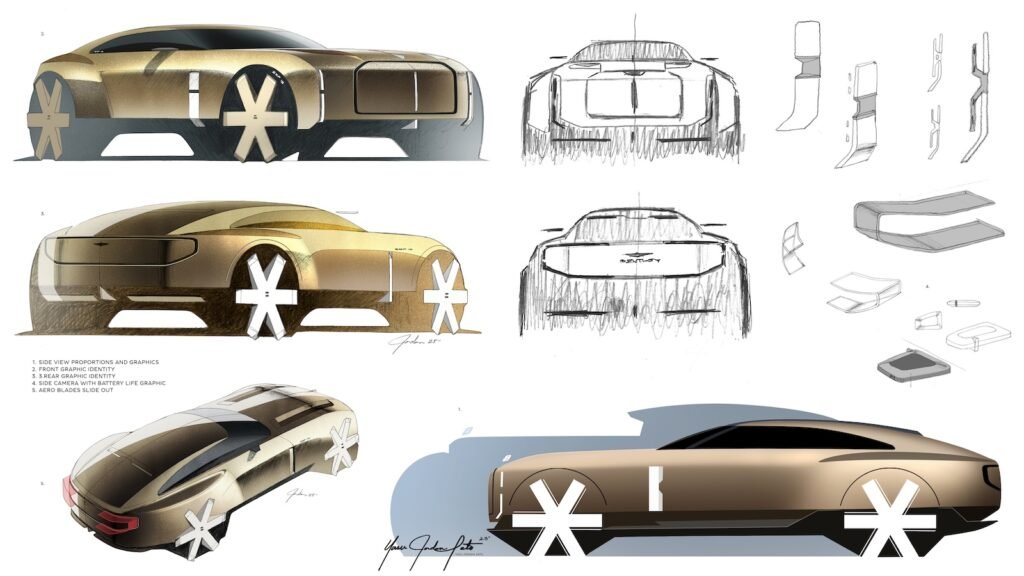
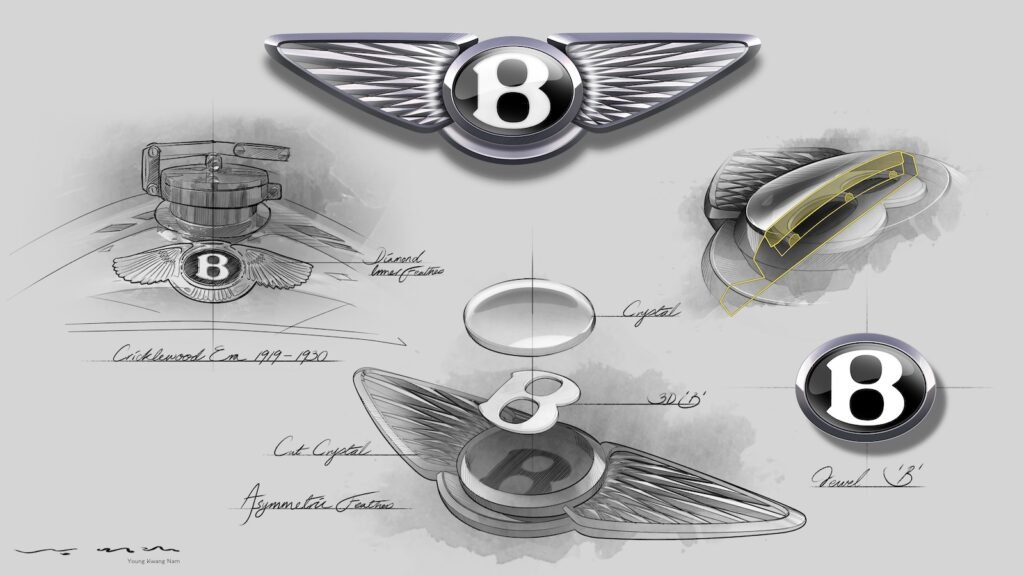
“It has a lot of Bentley DNA,” Rucigaj said of the EXP 15. “It has a lot of history from the Blue Train. It has some modernity of Continental R. It has the vertical lamps. (When Rolls-Royce bought Bentley lamps went horizontal, but the first continental R had vertical lamps.) Also, the surfacing — I’m big fan of Arnage. I love Arnage. I love Mulsanne — and you can see on the body side, the tension of the body side surface, it’s coming from that period of time. […] We have a Blue Train DLO [Daylight Opening]. We have a Blue Train boot-lid inspired back of the car. We have a grille which is behind the body color, with the diamonds hidden behind.” Some of these elements will be on production cars soon, he promised.
It’s clear speaking to both Rucigaj and Yasu that they’ve put their blood, sweat and tears into this concept. Rucigaj said as much.
But the reaction, at least the public reaction, has been mixed.
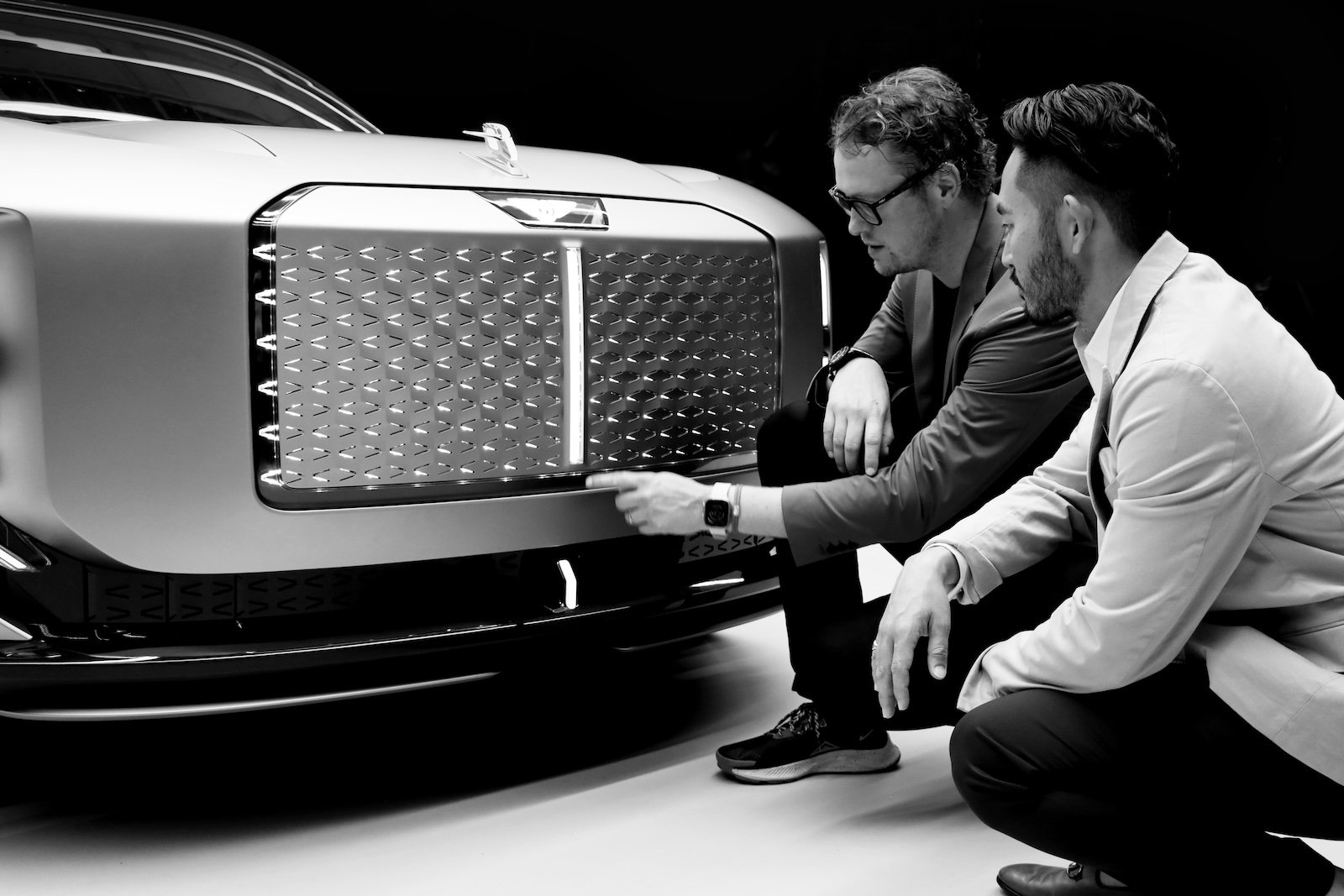
“Even though it’s uncomfortable for some people, you have to do that. That’s our job as designers, to move things forward,” said Sato. “If it’s comfortable with everyone, then it will be an economy car. So then what’s the point? You know, we are not like everyone else, and that’s how our customers feel,” he said with conviction.
“For me, the EXP 15, it’s a new breed,” added Sato. “It’s a new breed of animal. I think that’s why everyone is so uncomfortable with it. But there’s nothing like it out there for sure.”
Rucigaj explained in another way: “Punk culture started in the late ‘70s, and it moved not just England, it moved the world. It was a movement. […] In the modern world, you need to create a movement if you want to change something for the future.”
Creating a movement, a new animal, a new genre of music, those things are hard. And they take time.
Personally, I think they’re onto something, but the new concept doesn’t quite hit for me. The fastback shape feels a bit generic, too much like other fastback crossovers. The rear window could’ve been more upright and pushed back. It’s missing the stately and powerful C-pillars and rear ends seen on the Mulsanne or the Blue Train. The latter’s squared-off cabin combined with the infinitely long hood is what made the Blue Train — officially the 1930 Bentley Speed Six Gurney Nutting Sportsman coupe — look so impossibly, well, badass.
That said, there are some good details here too. Bentley understands that people are fed up with screens and digital experiences. That’s why the digital displays can be hidden to reveal a wood panel across the dash. The lamp between the rear seats makes the cabin look very much like a living room (this is a good thing). Many of the materials are also refreshingly un-automotive: silk jacquard textile, wool “thorn-proof” cloth, woven metal mesh, diamond-cut wood and 3D-printed titanium.
But enough from us. Bentley, as well as Sato and Rucigaj and the whole design team, want to hear from you. The company is inviting the public to give feedback on the new design in an official survey, so have your say.