
Photography by Zaid Hamid & courtesy of Valentino Balboni
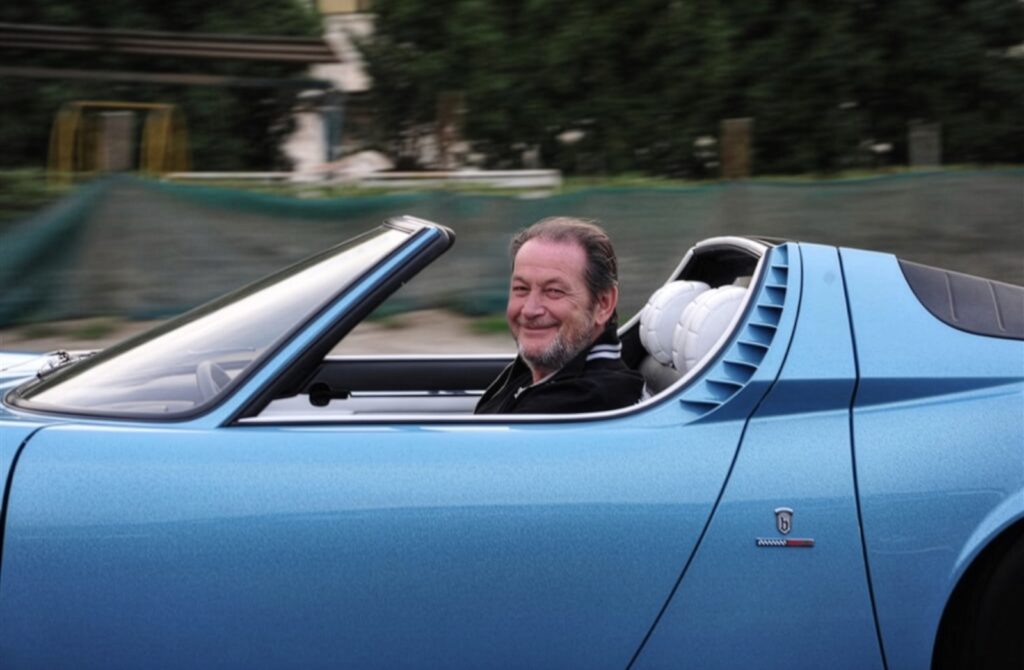
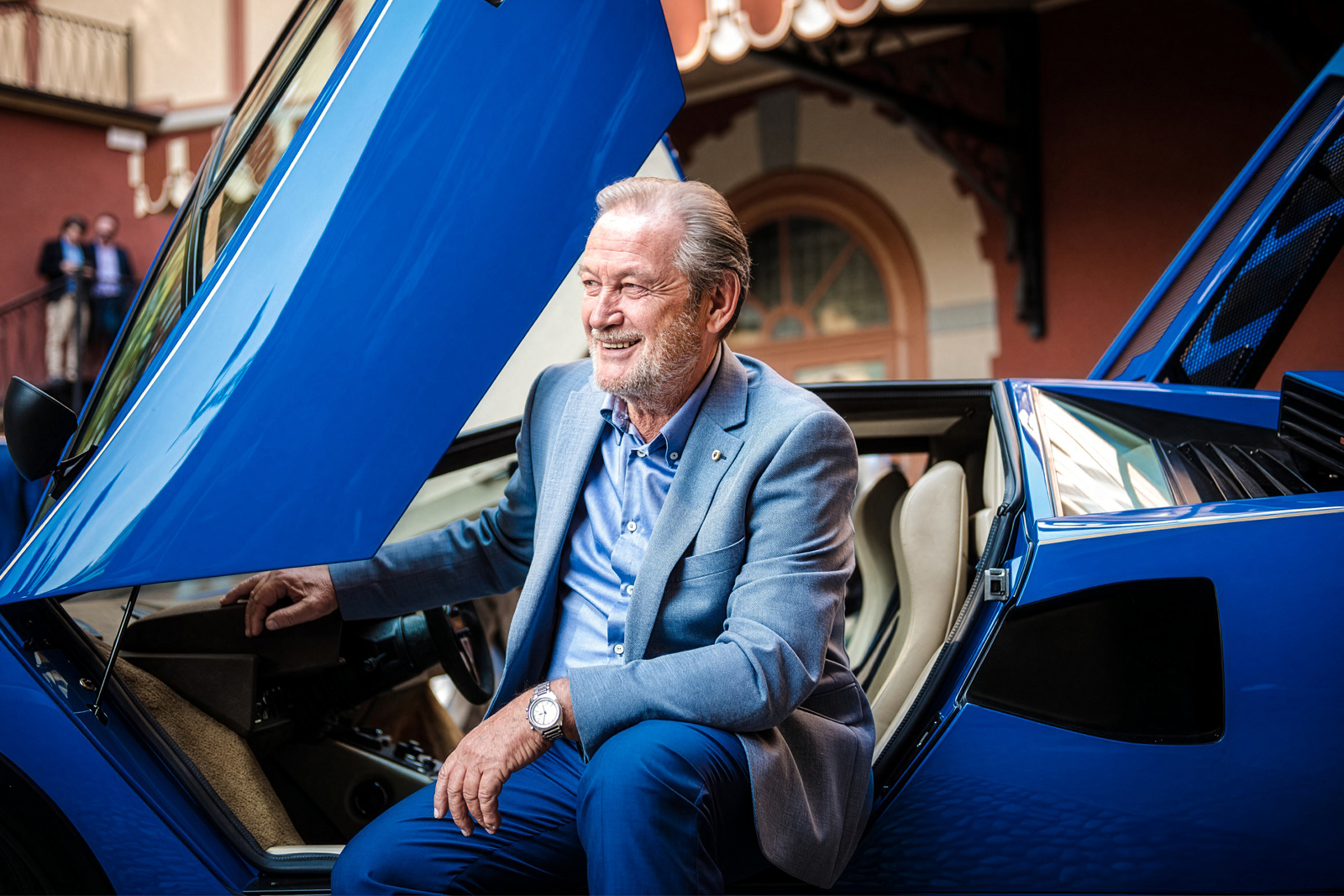
Valentino Balboni is having car trouble. Even Lamborghini’s legendary test-driver, a man of superhuman talent behind the wheel, is not immune to the mundane realities of everyday driving now that he has, finally, officially retired. He’s stuck by the side of the road with a car that has broken down (and no, it’s not a Lamborghini).
“Ah! We have an appointment, yes?” he says with what sounds like genuine enthusiasm. We’ve never met before but he answers the phone as if we’re old friends. He’s very apologetic and asks if, perhaps, it would be okay if I call him back in a couple hours. He’s exceptionally polite, affable, and somehow even sounds… happy!? The rest of us would likely be in a foul mood in that situation, but apparently not Balboni.
Maybe this is a stretch, but I do genuinely wonder if Balboni’s outlook on car trouble — and by extension cars, life, driving and everything — was coloured by the life and death stakes of his previous day job as Lamborghini’s chief test-driver, a job which he held for nearly four decades. From the early 1970s until 2008 when he was forced to retire by Italian law, Balboni shaped the very essence of every Lamborghini.
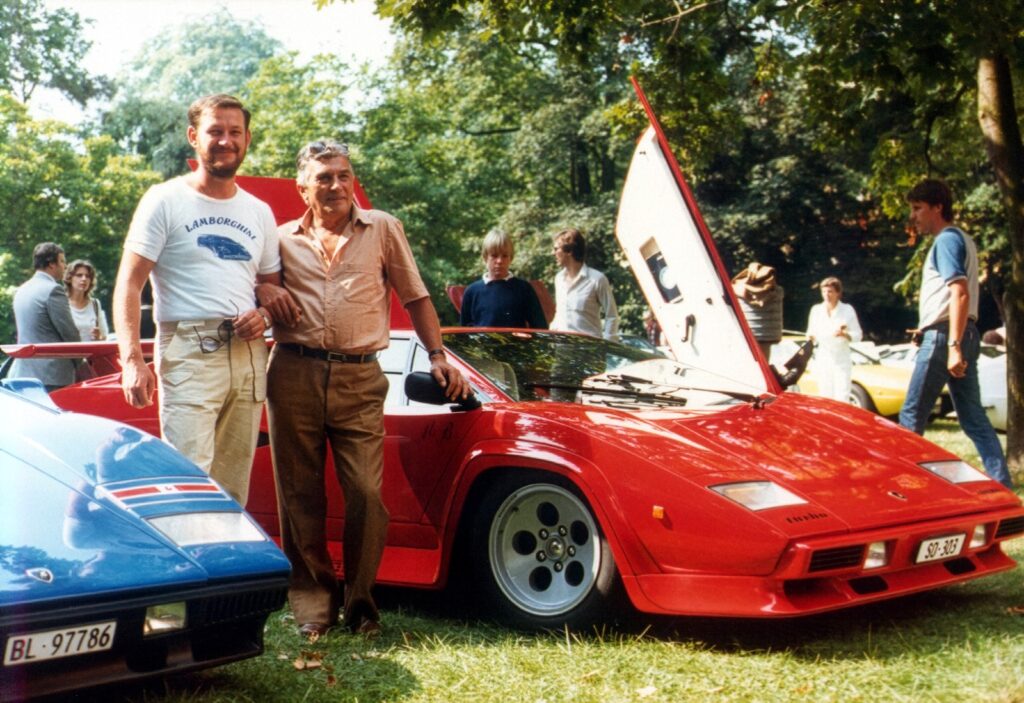
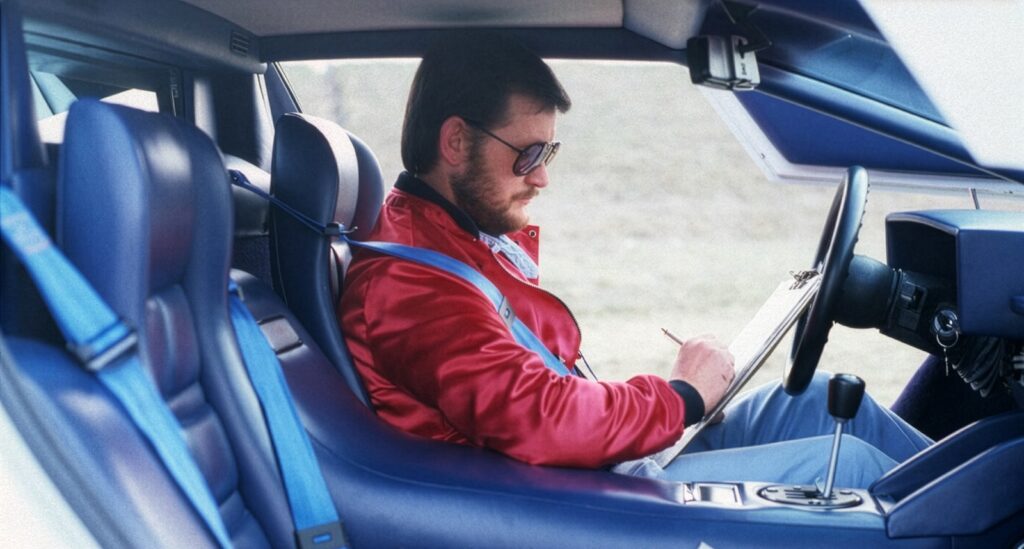
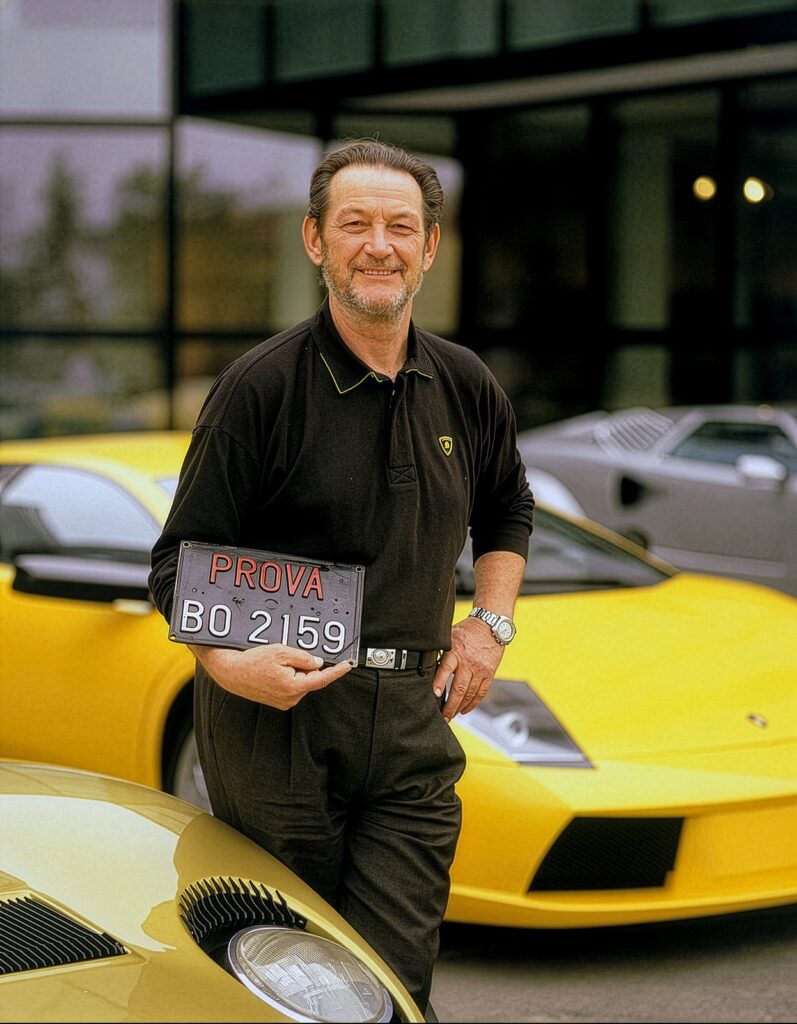
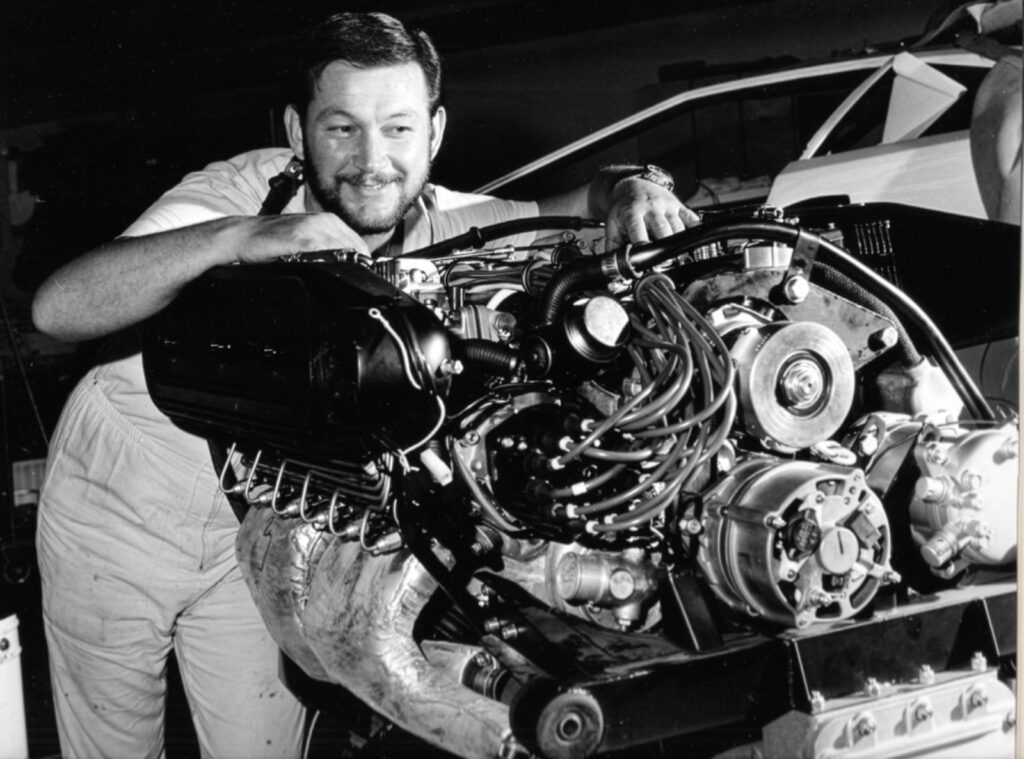
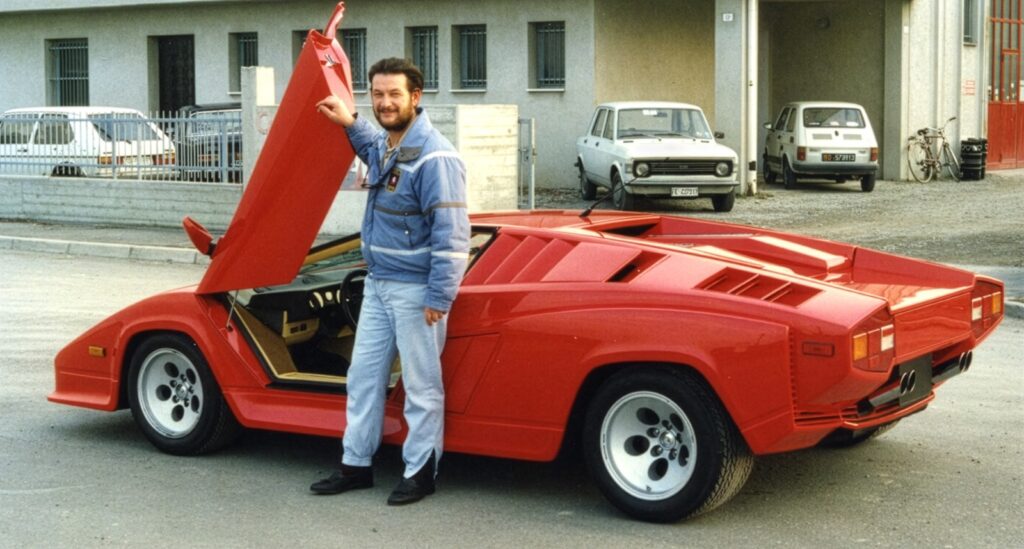
“A crash? It happened a few times,” he said casually, as if talking about a spilled cup of coffee. “One which I will never forget is a tire blowing at 300 kilometres per hour.”
“We were testing prototype tires from Pirelli, new tires, you know, during the development of the Murcielago,” Balboni recounts. “The Murcielago was a very fast car. To test those tires we had to go for a long time at maximum speed. And this happened on the proving ground in the South of Italy, at Nardo. You can reach 380, 400 km/h because the proving ground is homologated for that kind of speed. Testing with the Pirelli technician in the passenger seat, it happens, a front tire blows. I was very lucky because I was on a very high banking. There are four levels. We were at the top. Being fast up there the car was really pressed down by the aerodynamics and the tire disappeared completely. It blows. It blows the fender and the rim was touching the ground so it was throwing flames for 40 meters behind the car. At night! At night! Because this testing was done then since it’s the best conditions for the temperature to get the maximum speed. Going up and down I was able to stop the car without major damage; only the front fender disappeared. You know, this kind of thing happened.”
“And I can’t forget the engineer,” Balboni continues, “who was sitting as a passenger with all the instruments in his hands. When we stop finally, with a lot of dust and smoke inside the car, he said to me: ‘Valentino, are we dead or are we alive?’ I said ‘Get out! Get out! Don’t think about it, open that door and get away from here,’” Balboni recounts with a laugh.
Coming out unscathed from such a potentially catastrophic experience — and so many more like — must surely change a person’s perspective on life.
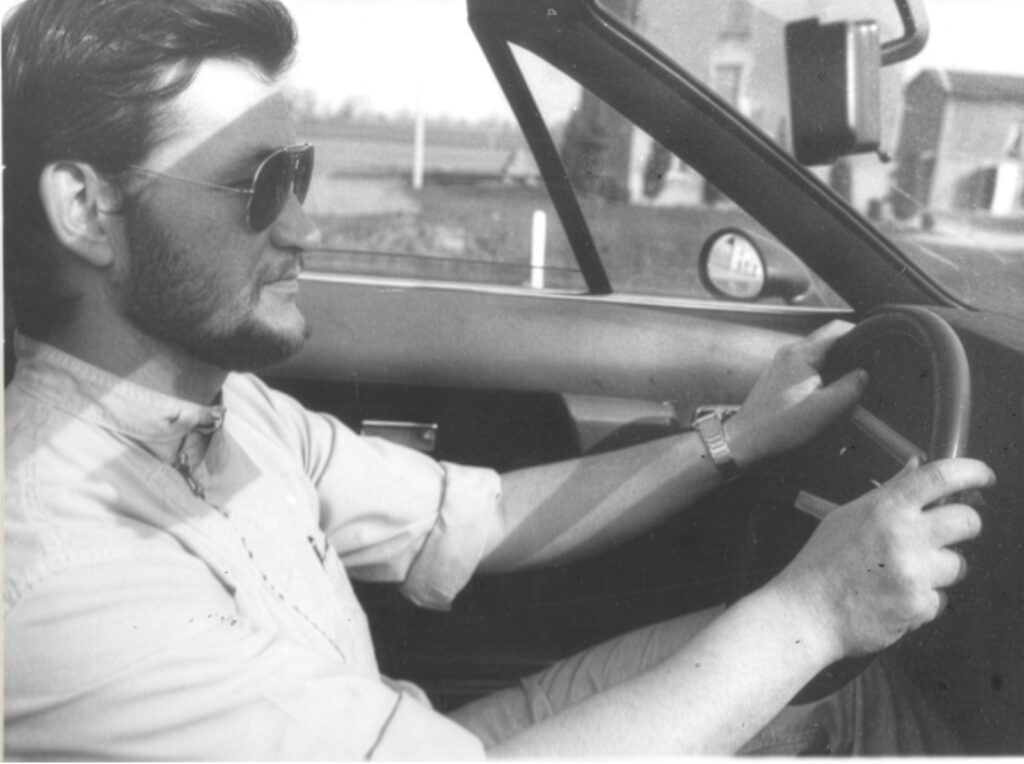
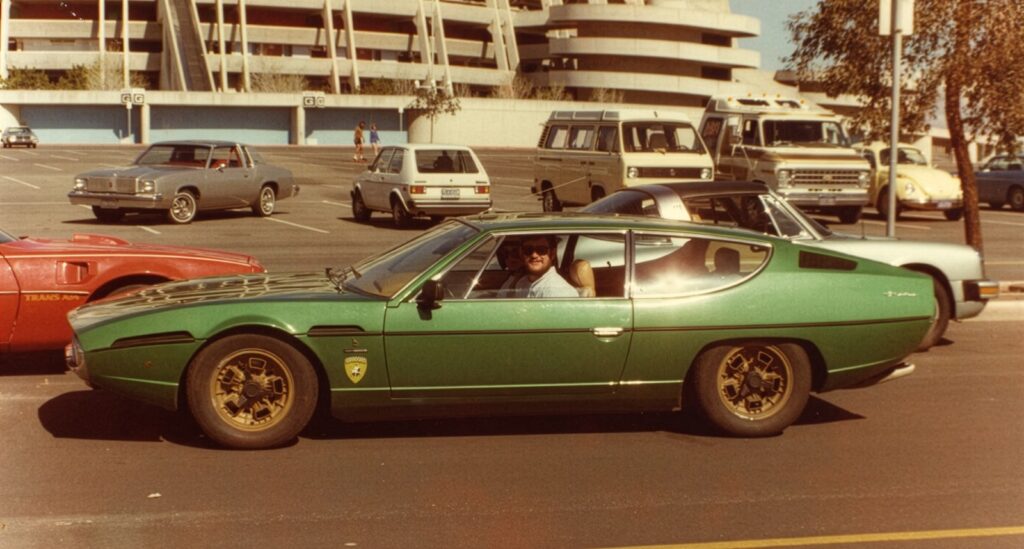
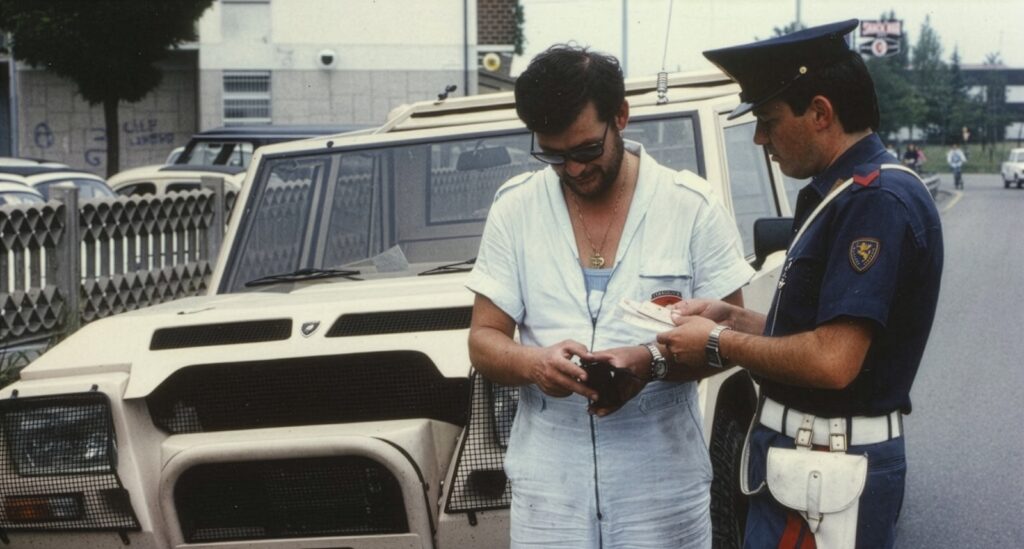
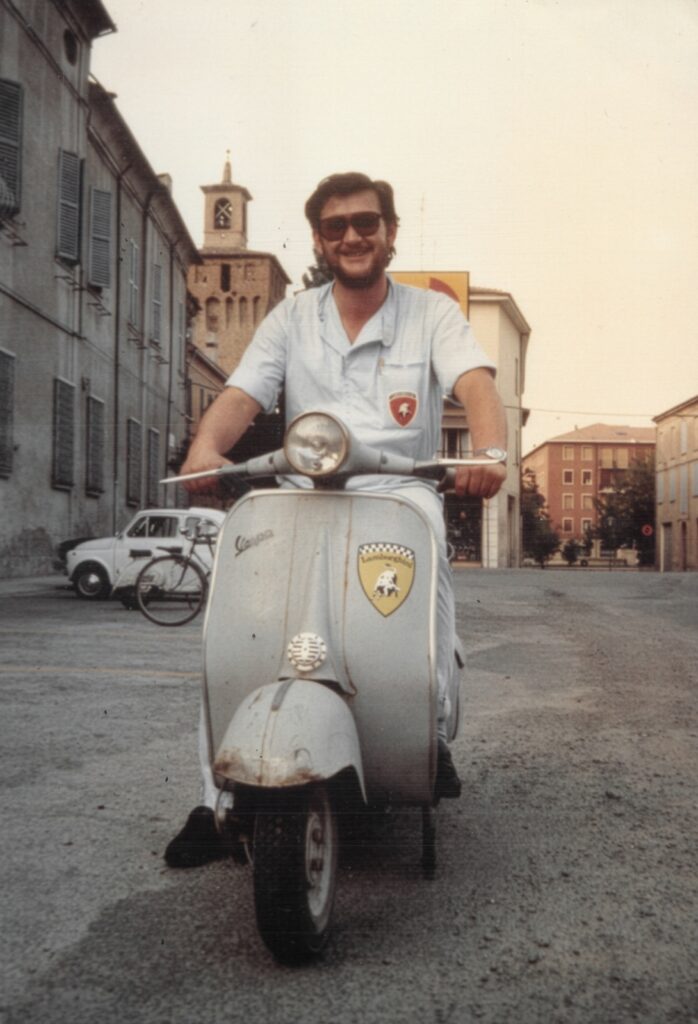
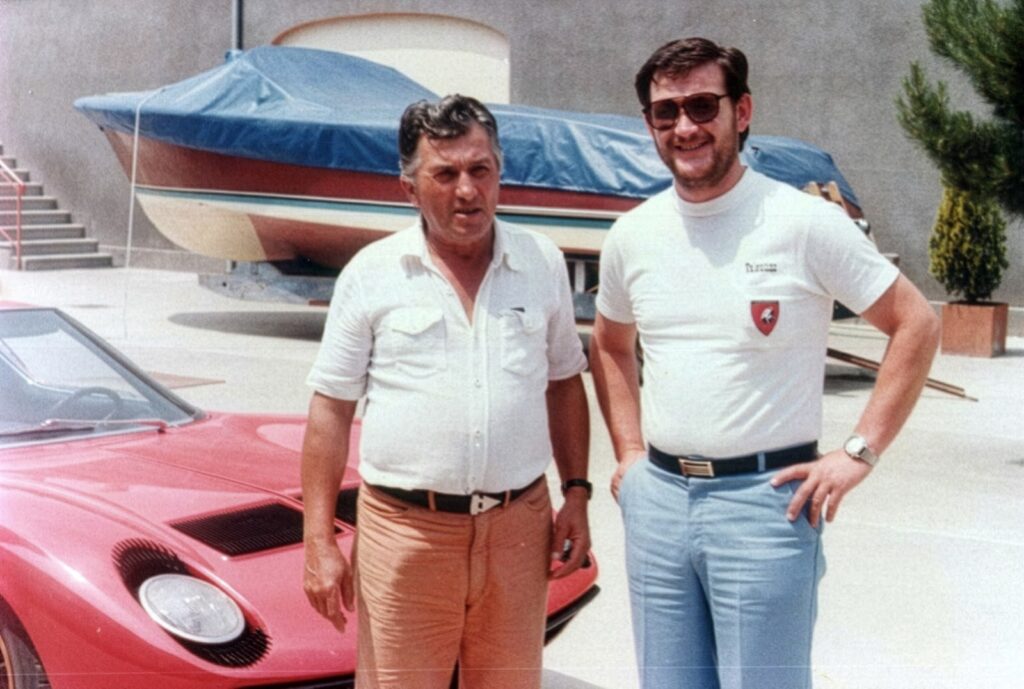
His path to the greatest job in the world could never happen today; it was almost an accident. He was passing the Lamborghini factory Sant’Agata Bolognese as workers were unloading Miura bodies, fresh from Bertone, into the workshop. He stayed and talked to the workers, lent a hand, and they suggested he apply for a job at Lamborghini. A week later he was hired by Ferruccio Lamborghini himself.
“April 21, ’68,” Balboni says, remembering the exact day he started at the company as an apprentice.
“It was a beautiful atmosphere, a small company,” he remembers from those early days. “It was 180 workers when I started in ‘68 and only two buildings. Still producing the 350 GT and 400 GT, and then the Miura. It was one building with two production lines, 350 and 400, and the other building was the Miura production line. It was very nice, very familiar. Everybody knew everybody…. That was a nice group of friends.”
Of course, in the 1960s, Lamborghini wasn’t the global juggernaut it is today. It was still relatively new. “Those days, almost nobody knew what Lamborghini was,” Balboni explains. “Imagine growing up a car company 20 or 30 minutes away from huge companies — Ferrari and Maserati — in those days. De Tomaso was also not too far. It was a big, big challenge. Typical of Ferruccio Lamborghini, he was never afraid to challenge anybody. He wasn’t afraid to do everything he wanted to do, and this became a big advantage for Lamborghini.”
“I learned to drive the cars around the building. I had no driving license… driving the cars around the building I learned how to change gears, how to use the car… I wasn’t supposed to, but I did; I learned.”
“[Ferruccio] was always very optimistic. He didn’t consider the risk. He was always insisting with the very young engineers, ‘no, no, let’s do it! We can do it. We can do it. Think about this.’”
The economy in Italy at the time, Balboni explains, was very conducive to this brand of risk taking and ambition. In certain areas of the country that needed an economic boost, much was being done to attract entrepreneurs. “Our region was called a ‘depressed’ area from the Italian government, and from the local government,” says Balboni. “So people showing up with projects to bring benefit and work and businesses to this area got a lot of advantages and money from the government to get started.”
At the factory, Balboni worked his way up from an apprentice mechanic, helping a senior mechanic with everything from working on the cars to keeping tools clean, to getting coffee. “After a year or so, they taught me how to change oil, how to make minor, minor repairs. I learned on the job,” he says.
Incredibly, at the time he didn’t know how to drive. So he learned that on the job too. “I learned to drive the cars around the building. I had no driving license,” Balboni recounts. “I didn’t really know how to drive a car. But, yes, driving the cars around the building I learned how to change gears, how to use the car, but, you know, just around the two buildings. I wasn’t supposed to, but I did; I learned.”
After that he did a stint in the army, beginning in 1969, for a year or so, and it was there where he finally got a driving licence. When he came back to Lamborghini, he was a full-fledged mechanic. Then, his life took a rather miraculous turn.
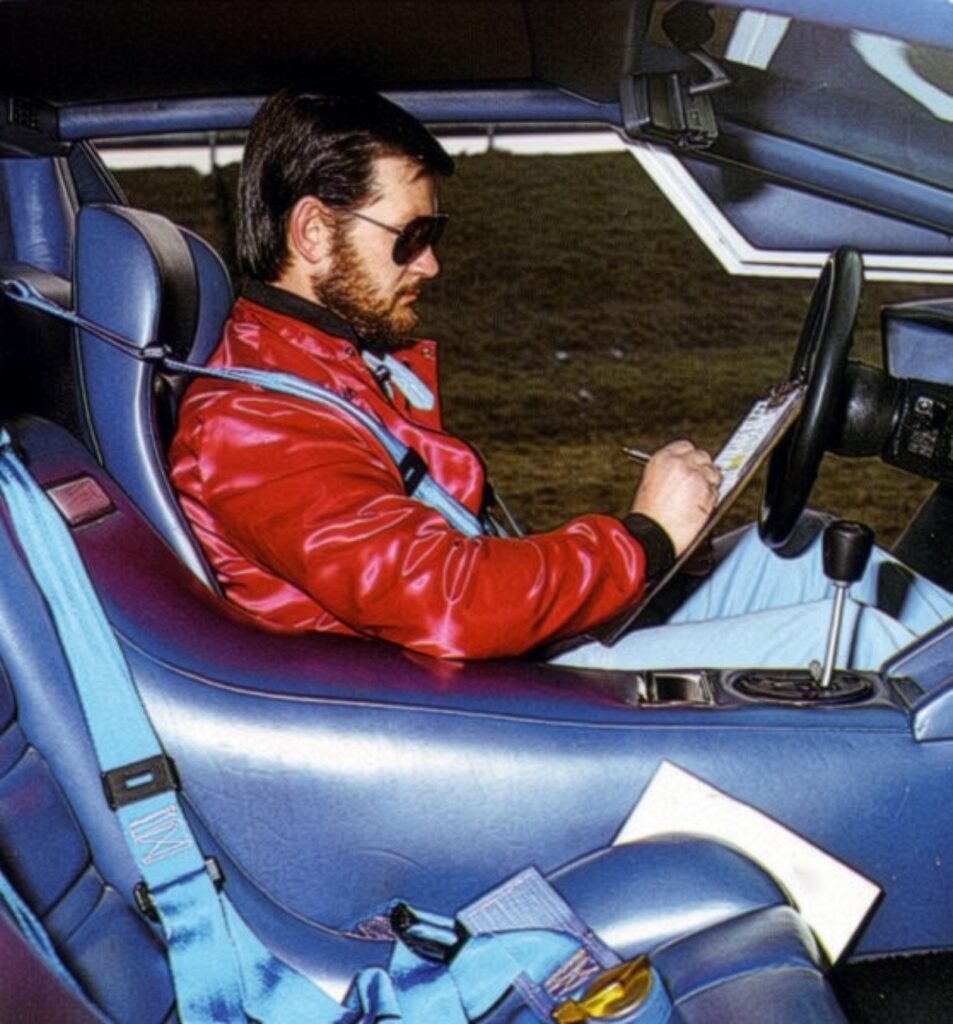
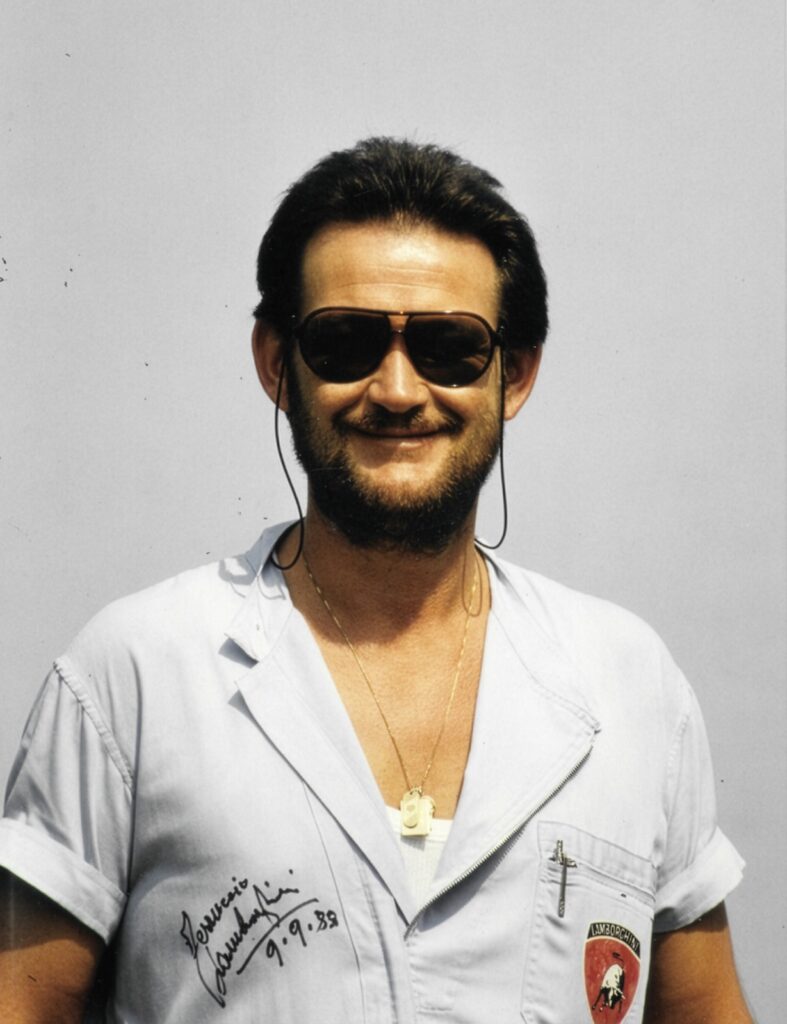
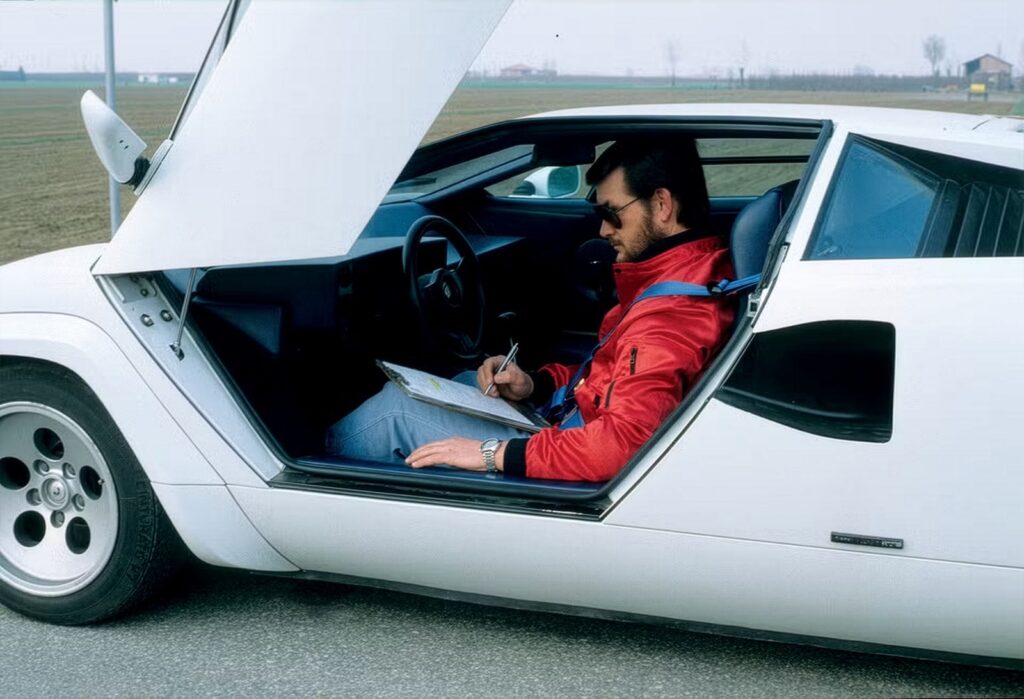
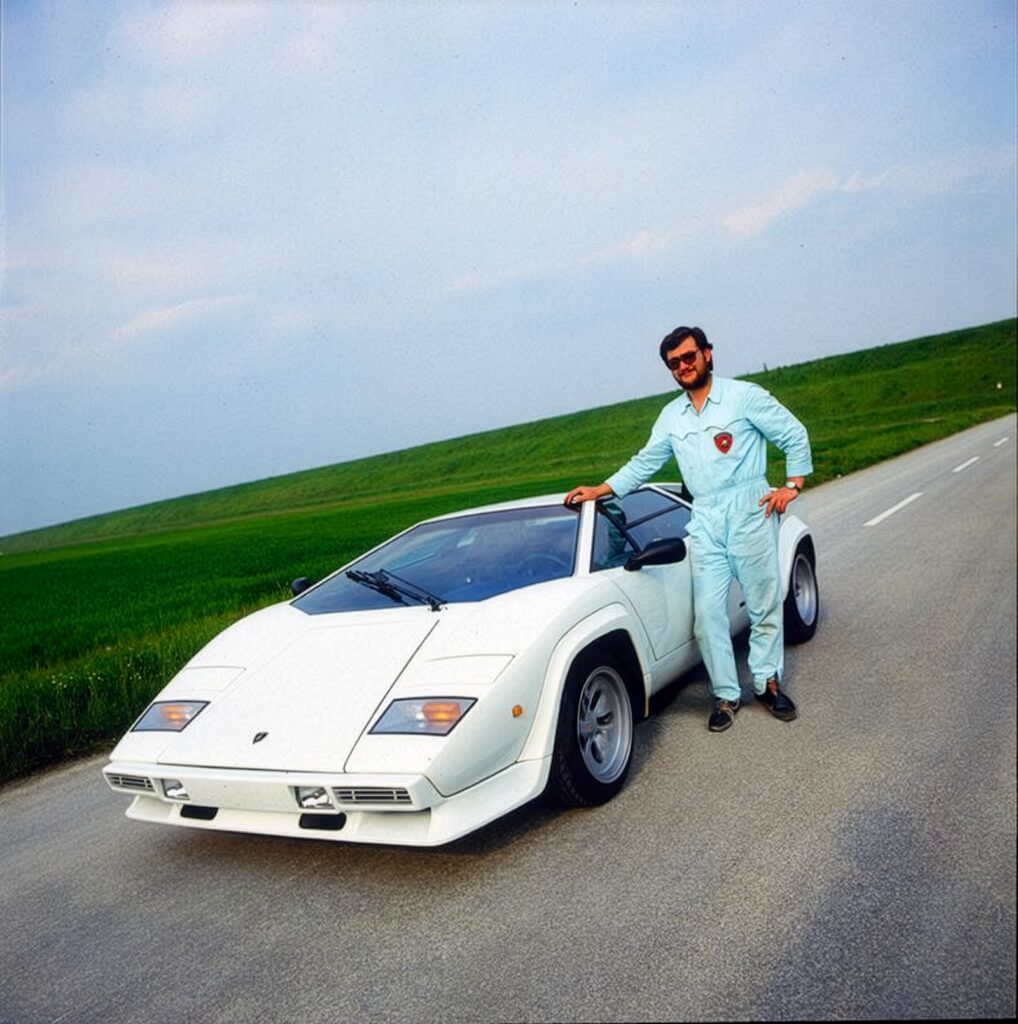
“At a certain point, Lamborghini needed to train two young test drivers because the company was getting bigger. Since I was always driving the cars around the building, they told me: ‘we want to see if you have the attitude to become a test driver.’ They just picked me and a friend of mine. It was more than a year of training with a senior test driver, Bob Wallace, who was my tutor, my instructor.”
The job of a test-driver is not just to push a car to its limits, but to define those limits, to shape the behaviour of 20,000 disparate pieces of metal and rubber and fuel into a cohesive experience that feels like a Lamborghini should.
“[Wallace] tried to give me the feeling, the attention you have to have, to understand what the car is doing if there is some problem, and how the car behaves,” Balboni explains. “Slowly, slowly, you build your own experience and your own feelings.”
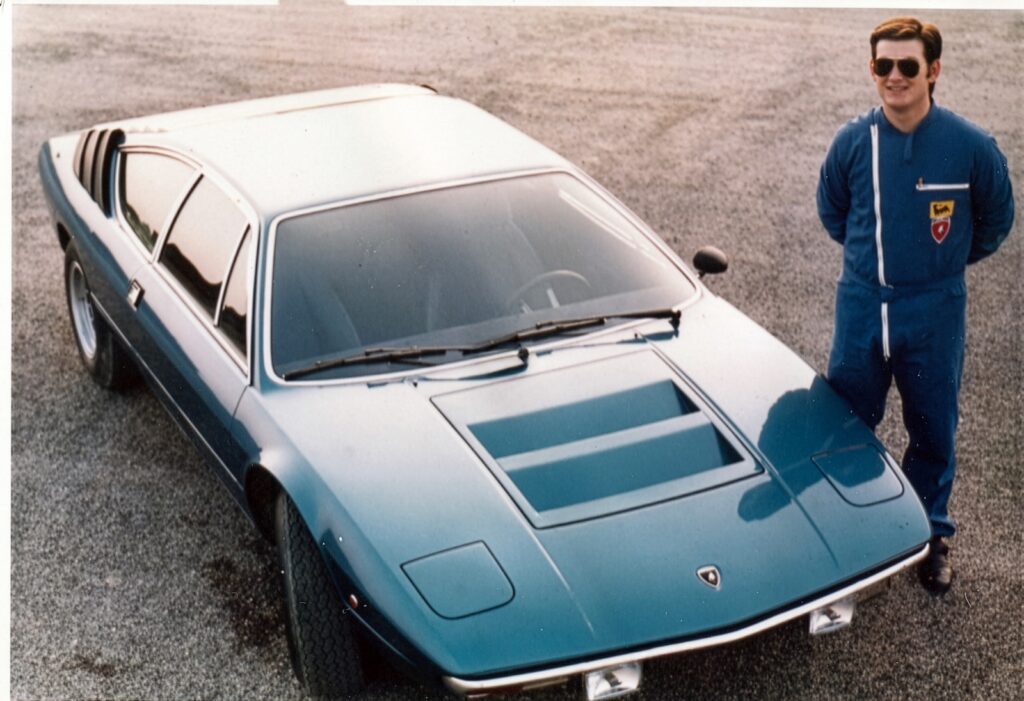
“I think it was September 5, 1973. This was my first day when I went out with a Miura by myself, being a test driver.”
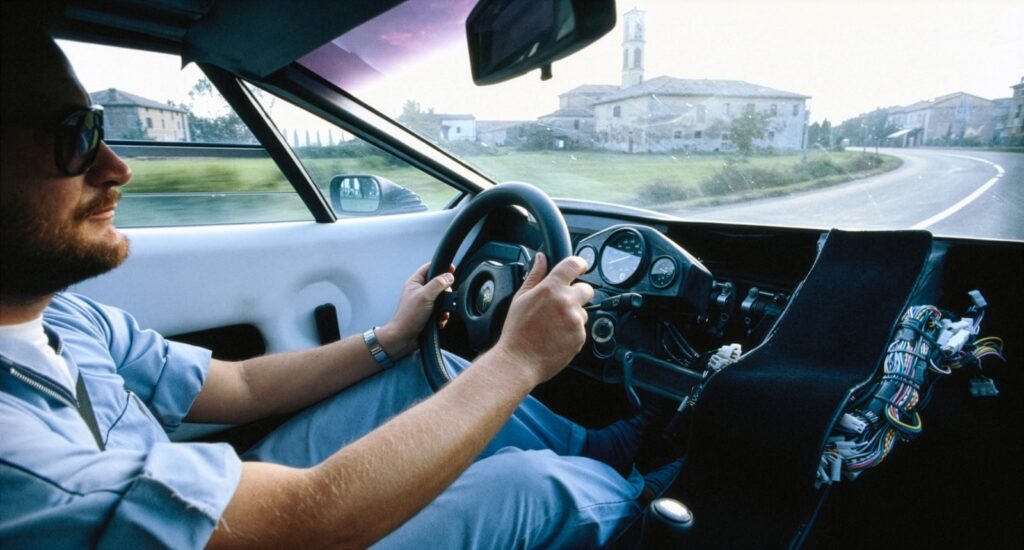
When developing a car, first Balboni and Wallace would take the prototypes out on the roads around the factory, or to a proving ground. Slowly they’d get a feeling for the car, a “general view,” as Balboni put it. Then, they’d get into the details with the engineers, fine tuning the suspension, the dampers and springs, finding a tire that’s the best match. “It’s constant improvement through testing, and the result of the test is the character of the car. You build the character of the car,” he explains. “There are no manuals. You have to develop your own sensibility and understanding and feelings.”
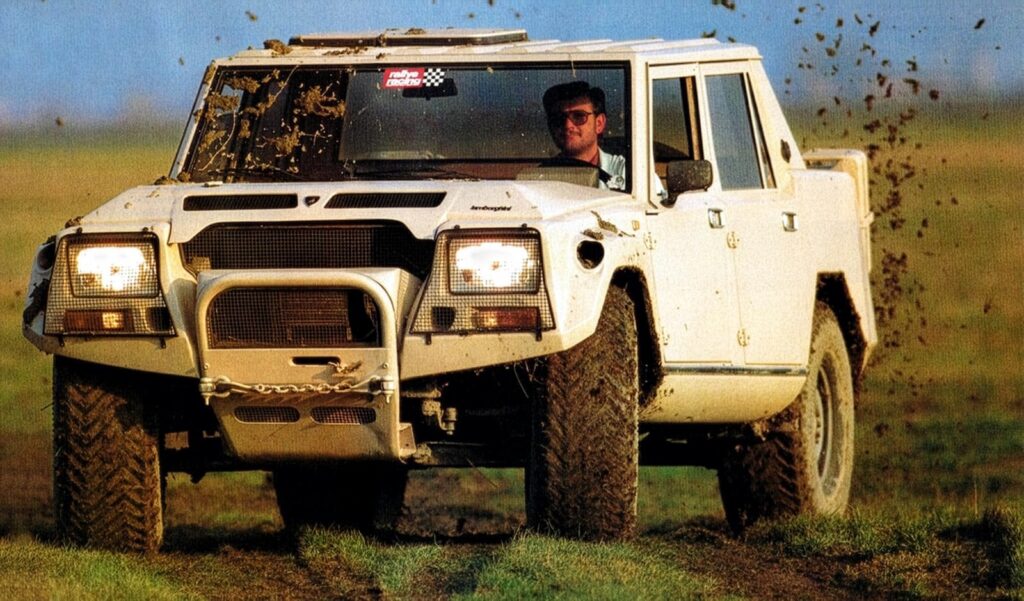
Remember that there were no electronic safety nets to save ham-fisted drivers back then. The prototypes Balboni was driving were manual-gearbox monsters, running on fickle old tires, with heaps of untamed horsepower. The fearsome reputation of some of these early Italian supercars was entirely deserved.
“In my time, the only [safety] system was on our hands and on our back,” laughs Balboni. “So it was difficult. Today it’s is more complicated to develop a car, but it’s more safe,” he adds.
The Countach was especially challenging, because it was the first car of its kind for Lamborghini.
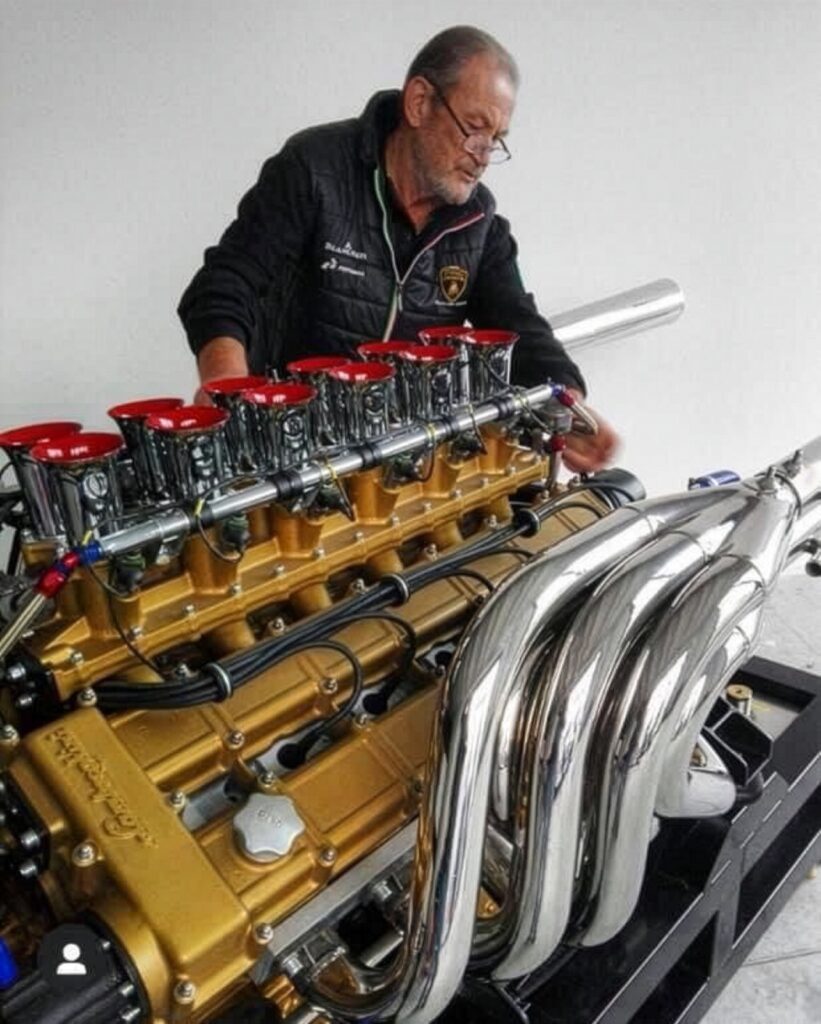
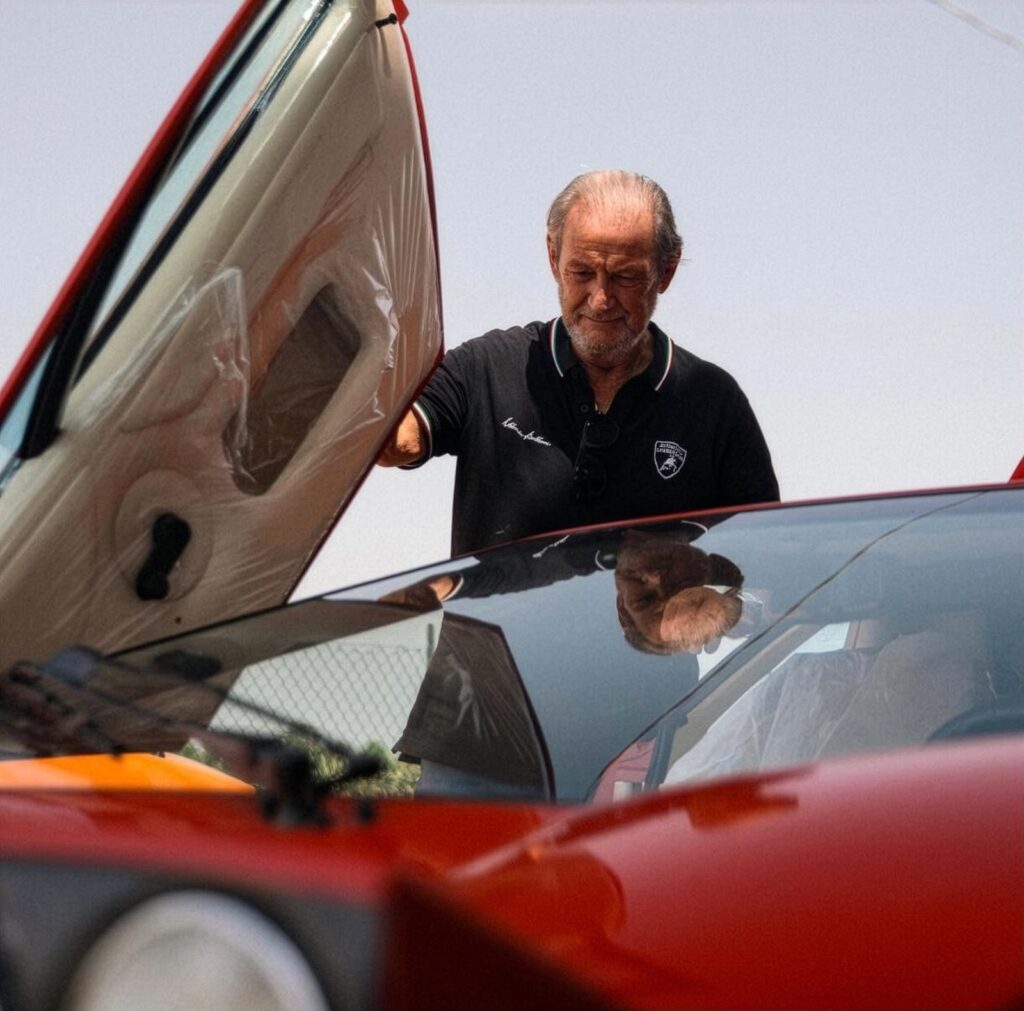
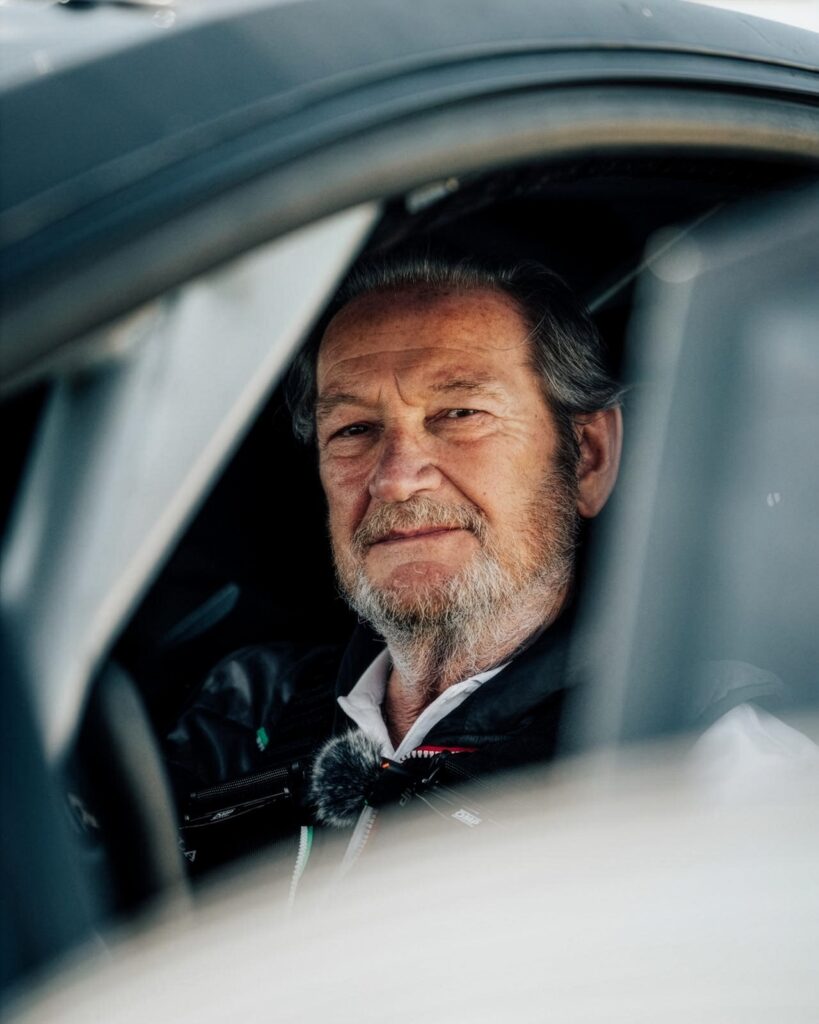
“From the technical point of view,” Balboni says, “Countach was the most difficult to fine tune in terms of chassis, in terms of balance, because we developed a tubular frame which was never used before on such a powerful sports car, and also because of the way the engine and the transmission were developed. They were at a very high position in the car. So, considering the tires in those days, and the weight, it was very, very difficult to avoid a huge oversteer, and to save a huge oversteer. It was not easy to develop.”
And if that’s how Balboni felt, I imagine the rest of us probably wouldn’t sent those early Countach prototypes into a tree at the first corner. But then Pirelli came up with a solution, the groundbreaking low-profile P7 tire. “We sorted out 99 per cent of our problems, of our drivability, stability problems, you know,” says Balboni.
After the Countach, its successor the Diablo was relatively easy. “To me, it’s like reading a book. You learn by reading a book, and the Countach was our Bible,” he says. “We learned from the Countach. The Diablo was already at the beginning a very good car, which got perfect during the different models: VT, GT 6.0 and so on. It was a very successful car. And, you know, the technology was different; electronic fuel injection came to Lamborghini with the Diablo.”
At that point, however, Lamborghini was not in the best financial shape. It had bounced around between various unsuitable owners until 1998 when Audi and Volkswagen Group swooped in and bought the whole operation for a steal. But, as Balboni explains, after some initial differences this unlikely partnership paid big dividends for Lamborghini.
“Unfortunately, when Germans started to come down to the company and work with us, a few of those guys were a little bit… umm, not considering Italians,” he remembers. “Some of them were just feeling like, ‘we at Audi do things this way. We do this and we are right.’ I had some fights with one of those guys. I said ‘listen, we’ve been building Lamborghinis for 20 years or more. Don’t come here and teach us how to make a Lamborghini!’ Afterwards, we started to understand each other. And I think everything went very well. It’s still going very well. Yes, they own the company but they definitely leave Lamborghini swimming in its own water, shall we say.”
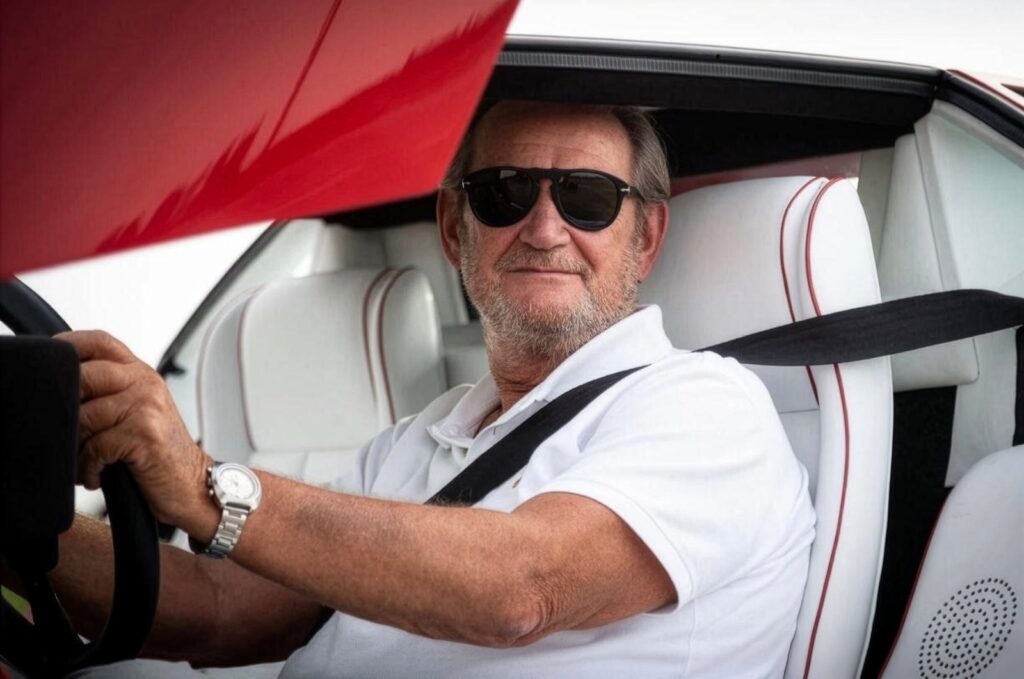
Prior to the acquisition, Lamborghini had already been thinking about making a “baby Diablo,” but with German corporate backing this highly-ambitious project could finally be done right. Work began on the new V10 engine and the eventual Gallardo, which was unveiled in 2003.
“The 10 cylinder was an experience,” Balboni says. “That was a big challenge. At the beginning the 10 cylinder engine didn’t want to run the way we expected. It took three, four years to develop the car. But because of the power of the Germans — they helped a lot with the materials — the engine came out very good after some work.”
Needless to say, the Gallardo was a smash hit for Lamborghini. It set the company up for financial stability and paved the way for expansion with the Urus SUV.
The most sought after model of the Gallardo is probably the one named for its test driver: the Gallardo LP 550-2 Valentino Balboni. It was rear-wheel drive, a purists car, which lent it a sharper front end and oodles of controllable oversteer, created in 2009 to honour Balboni following his official retirement. It was everything enthusiasts had been clamoring for — a modern rear-drive Lambo — and Balboni delivered, yet again, because he wasn’t retired. Not really. As soon as he could he signed back on with Lamborghini as a consultant for another seven years.
Looking back on it all, at this most most unlikely career path from mechanic’s apprentice to chief test-driver for one of the great Italian houses of horsepower?
“I always say I was lucky to do the right thing on the right time with the right people, and of course, I devoted a lot of myself to the company with the company, 40 years as an employee, and then seven more years as a consultant. It means a lifelong of the devotion. Yeah,” he says, “I was lucky to be with the right people.”
The high-stakes life and death reality of being a test-driver at the sharp end of the supercar business must, I think, give you a good perspective on life.
Lamborghini is lucky Valentino Balboni walked into the factory as a teenager that day in 1968, and so are we.