
Photography by Mark Luciani
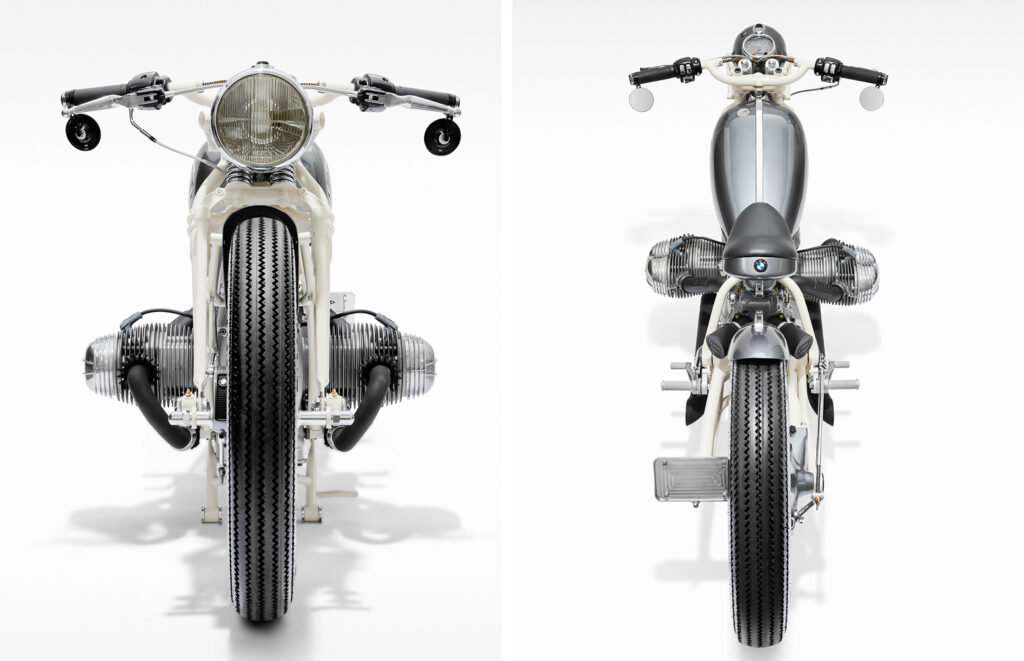
This custom BMW R75/5 was commissioned by Burlington, Ontario designer Helmut Siepmann and fabricated by retired tool and die maker John “Johnny” Lorette. Built over approximately 1,400 hours, the motorcycle retains only portions of its original frame, hubs and engine while incorporating extensive custom aluminum work, hidden electronics and a Weber carburetor conversion. The design centers around the original headlight bucket and eliminates visible wiring for a seamless, minimalist appearance.
Autostrada’s modus operandi has always been to get to the stories behind the world’s most impressive and unique vehicles by getting to know the people who create and care for them. So when we spotted this absolute one-of-a-kind custom BMW R75/5, we knew we had to have a chat with its steward.
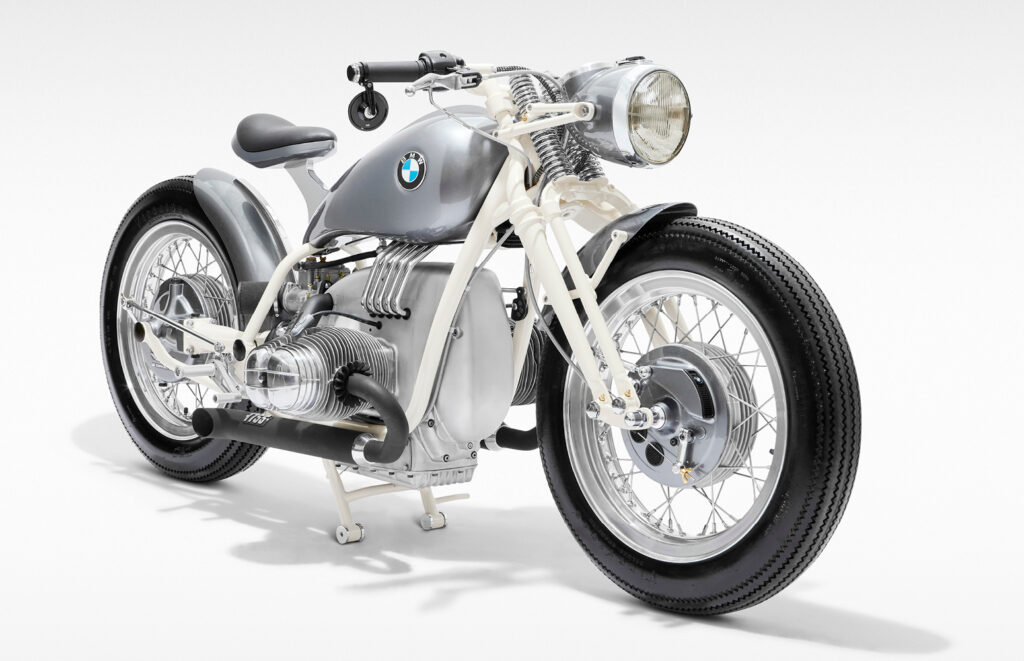
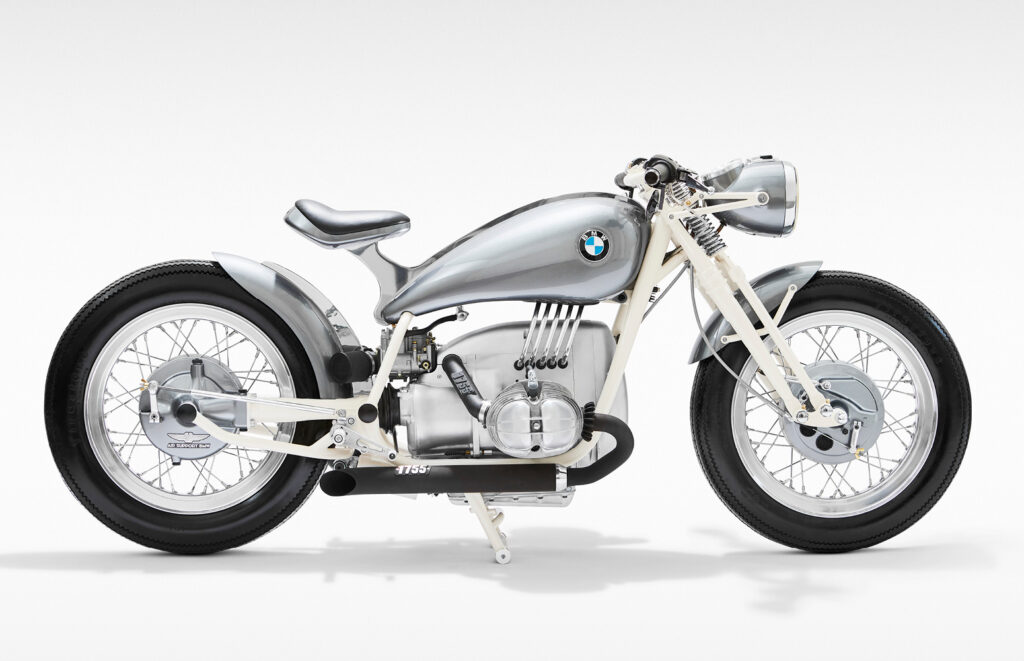
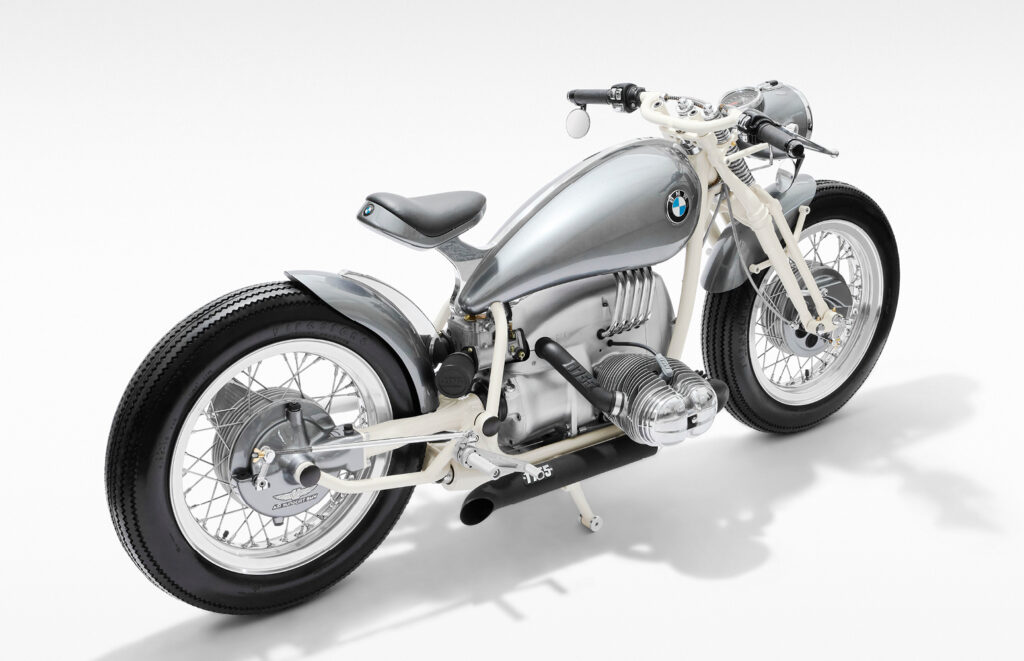
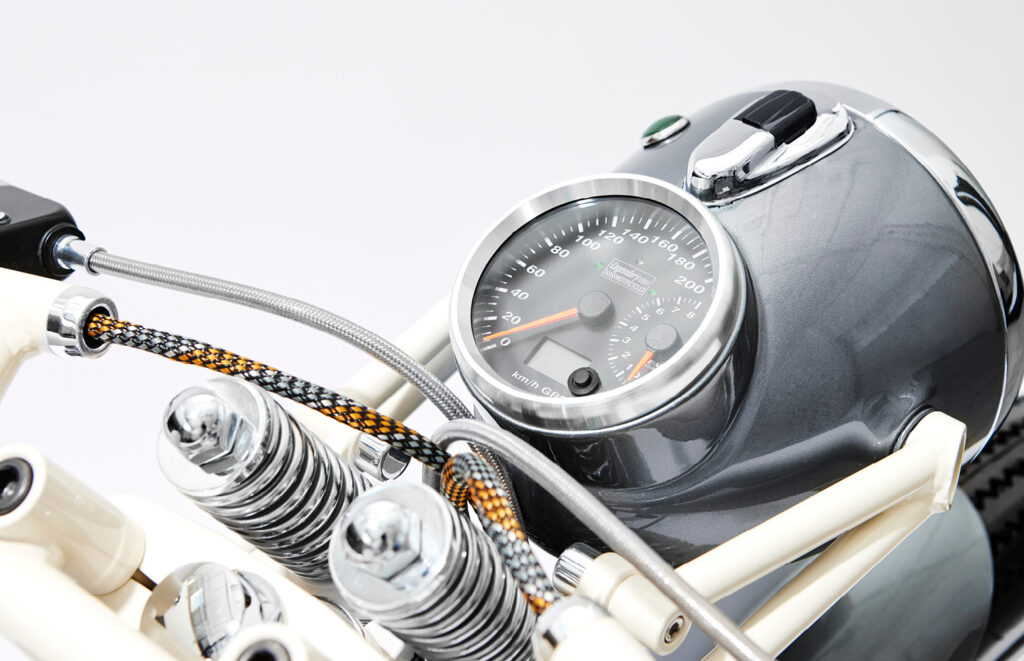
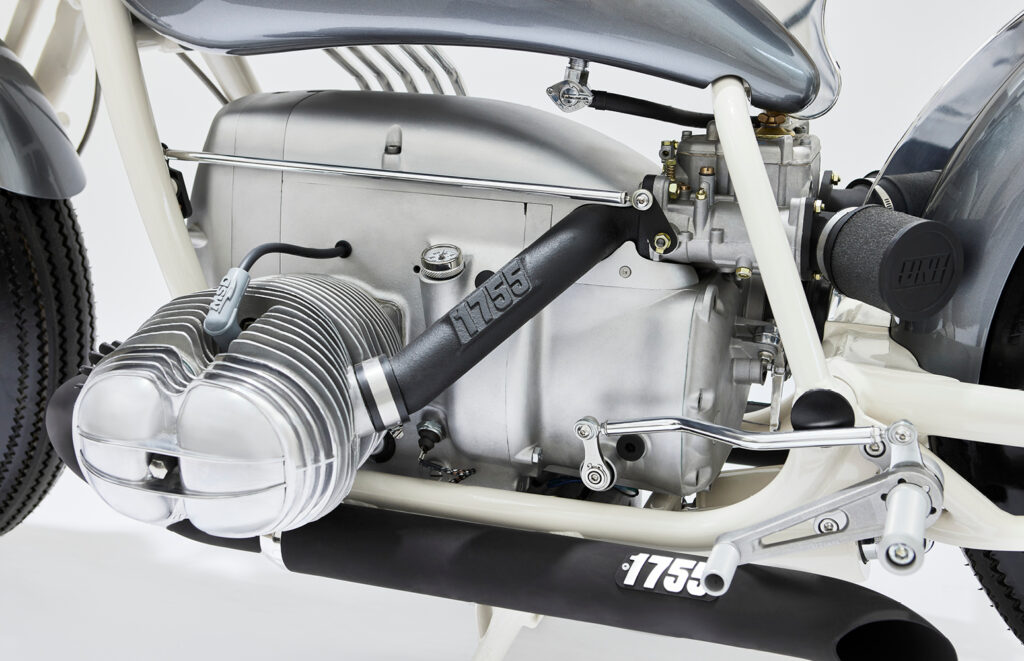
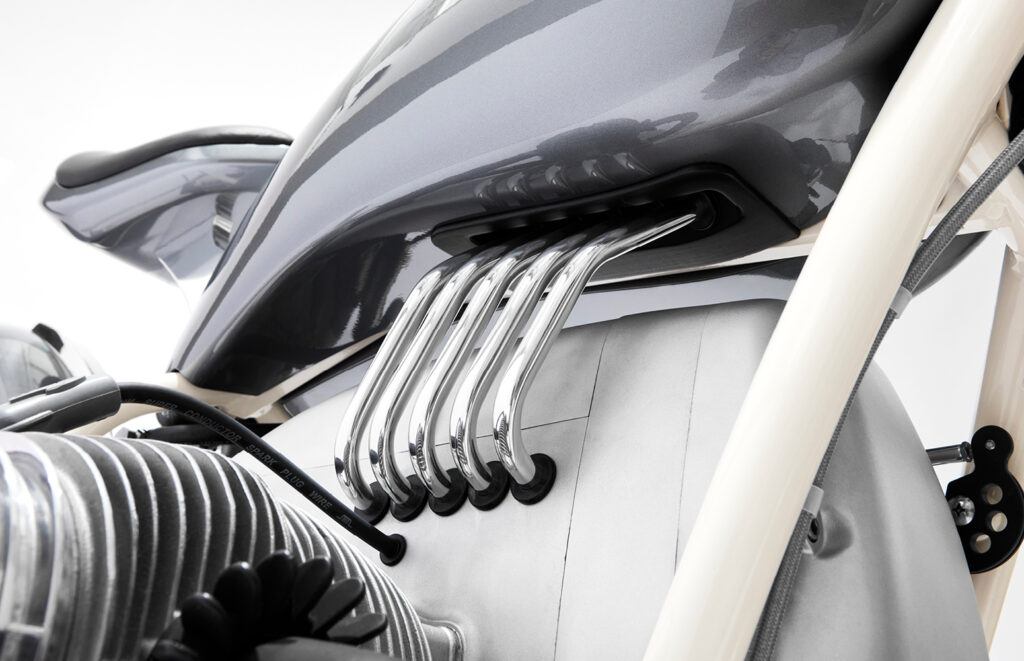
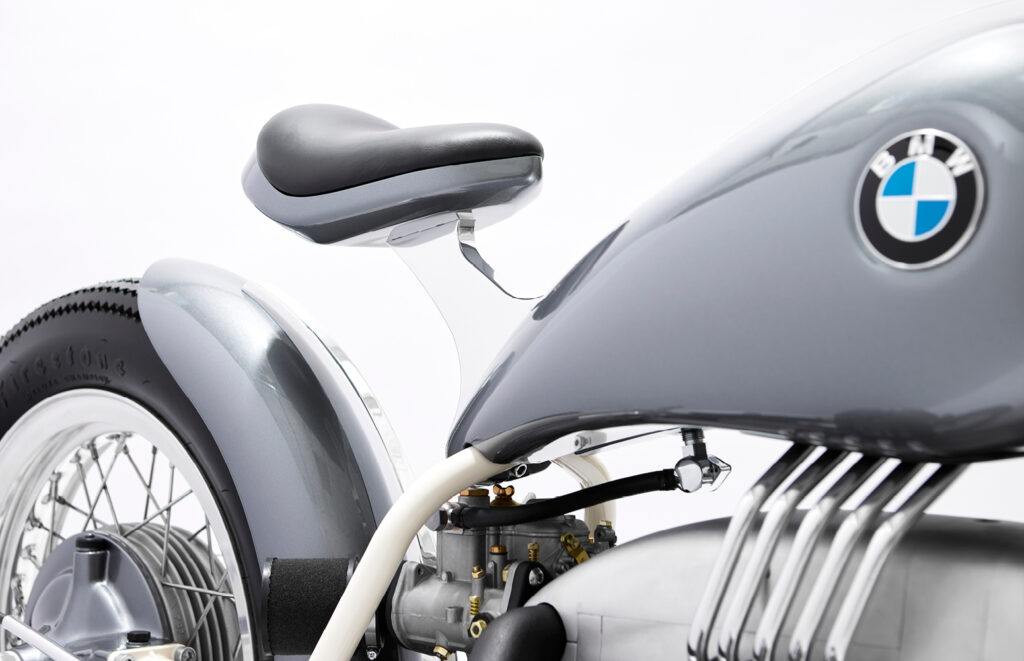
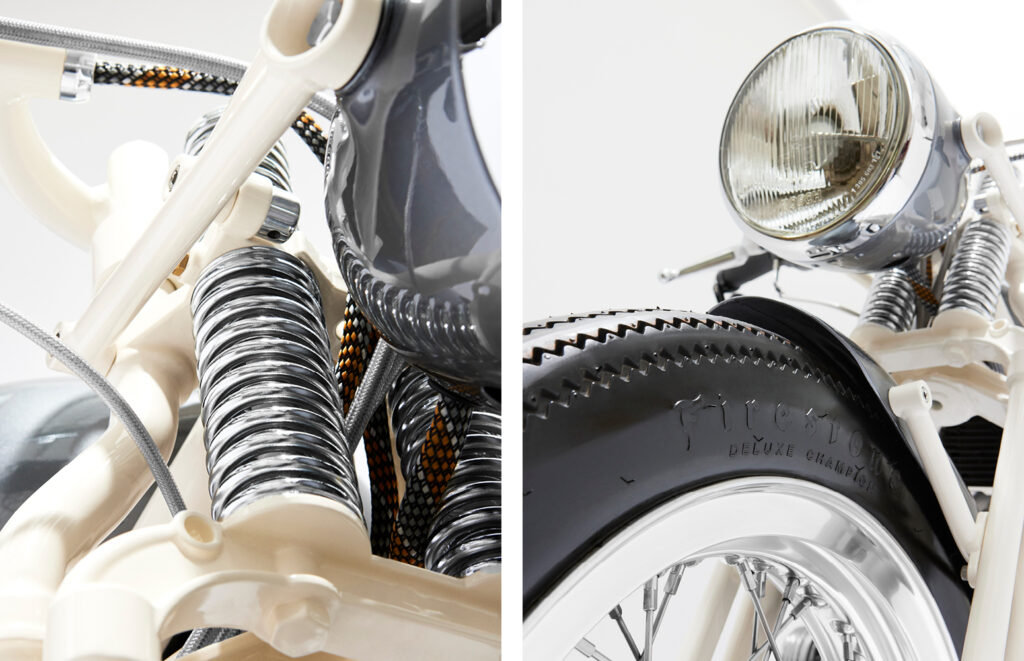
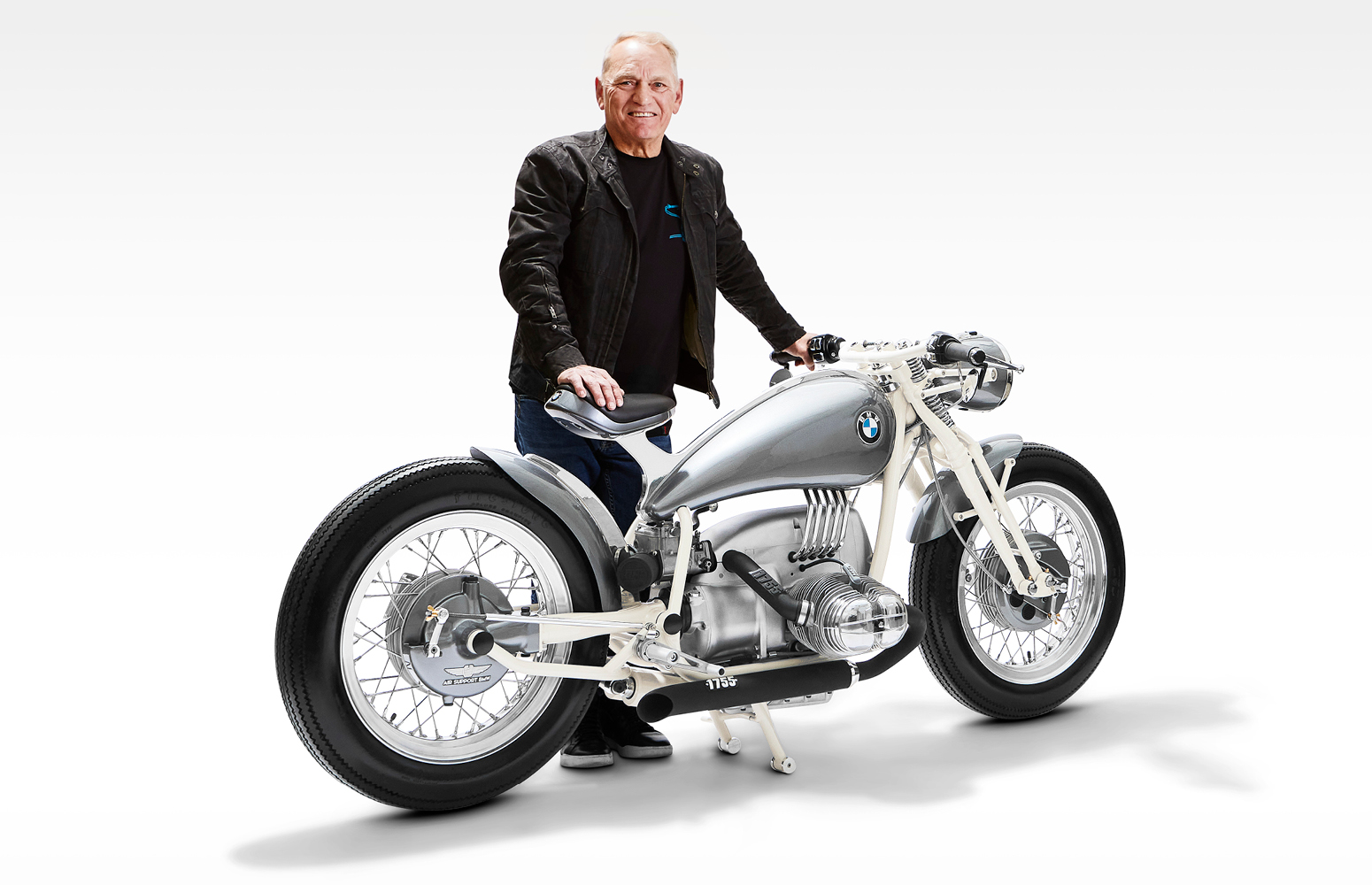
Helmut Siepmann is the bike’s owner and the dreamer who pulled its base from the barn it had sat in for years, but he’s quick to credit his friend and retired tool and die maker, John “Johnny” Lorette, as the fabricator and visionary. Siepmann spoke with us from his office in Burlington, Ontario.
Tell us what you do, Helmut.
I’m a clothing designer. Not your regular kind of clothing, but very technical garments for offshore oil, commercial fisheries, recreational yachting. I’ve designed protective snowmobile and motorcycle vests and am currently designing some snowmobile apparel. I do a lot of SWAT type work and items for the Department of National Defense… you know, the real sort of technical, high-end lifesaving products, primarily marine related… I’m 73 years old. I’m trying to retire, but my clients aren’t letting me.
Your generation’s never going to be allowed to retire. We need you guys to keep doing what you do.
Well, you know what? I’m still enjoying it… and as long as I’m capable of doing it well, I’ll probably continue to do it.
How does one get into that line of work?
When I was 15 years old, I was the world’s youngest certified parachute technician and I’ve been designing for the needle trade ever since. I did parachute design for a while and then ventured into the marine industry where I have remained ever since. I received my first patent as a teenager and have had a several since then for my parachute and marine products.
Do you ride motorcycles?
My first ride on a motorcycle was when I was three years old, and it was a family thing. It was my dad’s BMW with a sidecar. My older brother was sitting on the back behind my dad. My mom was in the sidecar, and she was pregnant with my little brother, and I was sitting between her legs. I don’t remember that, but I do remember the photo. Some things got lost when my mom and dad passed away, but I do wish I had that photo.
I’ve had four. My first was a Honda 350 that I had when I was 23. Afterwards I bought a brand new Norton 850 Commando in 1974 and had that for a while. I also have another BMW, a 1965 R50/2, which is in concours condition. It’s just beautiful. And then it was three years ago that I heard about a fellow who had an old BMW leaning up against the wall that he wanted to get rid of. So, I gave the guy a call and next thing you know, I’m picking it up—and that’s the bike that had all the work done to it.
Now had you done other builds like this before, or had you worked with Johnny Lorette before?
First thing I’ve got to do is to clear up the fact that this is not my build. Johnny built this bike. I was there for decision making and planning and things like that… but I’ve known Johnny for 40 years and the guy is an absolute amazing fabricator. When he was quite young, he took an RD350 air-cooled and turned it into a water-cooled. And I think he did that before Yamaha did it! So you can see, I’ve known him a long time. Johnny used to dabble in bicycles and made a line of bikes called Ruthless that were primarily CNC’d aluminum mountain racing bikes for downhill and cross country. I’ve got two, Ruthless bicycles, I think they’re absolutely amazing. One is called the Switchblade, it’s a trials bike, the only one of its kind in the world.
So, you know, we’ve been messing around for a long time, but when I got the /5 bike, I started taking it apart, cleaning things up and getting it ready to do the old café racer business. And then I spoke to Johnny. I told him what I had in mind, and I said, “there’s some things I want to do that I can’t, would you help me?'” And that’s how that got started.
And what was your vision?
It was basically some tank work and some seat work. A short seat with a bump on the back and, you know, get rid of just about everything else. Lighten it up. No front fender, a short little rear fender, and keep everything between the axles. That’s sort of the café racer rule—nothing extends beyond the axles forward or back. And yeah, that was basically it. Because of limited tools and things like that, I wasn’t going for a big machining fest. I was just going to basically try and buy some stock parts and do what I could to get a calf racer. I actually still want one (laughs). But Johnny, he wasn’t going for it.
What did he say?
He said, no, absolutely no way. He said, if you want a café racer, just go out and buy one. There’s a million of them, right? And then he just took it over and I basically thought, well who am I to tell him what to do? I gave him free reign to just go ahead and do what he does best.
And how did he communicate to you what he had in mind?
Initially, I dropped the bike off at his place. I remember it was in December and it was a nice day, so we threw it on a trailer and hauled it up to his place. I didn’t really know what he had in mind, nor did he. I left it there for several months, and finally I got the call and Johnny said, “Helm, come on up.” When I arrived, Johnny had all the doors locked, garage door down and front door locked. There’s a little 32-inch man door for entering the garage, it was unlocked and Johnny was kind of forcing me to enter in this through it. I opened the door, walked inside and my jaw just dropped.
When I saw what he had there, I just fell in love with it. What he had was basically the rough build of the way the bike looks now. There was some wire and there was some plywood – however, the look was there. Johnny was very excited and pleased that I liked it, that gave him a lot of encouragement as well. The moment was basically the starting point and since that day, we spent 1,400 hours taking it to the state where it is right now.
It really is incredible. Almost otherworldly, almost sci-fi.
It is so clean. His entire focus was on having the bike really, really clean. There are no wires at all, you don’t see anything. Fuel is on the left side of the tank and on the right side is where all of the electronics are. Even when you remove that section of the fuel tank to see what’s there, you still don’t see any bare wires. You see absolutely nothing. Everything comes through the frame and goes into that 3D printed electrical box.
What original pieces are left here?
I guess you could say that the hubs are original. And a portion of the frame, the lower portion where the engine mounts.
And how about the engine, is it original too?
The engine is the same that came with the bike, however, I put a five-speed transmission on as opposed to the four-speed. The engine was actually modified a lot. Like that upper cowling, that’s not original. That was purchased in Germany and then heavily modified to accept the carburetor. That’s a Weber carburetor – two of those would generally be on a 1600 cc race car.
But other than that, let’s see, what’s original? The headlight bucket (laughs). And, you know, that the bike was actually designed around the headlight bucket.
Interesting. Yeah, you can see how it sort of leads the way stylistically.
Exactly. That was one of the important things for us was to maintain. Mind you, we did change the speedometer in it because the old one was pooched and the bucket now contains the horn, but there are no longer any wires in there, like the original. And other than that, everything is basically new.
How do you use it? Obviously not just another café racer. You’re going to go and run around Burlington on this, but do you ride it at all?
I have to tell you that at this point in time, I’m not riding it. And the reason is that I have to change the intake manifolds. But they should be ready sometime in the next couple of weeks, and then I’ll be riding it. I didn’t build it just to look at it. I’m going to ride it. Oh, it’s not going to get a tremendous amount of mileage, you know? But that was always my plan.
Do you have a favourite part of the bike? Which bits are you most drawn to?
There are just too many things to like; however, one of the things that I really like is on the right side of the bike, those five tubes that come down. That bike was an R75/5. Right? So “slash,” the angle of the tubes, and then there’s five of them. So I like that, it’s definitely the candy side of the bike.
That and I love the seat support, we call that the fish. It’s actually very big, not just that half inch you see up top. It goes down six inches or so and is actually a structural member of the frame. I like that. The seat is lovely and gets a lot of attention. It’s highly polished aluminum, and if you stand back a couple of feet it reflects its surroundings. It almost looks like the seat is just floating there.
What sort of reaction does it get from people?
It draws crowds. Unbelievably so. People are always hanging around. They love it and what they like most is that its new and refreshing, it just hasn’t been done before. I love chatting the bike up and don’t get tired from that.
In retrospect, this has been a great project that has made the last few years a very exciting time for me.