
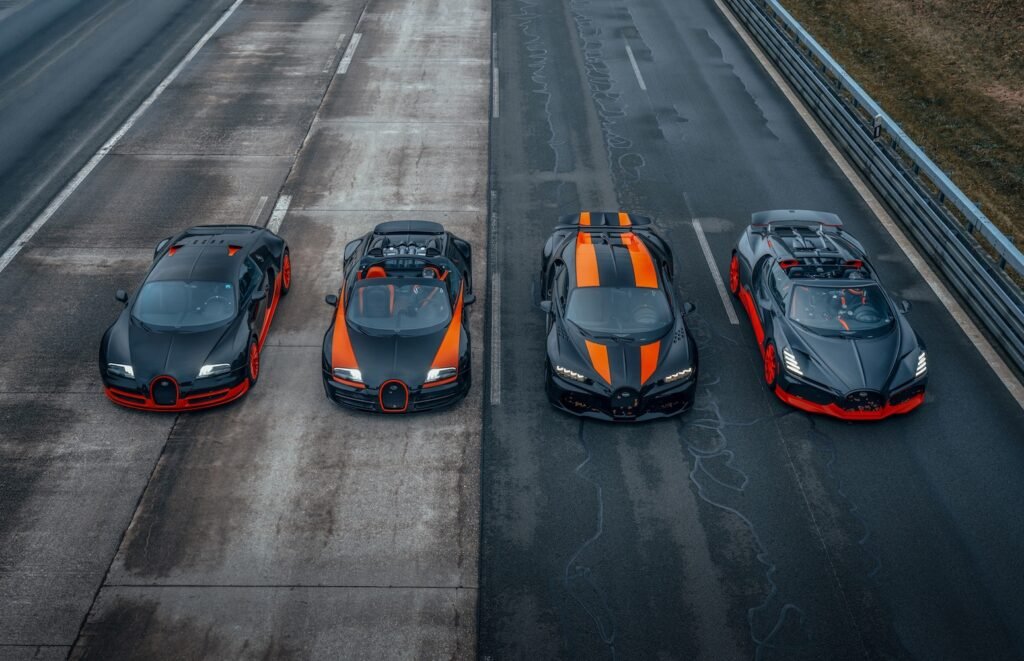
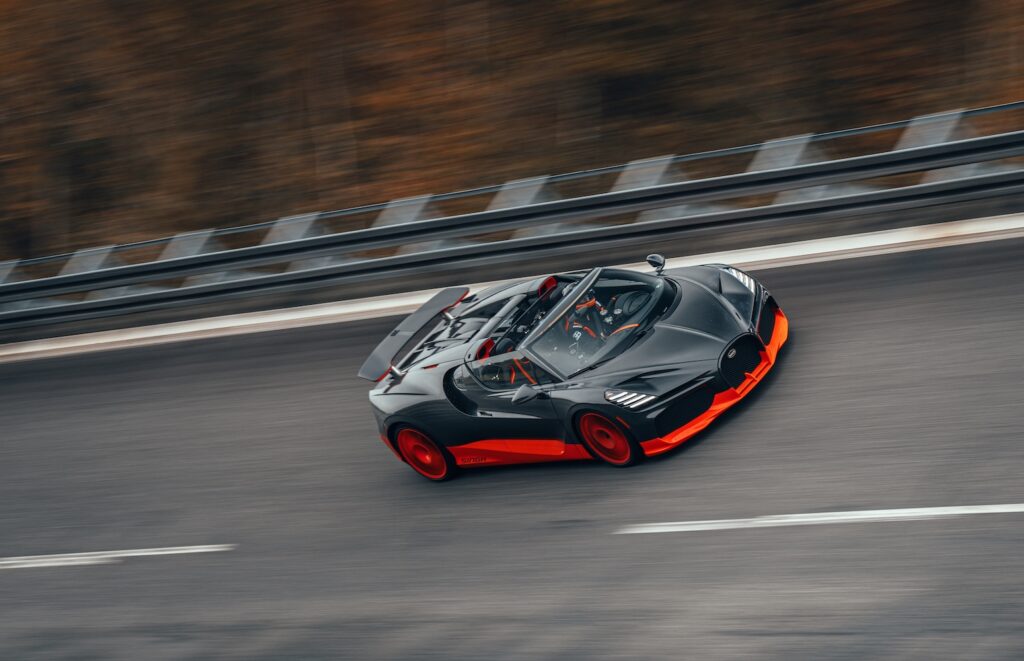
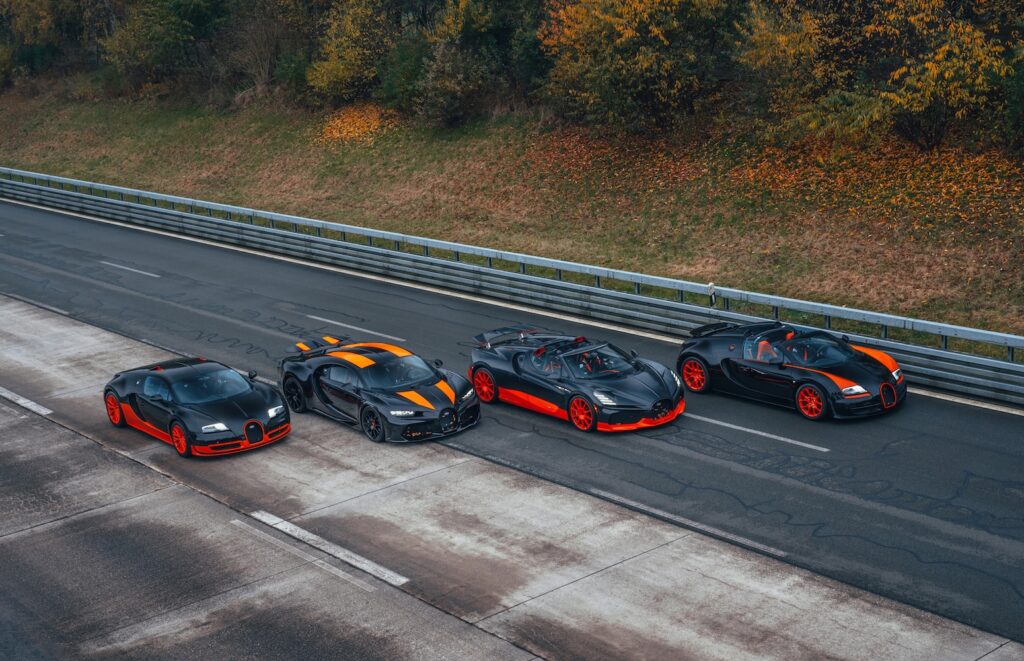
At 453.91 km/h in Papenburg, Germany, the Bugatti W16 Mistral secured its place in history as the fastest open-top production car ever built. The run marked more than a headline number—it signalled the end of Bugatti’s legendary quad-turbo W16 era. In the moments that followed, the Mistral joined three of the marque’s previous record-setters—the Veyron Super Sport, Veyron Grand Sport Vitesse and Chiron Super Sport 300+—for a rare gathering of every Bugatti production car to have claimed a world speed record.
On a crisp November morning in Papenburg, Germany, the final chapter of an extraordinary era unfolded at 453.91 km/h. That’s the speed at which the W16 Mistral—a roadster named for a fierce French wind—etched its name into the record books as the fastest open-top production car in the world. It wasn’t just a milestone for Bugatti. It was a goodbye.
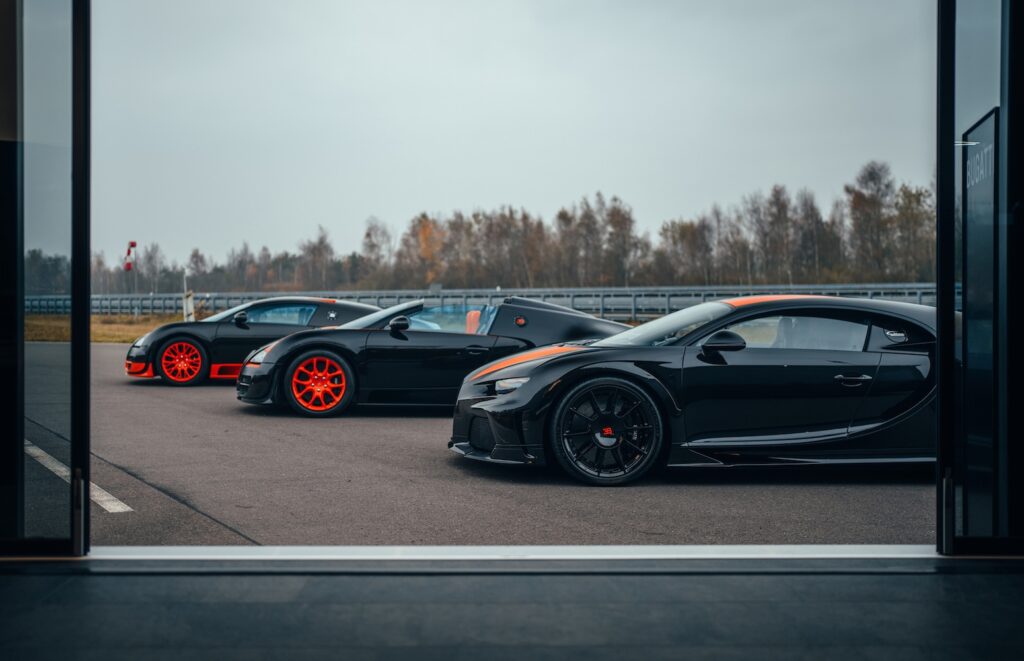
What happened next was quieter but no less significant. The Mistral rolled back toward the pit lane and rejoined its ancestors: the 2010 Veyron Super Sport, the 2013 Veyron Grand Sport Vitesse and the 2019 Chiron Super Sport 300+. For the first and only time, all four of Bugatti’s world-record-breaking production cars stood together on the same track, under the same sky.
“Seeing each of the World Record Cars gathered together on the same track at the same time is a truly emotional moment for me,” said Christophe Piochon, President of Bugatti. “Each one is a world first. A pioneer. A record holder. And now, for the first and only time, they are together.”
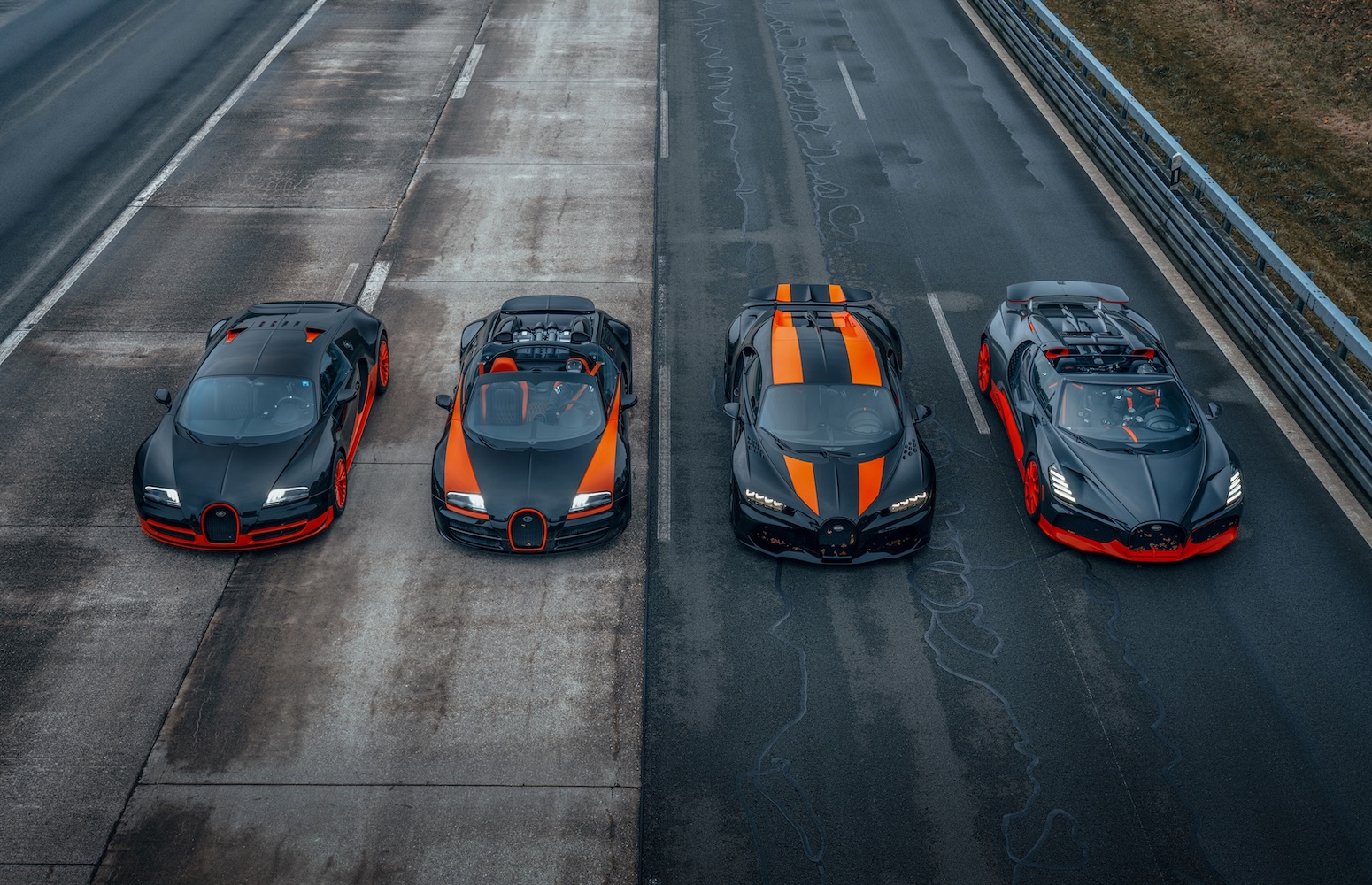
One engine, four legends
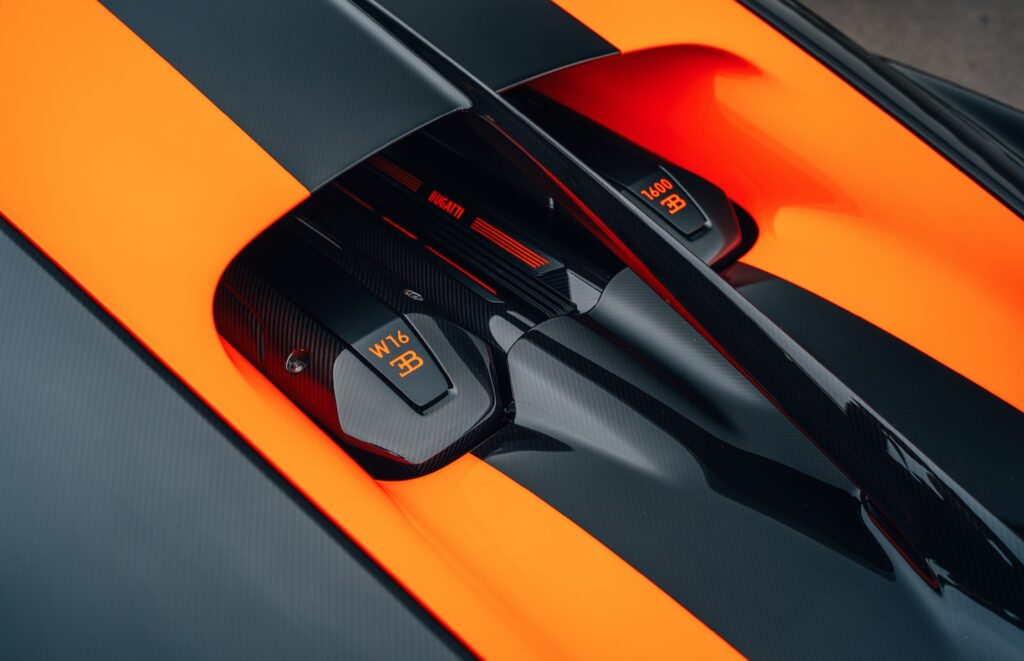
The story of these cars is also the story of the W16 engine—a quad-turbocharged, 8.0-litre powerhouse unlike anything the production car world had seen before. When it debuted in the Veyron nearly 20 years ago, it defied not only physics but expectations. Over the next two decades, it would push Bugatti to the edges of what was possible on public roads.
In 2010, the Veyron Super Sport became the fastest production car in the world, hitting 431 km/h. Three years later, the Grand Sport Vitesse set the open-top record at 408.84 km/h. Then came the Chiron Super Sport 300+, which broke through the once-unthinkable 300 mph barrier, clocking 490.48 km/h (304.773 mph) in 2019.
And finally, the Mistral, Bugatti’s roofless finale for the W16 era, completed the quartet with a run just shy of 454 km/h.
“Each represents the very best of its era,” said Piochon, “and each one is incomparable to anything else.”
These speeds didn’t come easy. And they weren’t computer simulations. They were earned on real asphalt, by seasoned drivers under immense pressure.
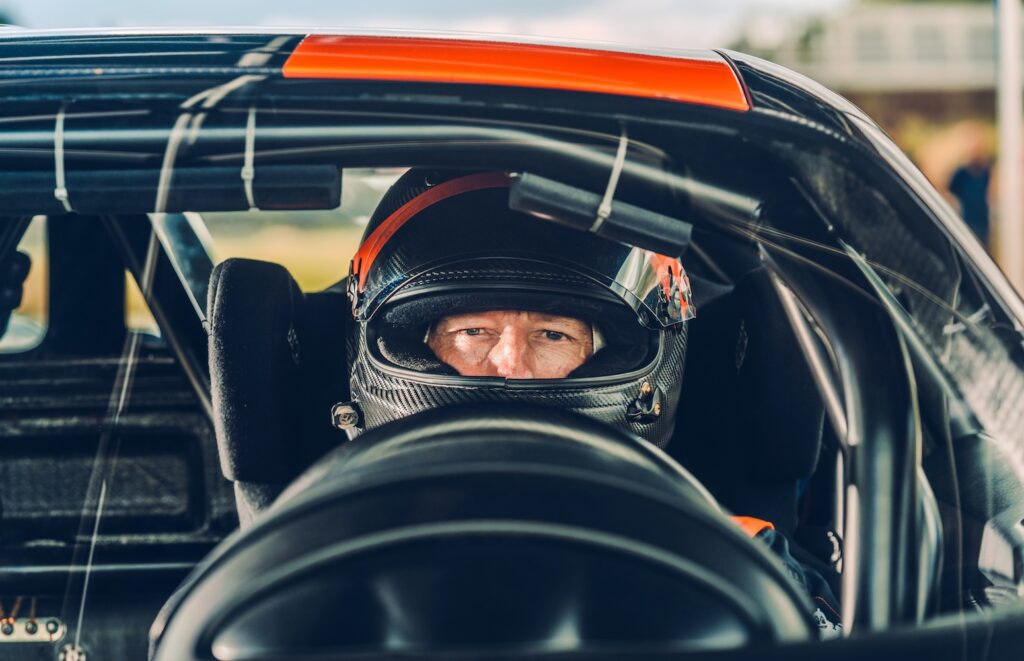
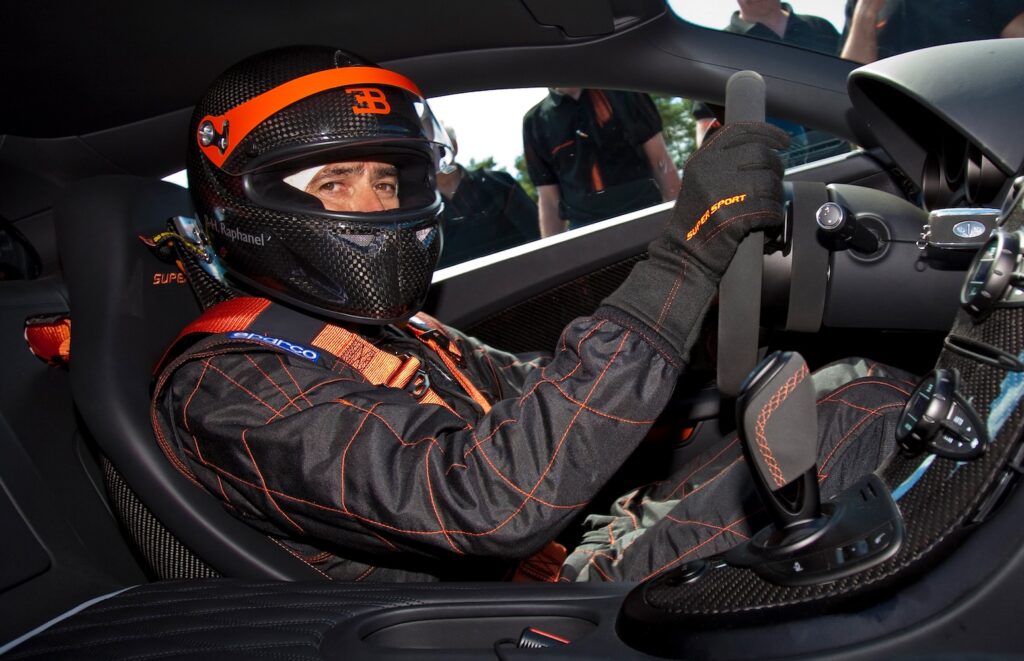
Pierre-Henri Raphanel, a former Le Mans winner, was behind the wheel of the Veyron Super Sport in 2010. Andy Wallace—another Le Mans legend—drove both the Chiron Super Sport 300+ and the Mistral during their respective runs. Between them, they’ve seen just how quickly the stakes rise when you’re pushing a production car beyond 400 km/h.
“You’re working with forces that are incredibly powerful,” Wallace said. “At that speed, everything has to be perfect—not just the car, but the conditions, the tires, the timing. It’s a scientific exercise, but an emotional one too.”
It’s also a reminder that these cars, for all their technology, still rely on human hands and judgment. The tests take place at facilities like Ehra-Lessien and Papenburg—multi-kilometre high-speed tracks originally designed for aerospace-level research and development. But the skill and the instinct? That’s all the driver.
Chasing meaning, not just speed
Bugatti has never claimed to chase records for their own sake. Instead, each new milestone has been treated as validation. It’s a way to prove the engineering is not just innovative but enduring, capable, and unmatched. It’s about raising the ceiling of what’s possible, and then making that ceiling street-legal.
“We wanted to honour the W16, and all that it has allowed us to achieve,” said Piochon. “We didn’t do this for publicity or to break another headline. We did it because this chapter deserves to be closed properly—with reverence.”
It’s hard to argue with that. The W16 isn’t just an engine. It’s a legacy, built across nearly two decades of impossible goals and improbable results, and like the best legacies, it was never meant to last forever.
At Papenburg, the symbolism wasn’t lost on the people who helped build it. For Wallace, returning to the track with the Mistral was more than just another record attempt—it was a chance to close a circle.
“There’s a feeling when you’re behind the wheel of something that’s built to go faster than anything else,” he said. “But there’s also a feeling when you know it’s the last time. That’s what made this different.”
So what’s next for Bugatti? The company has already confirmed a hybrid V16 powertrain for its next chapter, developed in partnership with Rimac. It will undoubtedly be fast, powerful and unlike anything else on the market. But it will also be different. There will be no more W16s, no more Veyrons, no more Chirons. The Mistral was the full stop at the end of a very fast, very loud sentence.
“This is a moment we’ll never be able to recreate,” said Piochon. “But that’s what makes it so powerful.”
Parked at Papenburg, the four record-breakers looked like monuments, but they weren’t built to be admired. They were built to move, and for one fleeting morning, they did, together. One final burst before the silence.